
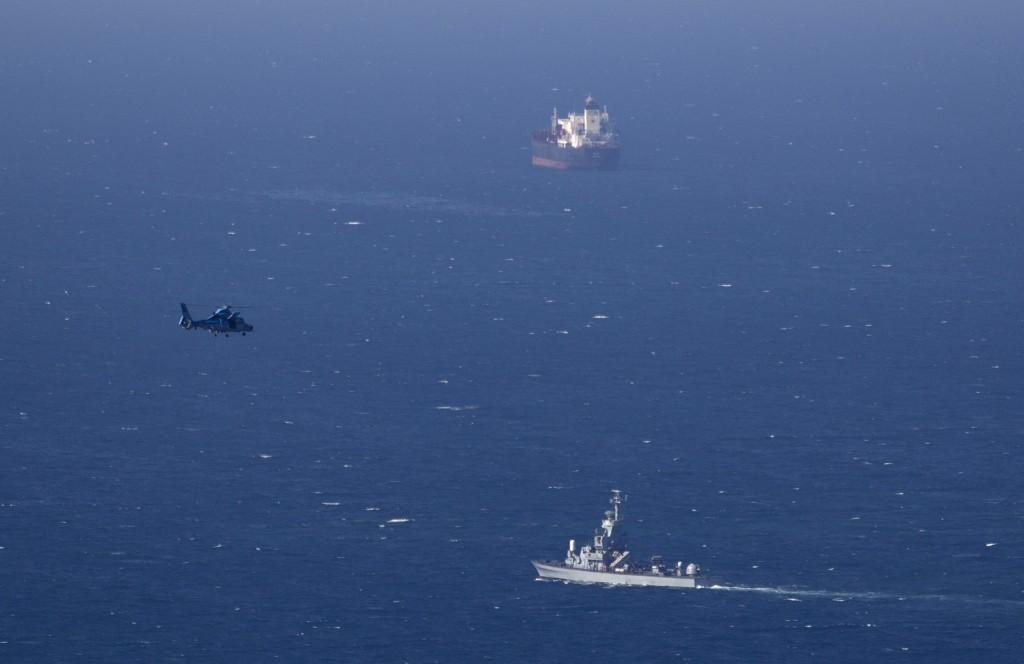
Israeli military and intelligence circles are reportedly concerned that Lebanon’s Hezbollah could adopt a new “shepherd and flock” tactic involving coordinated maritime attacks by swarms of small drones.
Under the concept, multiple attack drones would be controlled through a larger central unmanned aircraft acting as a communications relay, allowing the smaller drones to operate over greater distances and from different directions.
Israel’s Alma Research and Education Center said such a system could enable Hezbollah to launch several drones simultaneously from locations along the Lebanese coast or from vessels at sea, potentially overwhelming surveillance and air-defence systems protecting Israeli offshore installations.
The Israeli research centre said drones are expected to play a central role in the future military doctrine of Iran-aligned groups. It added that the appearance of fibre-optic-controlled drones and specialised offensive equipment indicated that their capabilities were continuing to evolve.
The report also warned that the threat could expand into southern Syria, particularly the occupied Golan Heights, which it described as a possible future launch zone for drone attacks against Israel.
According to the centre, the danger is not limited to armed groups obtaining drones. It said several factors could combine to create a broader threat, including Iranian-linked infrastructure established over several years, the activities of Hezbollah and Palestinian groups, weapons-smuggling networks and the weakness of Syria’s new authorities in the south.
The area’s proximity to Israel through the Golan Heights could also make it easier to deploy relatively inexpensive drones against Israeli forces or territory, the report said.
Technical and environmental constraints
The report noted that many commercial drones contain software restrictions limiting their altitude to about 500 metres above the point of take-off.
Launching drones from elevated terrain, however, could allow them to reach much greater absolute heights without bypassing those restrictions. A drone operated from the slopes of Mount Hermon, for example, would have its permitted altitude calculated from the operator’s already elevated position.
The report said strong winds would represent a more serious operational constraint than the thinner air found at higher elevations.
Common first-person-view, or FPV, drones are generally designed to withstand winds of roughly 35 to 50 kilometres per hour, depending on the model. Wind speeds near the summit of Mount Hermon can approach or exceed those limits.
In such conditions, a drone may struggle to maintain its position, consume battery power rapidly while attempting to stabilise, drift from its intended route or, in extreme cases, be lost completely.
The report said wind conditions must therefore be taken into account when assessing the feasibility of launching FPV drones towards Mount Hermon and other elevated sectors along Israel’s northern and Syrian frontiers.
Southern Syria as a potential launch zone
The Alma centre described southern Syria as particularly suitable for the operational model used by Iran-aligned groups because of the area’s potential for recruitment, weapons smuggling and the establishment of local logistical networks.
It said low-cost FPV drones were especially attractive because they are relatively simple to operate and can be launched from a wide range of locations.
The report cited the reported seizure of a weapons shipment near the al-Tanf border crossing on July 16 as evidence of the growing importance of explosive FPV drones to Hezbollah’s offensive capabilities.
The shipment allegedly included more than 100 drones and was said to be linked to efforts to strengthen Hezbollah’s Unit 127, which oversees aerial operations, as well as its elite Radwan Force and associated production and supply networks.
Al-Tanf lies on a key overland route linking Iran to Syria through Iraq and onwards to Lebanon. The Israeli report claimed Tehran had resumed using the corridor for weapons smuggling despite the fall of Bashar al-Assad’s government and the installation of new authorities in Damascus.
It said smugglers could exploit the heavy commercial traffic of thousands of trucks travelling from Iraq into Syria.
The size of the alleged shipment suggested that Iran remained determined to replenish Hezbollah’s drone arsenal despite the interception of some deliveries, the report said.
It also cited an unverified local report claiming that six earlier smuggling operations using a similar method had succeeded.
The centre said some of the drones may have been intended to remain in Syria and could eventually be used by Iran-aligned networks against Israeli forces deployed in southern Syria or against targets inside Israel.
The claims in the report have not been independently verified.