
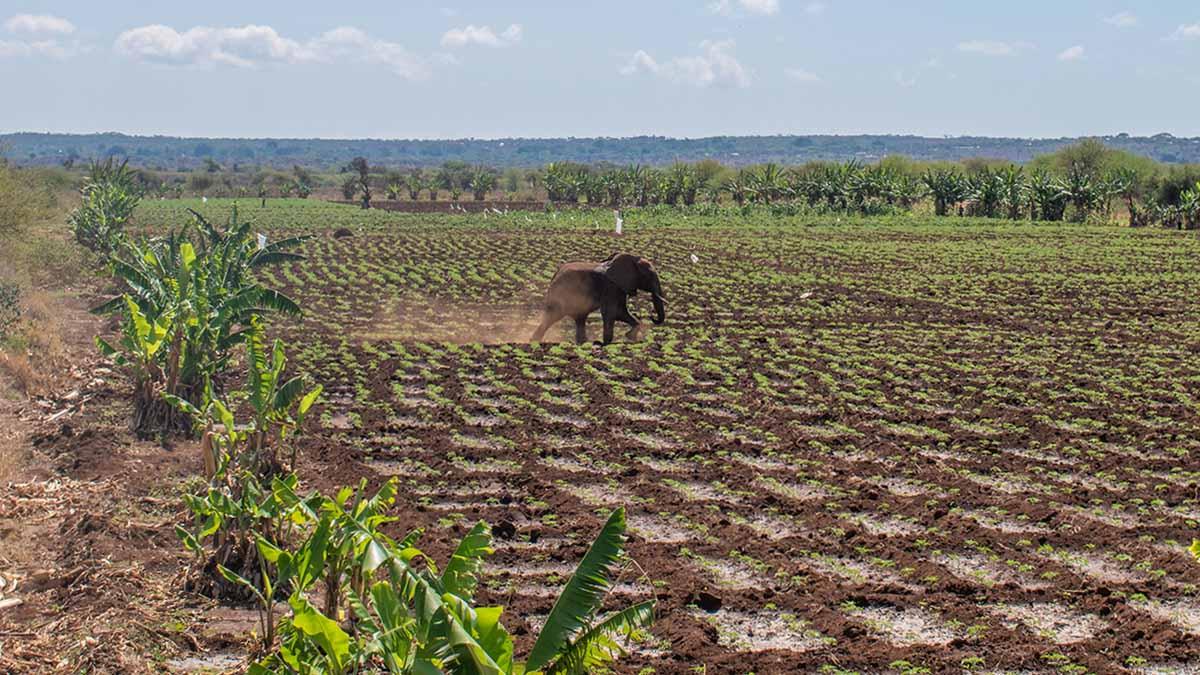
Kenyan wildlife authorities are investigating whether toxic pesticides used on farms near Amboseli National Park may have contributed to the deaths of 15 elephants, although conservationists say the available evidence remains inconclusive.
The elephants were found dead outside the park between June 24 and July 24, according to the Kenya Wildlife Service. Several reportedly showed signs of partial paralysis, raising suspicions that they may have been exposed to cyanide-based chemicals.
Veterinary tests detected traces of cyanide in samples taken from the animals’ stomachs, but officials have not established how the substance entered their bodies or whether the poisoning was deliberate.
Dr Isaac Lekolool, the wildlife service’s chief veterinarian, said investigators were examining the possibility that the elephants came into contact with pesticides sprayed on tomato farms in the nearby Kimana area.
He said farmers may have been attempting to control crop pests without realising the potential danger to wildlife.
Kimana lies within a major wildlife corridor linking Amboseli National Park with Tsavo National Park. More than 2,000 elephants move through the wider Amboseli ecosystem, which extends towards the Tanzanian border, in search of food and water.
The area is also an important agricultural centre. Streams flowing from Mount Kilimanjaro support tomato farms that supply markets in Nairobi and other parts of Kenya.
Concerns over chemical use in the region have been raised before. A 2024 report by the Kenyan food safety organisation Route to Food documented the use of an insecticide containing a cyanide-related chemical compound on a farm in Kimana.
The report’s author, Wangunyu Njuguna, said some banned or highly toxic agricultural chemicals were being brought into Kenya through the border with Tanzania, where enforcement standards may differ.
Despite existing restrictions, campaigners say controls on illegal agrochemicals remain weak and their impact on wildlife is often poorly monitored.
However, conservationists have questioned whether pesticides alone can explain the elephant deaths.
Paula Kahumbu, a Kenyan conservationist who has worked with elephants for nearly three decades, said authorities had not released enough detailed evidence to support the theory with confidence.
She also questioned whether the elephants could have consumed a large enough quantity of contaminated crops to cause multiple deaths.
Other wildlife experts have noted that the pattern of deaths appears unusual. Adult male elephants are generally more likely to raid farms because they tend to take greater risks, yet only one of the dead elephants was an adult male.
Local landowners have also expressed scepticism.
Daniel Nina, who represents landowners in the area, said previous poisoning incidents had also affected zebras and antelopes that fed in the same locations. In this case, no similar deaths among other grazing animals were reported.
The incident has renewed attention on the growing conflict between wildlife and farming communities around Kenya’s protected areas.
Tomato farmer Stephen Michael said elephants and giraffes regularly enter farms in Kimana, causing heavy financial losses. During one recent raid, he said elephants destroyed cabbages worth more than $1,500, in addition to damaging tomato crops.
Frank Pope, chief executive of Save the Elephants, said the main threat facing Amboseli’s elephant population was no longer ivory poaching, but the expansion of farms, lodges and other developments into traditional wildlife corridors.
He said agriculture was increasingly spreading into areas with fertile soil and reliable water — the same places elephants depend on.
The exact cause of the deaths remains unknown, and authorities have not ruled out deliberate poisoning or other explanations.
Until investigators determine what happened, conservationists fear that both wildlife and communities living near the Amboseli ecosystem may remain exposed to further risks.