
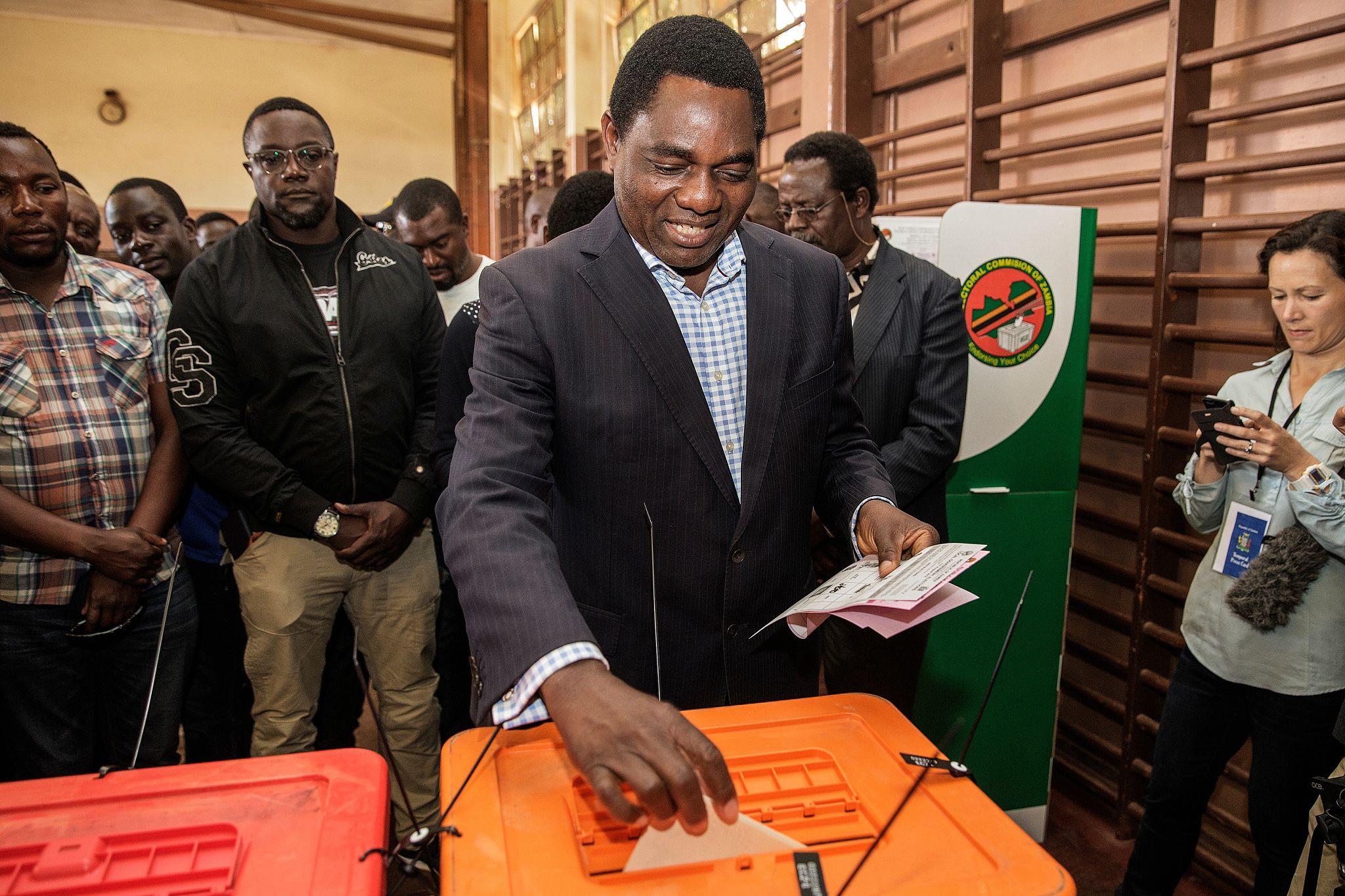
Zambia heads into a closely watched presidential election on August 13, with President Hakainde Hichilema seeking a second term on the strength of an economic recovery that his campaign says has transformed the country after years of debt distress and weak investment.
Hichilema is facing 13 challengers, including prominent lawyer and lawmaker Brian Mundubile, who is running under the opposition Tonse Alliance and has attracted support from several opposition groups.
The election is shaping up as a referendum on Hichilema’s economic policies, which have delivered important gains but have also divided public opinion as many Zambians continue to struggle with high living costs.
Zambia became the first African country to default on its external debt during the COVID-19 pandemic, leaving the government under intense pressure to restructure its liabilities and restore confidence among international lenders and investors.
Under Hichilema, the government embarked on lengthy negotiations with creditors through the G20 Common Framework, eventually securing agreements aimed at extending repayment periods, reducing financing costs and giving the economy greater fiscal breathing room.
The president has also sought to revive foreign investment, particularly in Zambia’s crucial copper sector, offering incentives designed to attract billions of dollars into mining and related industries.
Economist Ibrahim Coulibaly said Hichilema enters the election with significant economic and financial achievements, arguing that his administration succeeded in breaking years of investment stagnation and restoring Zambia’s appeal to international investors.
Copper has remained central to that strategy, with the government betting that increased mining investment can boost exports, government revenues and economic growth.
However, Hichilema’s path to a second term is far from guaranteed.
The election campaign has been marked by growing political tensions. Mundubile’s Tonse Alliance has accused state institutions and security forces of favouring the ruling party, while opposition groups say administrative restrictions and selective enforcement of regulations have made campaigning more difficult.
Beyond the political dispute, Hichilema faces a more immediate challenge: convincing voters that improvements in headline economic indicators have translated into better living conditions.
Political analyst Mohammed Idris said there remains a substantial gap between the government’s presentation of Zambia’s economic performance and the everyday experience of ordinary citizens.
That disconnect could prove decisive at the ballot box.
Food prices have become a particularly sensitive issue. The cost of maize, Zambia’s main staple, has risen sharply, giving opposition parties an opportunity to argue that economic recovery has yet to reach many households.
For Hichilema, the election therefore represents more than a contest over political leadership. It is also a public verdict on whether debt restructuring, foreign investment and macroeconomic recovery have delivered enough tangible benefits to outweigh persistent pressures on household budgets.
As Zambians prepare to vote, the president’s economic record — celebrated by supporters as a major turnaround and criticised by opponents as uneven and disconnected from daily life — is set to become one of the defining issues of the election.