
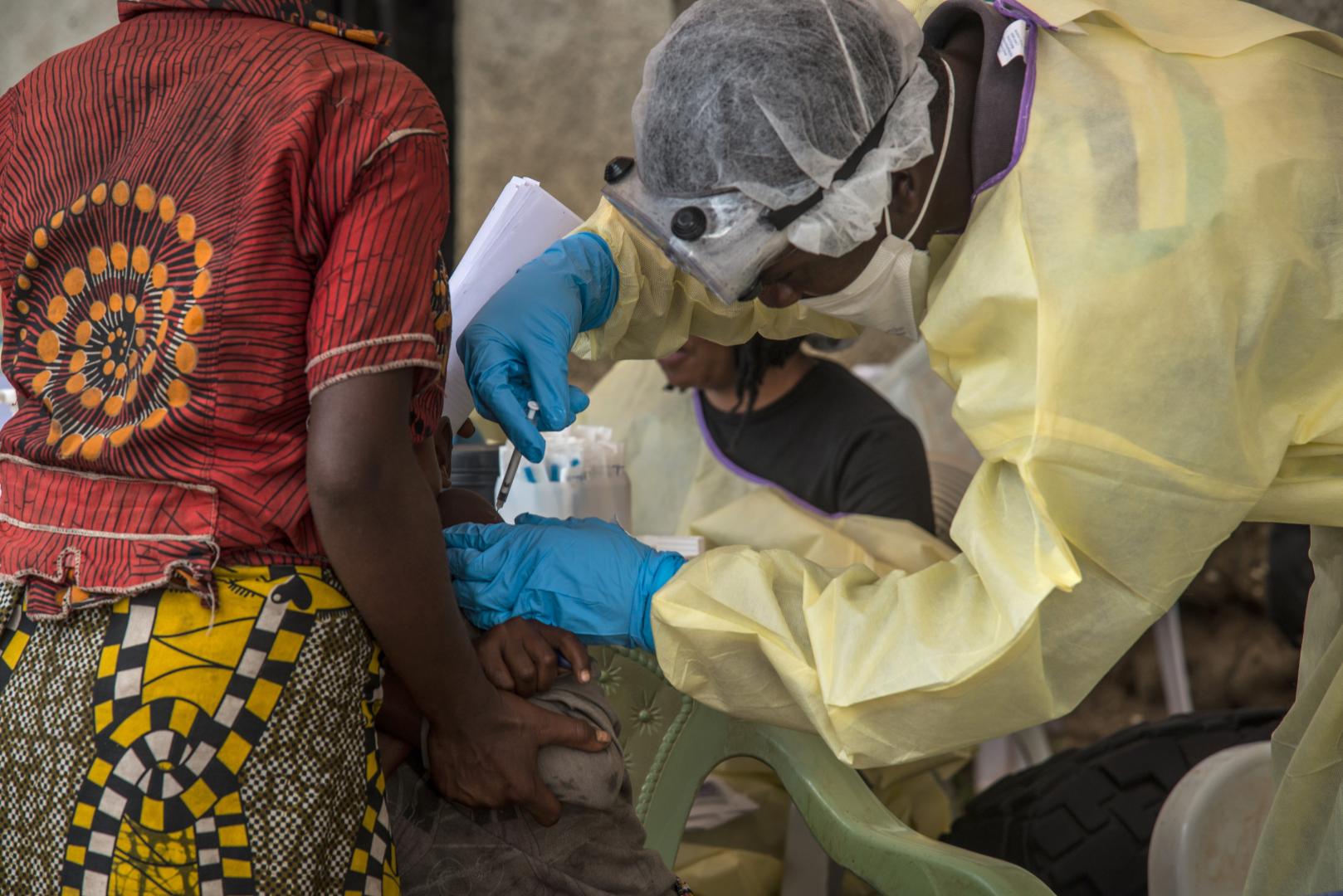
The Democratic Republic of Congo is set to receive 70,000 doses of Merck’s Ervebo Ebola vaccine as authorities battle the country’s largest recorded outbreak of the disease, the World Health Organization said on Thursday.
The allocation follows a request from Congo last week for vaccines from the global Ebola vaccine stockpile, which is managed by the International Coordinating Group on Vaccine Provision.
Of the 70,000 doses approved for Congo, 20,000 will be used in a late-stage clinical trial examining whether Ervebo can provide protection against the Bundibugyo strain of Ebola currently driving the outbreak.
Ervebo is approved for use against the more common Zaire ebolavirus strain, but there is currently no approved vaccine or treatment specifically targeting Bundibugyo Ebola.
The WHO said it remains unclear whether Ervebo can protect people against the Bundibugyo virus, making the planned trial particularly important.
“It is not known whether Ervebo may be protective against the Bundibugyo virus in humans,” the agency said, adding that clinical testing could provide critical evidence on its effectiveness.
Congo has now recorded more than 5,000 confirmed Ebola cases, according to government data, making the current epidemic the largest in the country’s history by case count.
The death toll has risen to 2,378, surpassing the toll recorded during the 2018-2020 outbreak, previously considered Congo’s worst Ebola epidemic.
The current outbreak, Congo’s 17th, became the country’s largest on record in late July as infections continued to spread despite containment efforts.
Earlier this week, WHO Director-General Tedros Adhanom Ghebreyesus said the Ebola outbreak in eastern Congo remained a global health emergency.
Health authorities are seeking to contain transmission through surveillance, isolation of infected patients, contact tracing and vaccination efforts, while researchers assess whether existing vaccines could offer protection against the Bundibugyo strain.
The International Coordinating Group on Vaccine Provision brings together the WHO, the International Federation of Red Cross and Red Crescent Societies, Médecins Sans Frontières and UNICEF.