
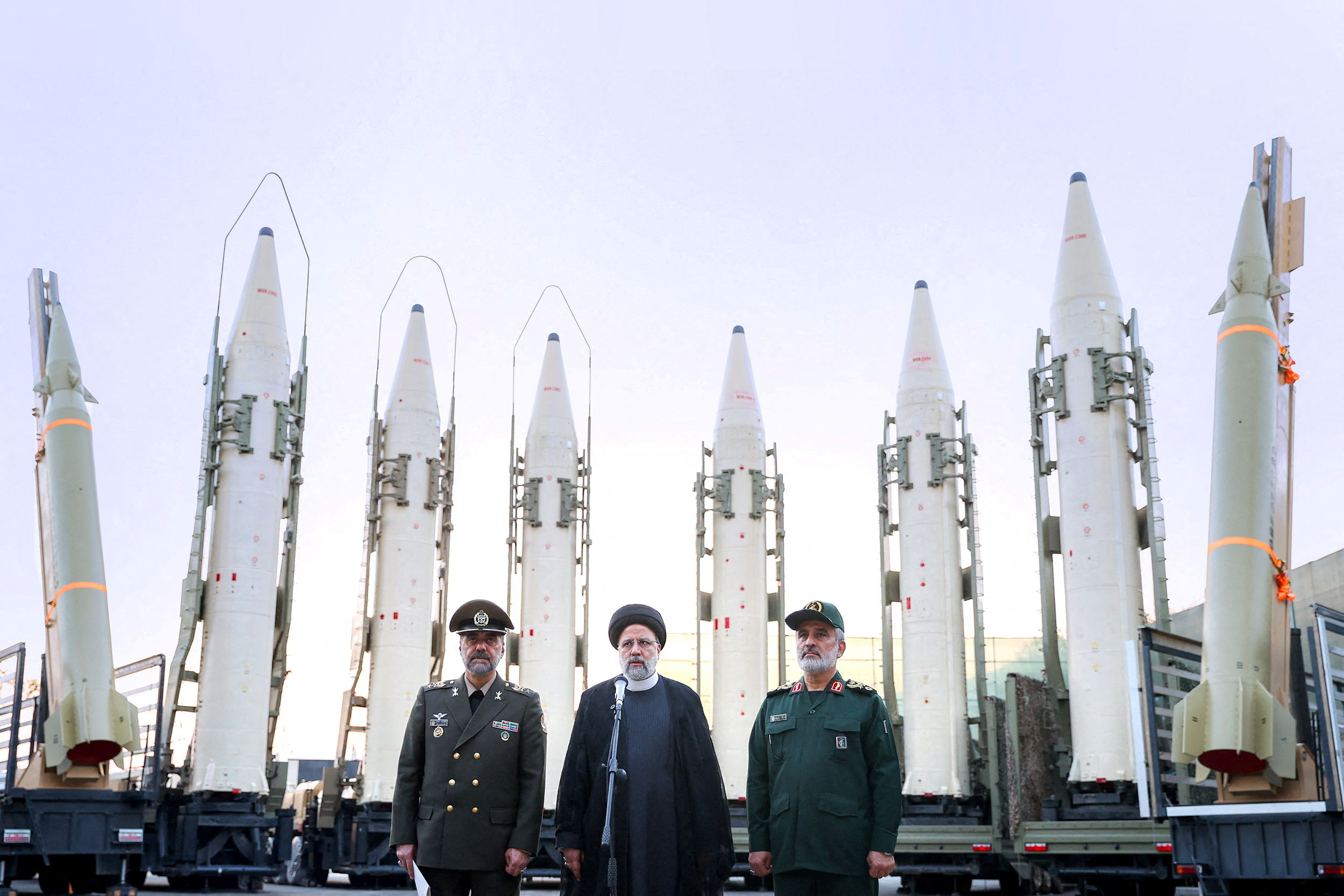
Iran has warned that any new US threats will be met with a “devastating” response after Washington pledged a fresh campaign of financial pressure aimed at cutting off Tehran’s remaining economic lifelines.
The warning came as US Treasury Secretary Scott Bessent said the administration of President Donald Trump was preparing what he described as the toughest sanctions ever imposed on Iran, with further details expected on Monday.
Trump has also warned that countries providing Iran with “any type of lifeline” could face economic consequences.
Iran’s Armed Forces chief of staff, Major General Ali Abdollahi, said the country was prepared to respond across multiple fronts.
“With preparedness across land, sea, air, air defence and cyberspace, Iran’s armed forces will respond to the enemy’s new threats with crushing, punishing and devastating responses,” Iranian media quoted him as saying.
Parliament Speaker Mohammad Baqer Qalibaf, who has played a central role in mediated contacts with Washington, said the United States had turned increasingly to economic pressure after failing to achieve its objectives through direct military confrontation.
Speaking during a visit to Iraq, Qalibaf accused Washington and Israel of pursuing both economic and psychological warfare against Iran, while saying Tehran needed to develop measures to withstand the sanctions.
Washington prepares new measures
Bessent said the United States would provide further details of the planned measures at a press conference on Monday.
“We are going to collapse this regime,” he told CNBC, arguing that US allies and other countries now had to decide whether they would cooperate with Washington.
He described a naval blockade reimposed on Iran in July and the planned sanctions package as a “one-two punch” designed to place maximum economic pressure on Tehran.
Bessent also suggested that tougher economic measures could reduce the likelihood of another major outbreak of direct military conflict.
Oil prices edged lower on Friday but remained on course for a second consecutive weekly gain after jumping a day earlier following Washington’s latest sanctions threat.
The nearly six-month conflict has disrupted energy markets and shipping through the Strait of Hormuz, a crucial route that carried roughly one-fifth of globally traded oil before the war began.
Kpler shipping data showed just seven commodity vessels passed through the strait on Thursday, about half the previous day’s figure and dramatically below the more than 130 ships per day recorded before the conflict.
Two ceasefire agreements announced by the United States and Iran, in April and June, were intended to restore shipping through Hormuz and create a path toward ending the conflict, but both broke down quickly.
Iran faces mounting economic strain
Iran has lived under varying levels of international and US sanctions for decades, but its economy has come under growing pressure from high inflation, a weakening currency, energy shortages and damage to infrastructure.
The Iranian Foreign Ministry said further US sanctions would not weaken the country’s determination to defend what it called its independence, dignity and sovereignty.
President Masoud Pezeshkian also warned that any renewed attack on Iran would receive a “crushing” response, while reiterating his view that the conflict should now end.
Pezeshkian, considered relatively moderate within Iran’s political system, has repeatedly expressed concern about the impact of the war and economic pressure on ordinary Iranians.
Some Iranians interviewed by Reuters have said additional sanctions could deepen hardship and potentially weaken the clerical establishment, although there has been no significant wave of unrest since authorities violently suppressed protests in January.
China under pressure over Iranian oil
Washington is also seeking greater cooperation from China, Iran’s largest oil customer.
Bessent noted that China obtains a large share of its energy supplies from the Gulf and argued that Beijing should support US efforts.
China bought more than 80% of Iran’s seaborne oil exports in 2025, according to data from analytics firm Kpler.
Iranian crude offers to Chinese buyers have already fallen since Washington reimposed its blockade on Iranian ports in mid-July, according to trade sources cited by Reuters.
China, however, has rejected Washington’s approach.
Its embassy in Washington said sanctions and pressure would not resolve the crisis and called instead for diplomatic efforts.
Further escalation also carries risks for US allies in the Gulf, where Iranian attacks have already targeted energy infrastructure and desalination facilities vital to regional water supplies.
Trump is facing growing domestic pressure over the war as elevated fuel prices weigh on public approval ahead of November’s US midterm elections.