
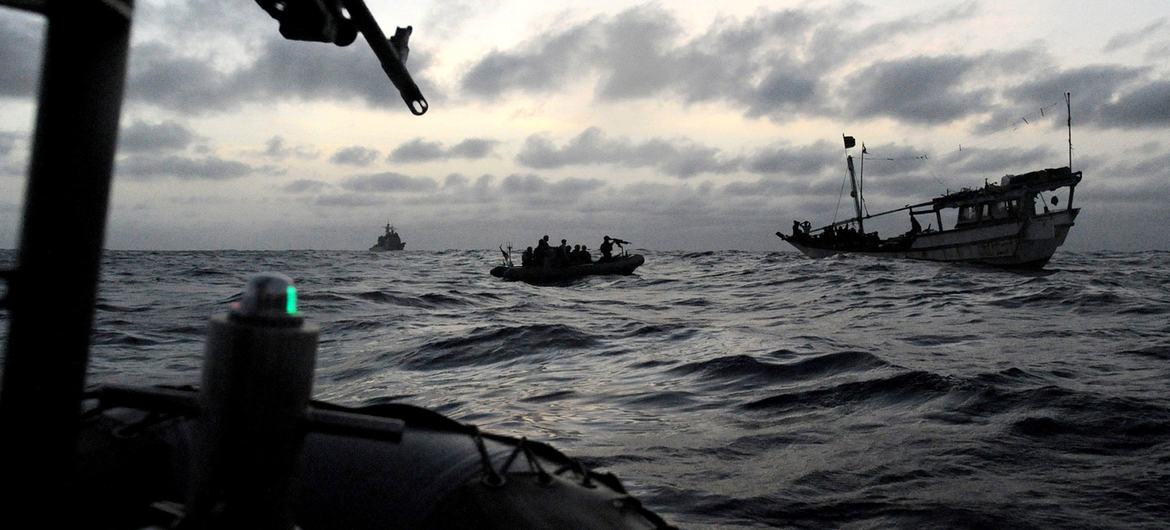
Countries bordering the Red Sea and Gulf of Aden are strengthening maritime cooperation as piracy, smuggling and shipping disruptions pose growing security challenges.
Officials from Ethiopia, Yemen, Djibouti and Somalia met in Nairobi for a two-day dialogue focused on regional maritime security.
The meeting was facilitated by the UN Office on Drugs and Crime, with support from international and regional partners.
Djibouti Maritime Authority official Abdurrahim Muhammad Ali said tensions around the Strait of Hormuz could create opportunities for pirates.
He warned that maritime forces distracted by wider regional threats could leave the Gulf of Aden more vulnerable to attacks.
The Red Sea and Gulf of Aden form vital trade corridors, linking regional economies with international markets and global supply chains.
Officials highlighted piracy, illegal fishing, human trafficking, migrant smuggling, narcotics trafficking and maritime terrorism as interconnected regional threats.
UNODC coordinator Mostafa Elbanna said stronger dialogue could help authorities address shared challenges and improve maritime security across borders.
Although piracy remains below levels seen more than a decade ago, officials stressed the need to preserve stronger regional coordination.
For landlocked Ethiopia, secure maritime routes are particularly important because much of its trade passes through neighbouring Djibouti.
Ethiopian Maritime Authority Captain Kibru Mesfin said disruptions could raise shipping and insurance costs while delaying essential goods and exports.
He called for harmonised information-sharing systems and stronger links between maritime authorities, coast guards and law enforcement agencies.
Participants also discussed improving maritime awareness, coordinating responses and establishing stronger channels for timely information during incidents.
Officials said criminal networks move easily across borders, making cooperation essential to protecting seafarers, sustaining trade and preserving regional stability.