
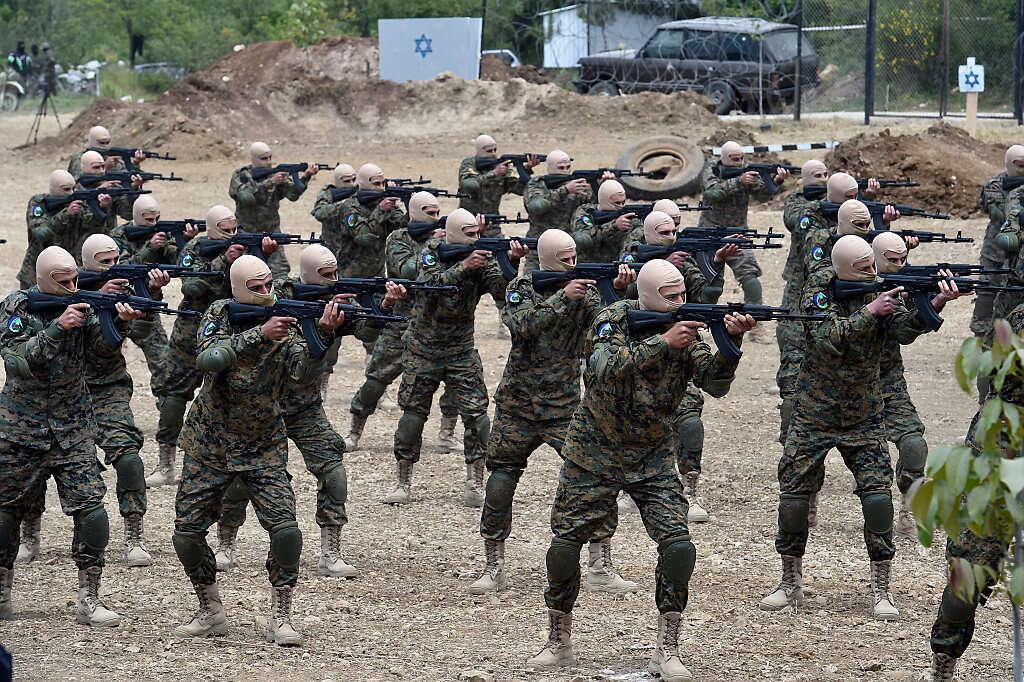
Hezbollah’s elite Radwan Force has suffered a deep operational decline after years of Israeli strikes targeting its commanders, covert infrastructure and support networks, according to an Israeli media report.
The force, once trained to conduct complex cross-border raids and other strategically important missions, is now focused largely on survival, the Walla news website reported.
The report said the loss of experienced commanders, destruction of concealed military formations and withdrawal of fighters had deprived Hezbollah of the ability to conduct coordinated attacks across multiple fronts—an operational capability it had spent almost two decades developing.
Israel’s campaign against the Radwan Force marked a major change in its security approach toward Hezbollah, according to Walla. Israeli military chief Eyal Zamir reportedly prioritised the systematic disruption of the unit, supported by extensive intelligence gathering that covered both its core formations and secondary support networks.
The intelligence effort exposed what Israel described as the full extent of the force’s clandestine infrastructure, revealing the scale of the threat it could have posed during the war.
Walla said former Hezbollah leader Hassan Nasrallah initially hesitated to implement the group’s plan to seize communities in northern Israel. When Hezbollah later began considering the operation more seriously, Israel reinforced its forces along the border and moved to thwart the plan from the ground and air, the report claimed.
After nearly three years of fighting, the balance of power in Lebanon has changed significantly, according to the Israeli assessment.
Most Radwan fighters reportedly withdrew when Israeli forces began deeper ground operations. Many of the unit’s experienced field commanders were also killed and replaced by younger figures lacking comparable combat and leadership experience.
The report described those changes as evidence of a serious breakdown in Hezbollah’s operational command structure.
According to the assessment, Hezbollah has lost one of its principal military advantages: the ability to launch a coordinated, lethal cross-border assault against numerous locations simultaneously.
Such an operation had reportedly formed a central part of Hezbollah’s military planning before the October 7 attacks, with preparations dating back approximately 18 years.
Hezbollah has not publicly responded to the specific claims contained in the Israeli report. The assessment could not be independently verified.