
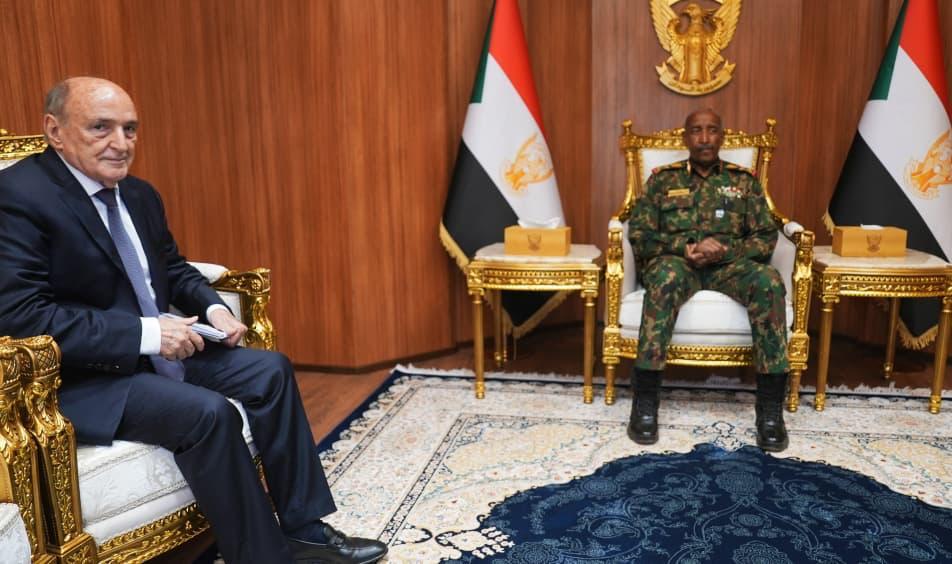
Sudanese political and civil groups have opposed the African Union’s support for a dialogue initiative associated with army chief Abdel Fattah al-Burhan, warning that the process could deepen divisions created by the country’s ongoing war.
The groups submitted a memorandum to the African Union Peace and Security Council and the AU’s Department of Political Affairs, Peace and Security.
Their objections followed an August 31 statement by the African Union Commission welcoming an initiative for a “Sudanese-Sudanese dialogue” inside the country.
The AU said the proposed process should involve Sudanese civil, political and societal stakeholders and contribute towards restoring legitimate civilian institutions.
AU Sudan dialogue faces opposition
The signatories include political parties, civil society organisations, women’s and youth networks, academics and other public figures opposed to the war.
They argued that efforts to end the fighting and address Sudan’s humanitarian crisis should take priority over launching a political dialogue.
The groups also called for a humanitarian truce and comprehensive ceasefire, warning that a political process held in territory controlled by one of the warring parties could exclude significant sections of Sudanese society.
According to the memorandum, such a process could reinforce political divisions alongside the territorial fragmentation already caused by the conflict.
The groups also stressed that Sudanese actors should retain ownership of any political process aimed at ending the crisis.
Groups call for broader participation
Those opposing the initiative called for broad Sudanese participation in any future political settlement and said mediation efforts should remain independent of the country’s warring parties.
They also urged greater coordination between the different regional and international initiatives seeking to end the conflict.
Despite their criticism, the groups expressed willingness to continue consultations with the African Union in pursuit of a sustainable political settlement.
The African Union, meanwhile, has said Sudanese ownership and leadership should remain central to the proposed process. It has also called for participation from civil, political and societal stakeholders.
Critics raise concerns over neutrality
Some Sudanese political figures have questioned whether the AU Commission’s decision to welcome the initiative could affect perceptions of its neutrality.
Critics argue that a dialogue involving primarily groups aligned with authorities in Port Sudan would struggle to achieve broad civilian legitimacy.
They say displaced people, refugees, civil society organisations and political movements outside Burhan’s camp should also have meaningful representation in any credible political process.
The disagreement comes as Sudan’s conflict continues to drive a major humanitarian and displacement crisis.
The African Union has maintained that the ultimate objective should be a united and peaceful Sudan governed by legitimate civilian institutions. It has also said the dialogue initiative should complement existing African and international efforts to resolve the conflict.
The dispute now places renewed attention on whether the AU Sudan dialogue can develop into a process acceptable to Sudan’s competing political and civilian groups.