
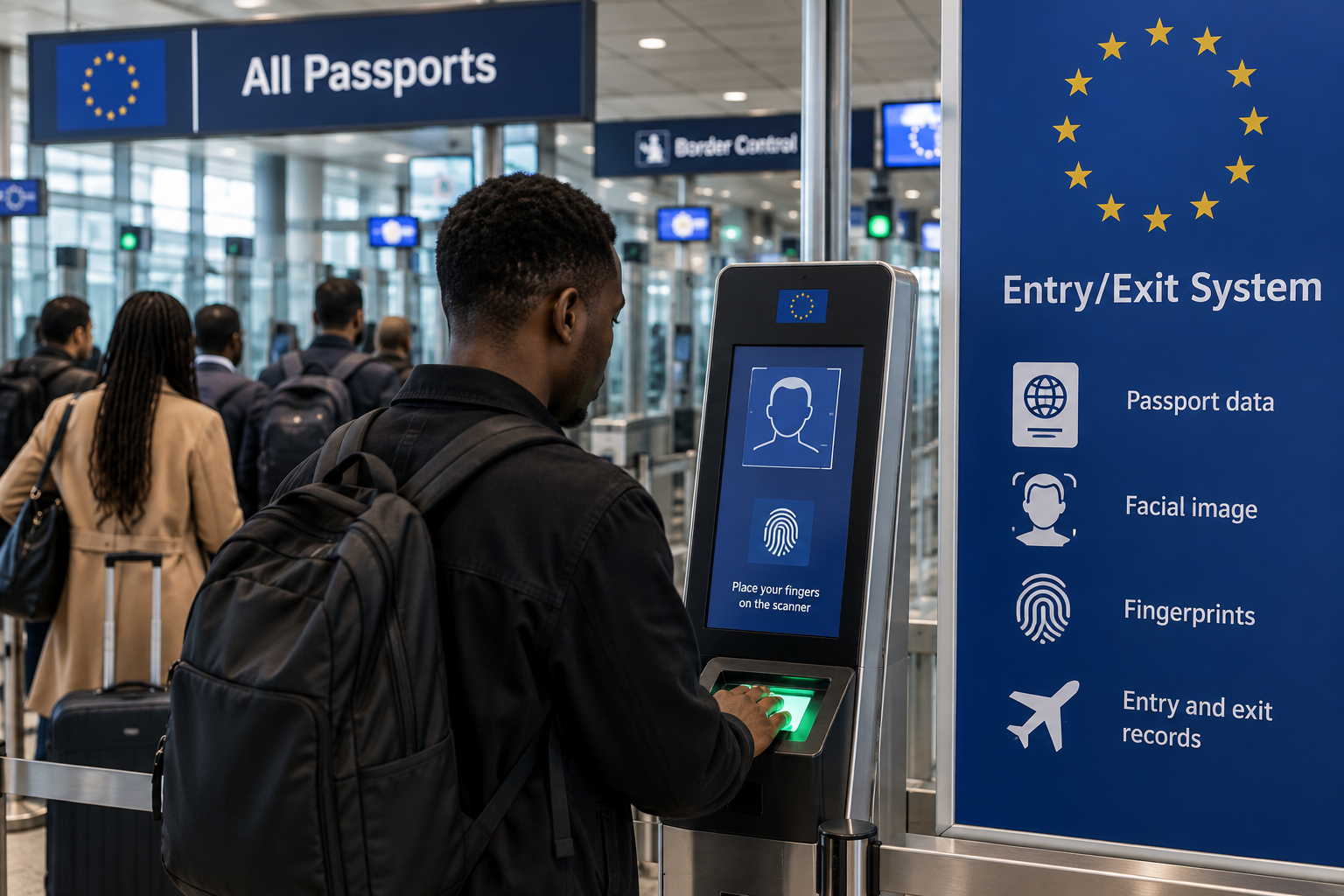
African travellers entering Europe may face more consistent biometric checks and potentially longer queues after temporary flexibility around the European Union’s digital border system expired on September 6.
Europe’s Entry/Exit System (EES) records information from eligible non-EU travellers entering or leaving 29 European countries.
The system collects passport details, facial images, fingerprints and records of entry and exit.
Europe biometric checks become stricter
Temporary measures had allowed border authorities to suspend some EES procedures when congestion became severe.
That flexibility expired on September 6.
Airlines had pushed for the European Commission to extend the measures, warning that delays linked to the system had already caused some passengers to miss flights and connections.
However, implementation may still vary between airports because some countries continue to experience technical problems.
What African travellers need to know
The EES applies to eligible short-stay visitors from outside the EU. This includes African tourists, business travellers, students and people visiting relatives.
It is not limited to African nationals and covers both visa-required and visa-exempt travellers from outside the EU.
According to the European Commission, the system operates at the external borders of 29 European countries.
It records a traveller’s name, passport information, facial image, fingerprints and the date and location of entry and exit. Refusals of entry are also recorded.
First-time visitors could face additional processing
Travellers registering with EES for the first time may need to provide biometric information at a kiosk or directly to a border officer.
On later journeys, authorities can normally compare the traveller’s passport and facial image against their existing EES record.
African travellers who previously submitted fingerprints for a Schengen visa are not automatically exempt from EES registration.
The EES also does not replace the Schengen visa. Travellers who require a visa must still obtain one before travelling.
Travellers warned to prepare for possible delays
Border procedures may not be identical across Europe.
Technical problems, malfunctioning kiosks and large numbers of passengers arriving simultaneously could still cause delays.
Travellers should therefore prepare for the full biometric process even if they encountered fewer checks during previous trips.