
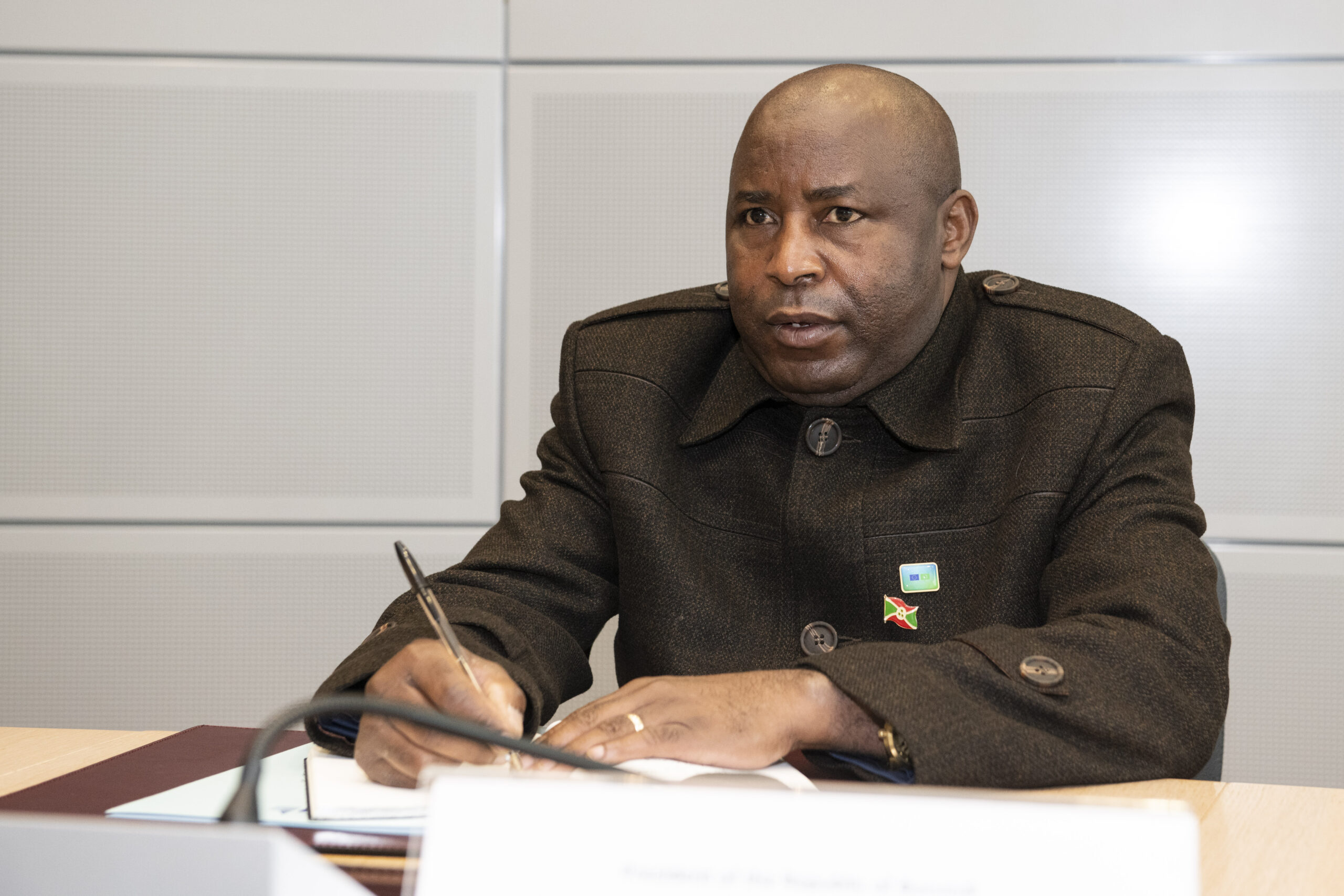
Burundian President and African Union Chair Évariste Ndayishimiye held talks with a Sudanese delegation in Gitega before speaking by phone with Mohamed Hamdan Dagalo, according to accounts of the meeting.
The delegation represented Sudan’s Transitional Government of Peace. It was led by Cabinet Affairs Minister Ibrahim al-Mirghani.
During the meeting, the delegation presented a message from Dagalo. It also outlined the Sudan Founding Alliance’s, or TASIS, proposals for ending the war.
The talks focused on a humanitarian truce, aid access and possible African Union mediation.
Dagalo and AU chair discuss Sudan peace
According to accounts published after the meeting, Ndayishimiye later spoke directly with Dagalo.
Their conversation focused on the conflict and efforts to reach a political settlement.
Dagalo serves as president of the Presidential Council of the Transitional Government of Peace.
Ndayishimiye, meanwhile, is serving as African Union chair for 2026.
The talks mark a notable diplomatic engagement as TASIS seeks a role in regional and international efforts to end Sudan’s war.
TASIS raises concerns over AU approach
The delegation also raised concerns about the African Union Commission’s approach to Sudan.
In particular, it criticised AU Commission Chairperson Mahmoud Ali Youssouf’s support for a Sudanese dialogue initiative associated with the army-controlled authorities.
TASIS argued that such engagement could weaken the AU’s neutrality.
The AU Commission announced on August 31 that it welcomed a Sudanese-Sudanese dialogue initiative. It said the process could help bring Sudanese stakeholders together.
However, TASIS argues that a process dominated by groups linked to the former National Congress Party and the Islamic Movement would not address the causes of the conflict.
The delegation therefore called on the AU to maintain equal distance from Sudan’s rival authorities.
AU neutrality discussed
According to the delegation’s account, Ndayishimiye reiterated the AU’s opposition to military coups.
He also said the organisation should act as an impartial mediator in Sudan.
Published accounts of the meeting attributed another significant statement to Ndayishimiye. They reported that he said positions expressed by the AU Commission chairperson did not necessarily represent the position of the entire African Union.
However, Radar Africa could not independently verify that characterization of his remarks.
Sudan has remained suspended from the African Union since the October 2021 military takeover.
Humanitarian truce proposed
The delegation also presented its proposals for ending the conflict.
It called for an urgent humanitarian ceasefire. In addition, it called for safe corridors to allow aid to reach civilians in war-affected areas.
The delegation said political negotiations should follow.
It argued that those talks should be broadly inclusive. However, TASIS said the Islamic Movement, the former ruling National Congress Party and affiliated groups should be excluded.
The delegation also described the Transitional Government of Peace as a response to the collapse of state institutions during the war.
It said authorities in areas under its administration were working to restore basic services. These include education, healthcare, security, judicial services and humanitarian assistance.
Radar Africa could not independently verify all of the delegation’s claims about conditions or services in those areas.
Chemical weapons allegations raised
The delegation also raised allegations about the use of chemical weapons during Sudan’s war.
It called for stronger international controls on weapons entering Sudan. It also proposed inspections of suspected facilities and measures to prevent prohibited weapons from reaching armed or extremist groups.
Chemical weapons allegations have become an important issue in Sudan’s conflict.
However, claims about individual attacks remain contested. Specific allegations require independent investigation and verification.
The delegation’s statements should therefore be understood as claims presented during the meeting, rather than independently established findings.
TASIS seeks wider diplomatic role
The Gitega meeting gives TASIS another opportunity to present its political position directly to African leaders.
It also allowed the delegation to raise its concerns about the AU Commission’s approach to Sudan.
At the same time, the meeting does not by itself amount to formal African Union recognition of the Transitional Government of Peace.
The significance of the talks will depend on whether they lead to further AU engagement or concrete mediation efforts. aute irure dolor in reprehenderit in voluptate velit esse cillum dolore eu fugiat nulla pariatur. Excepteur sint occaecat cupidatat non proident, sunt in culpa qui officia deserunt mollit anim id est laborum.