
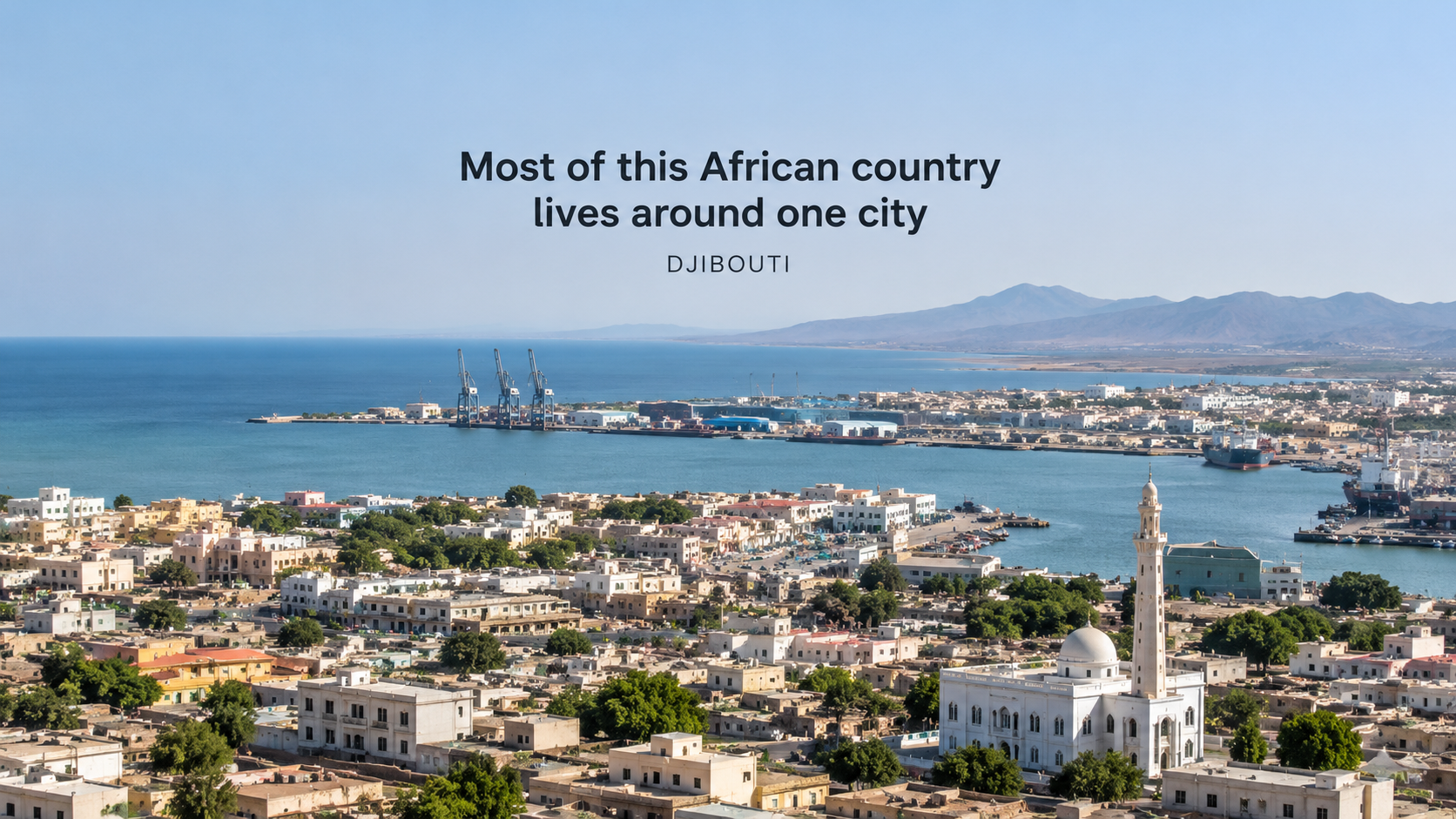
Djibouti is one of Africa’s smallest countries.
But there is something unusual about where its people live.
A huge share of the population is concentrated in and around Djibouti City, the country’s capital and economic centre.
The 2024 census recorded around 777,000 people in the Djibouti Region, which contains the capital. The country’s total population was about 1.07 million.
That means roughly seven in every 10 people were living in the capital region.
Why does everyone head towards Djibouti City?
Geography plays a major role.
Djibouti is extremely dry. The World Bank says the country receives only around 130 millimetres of rain a year, while less than 1,000 square kilometres of its territory is considered arable land.
As a result, large-scale agriculture is difficult and much of the population has become urban.
Djibouti City offers something the country’s sparsely populated interior cannot: a major port, jobs, government institutions and connections to international trade.
A tiny city with a huge strategic position
Djibouti City sits near the southern entrance to the Red Sea.
That puts it close to one of the world’s busiest shipping routes.
Its location has made the small country strategically important. China, France, Italy, Japan and the United States all maintain military facilities or forces in Djibouti.
Meanwhile, the country’s ports provide neighbouring landlocked Ethiopia with an important route to the sea.
So despite Djibouti’s small size, its capital sits at the crossroads of Africa, the Middle East and global maritime trade.
And that’s why looking at Djibouti on a population map can be surprising: much of the country’s population is concentrated in one small corner around its capital.