
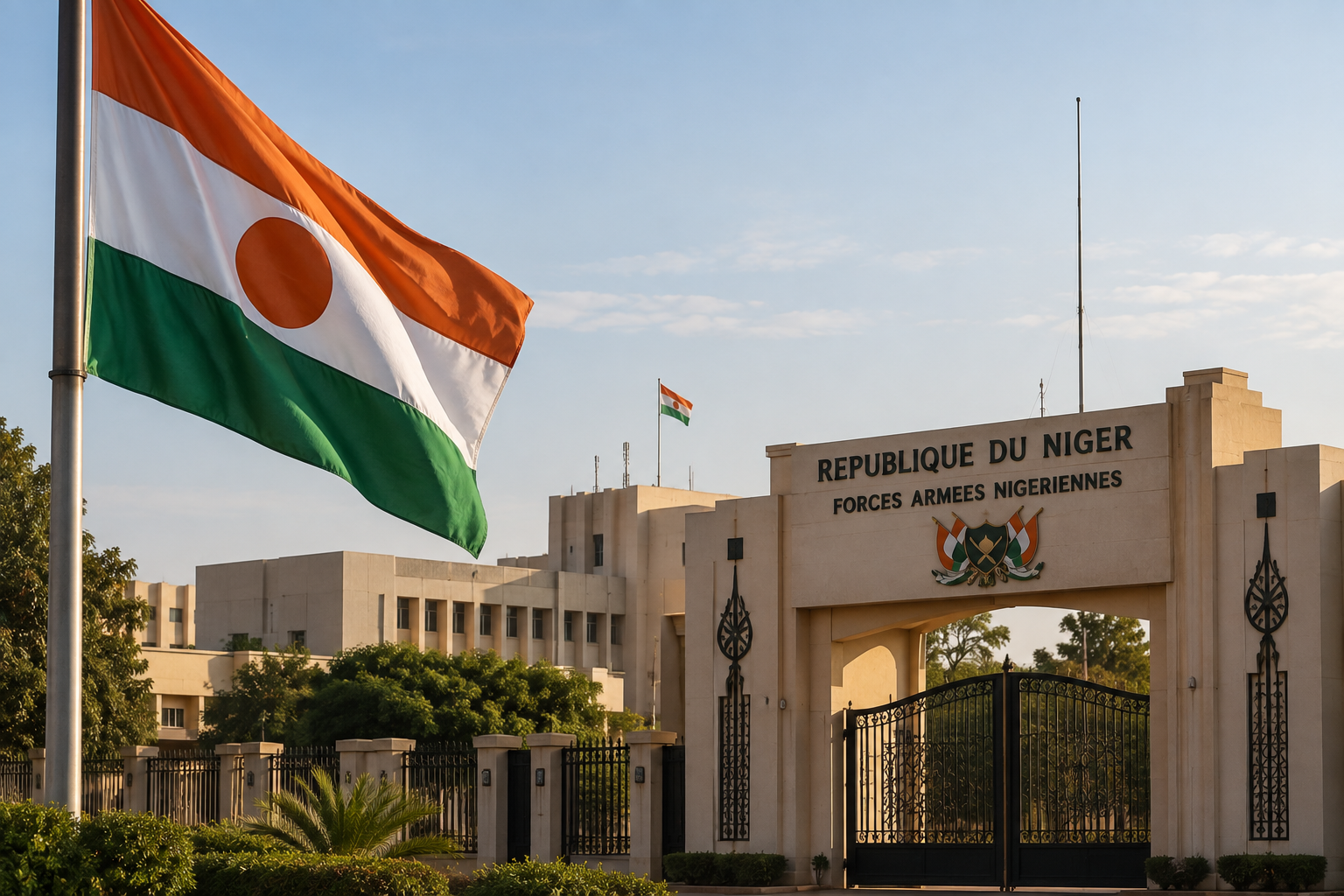
Niger’s military leader General Abdourahamane Tiani has appointed a new armed forces chief following a failed mutiny in Niamey last month.
Brigadier General Maman Sani Kiaou was named chief of staff, replacing General Moussa Salaou Barmou, according to a decree announced on state television.
The leadership change comes as Niger faces continuing security challenges and questions over cohesion within its armed forces.
Niger army chief replaced after mutiny
Kiaou has previously led military operations in Tillabéri in western Niger and Diffa in the southeast.
Both regions have faced persistent insecurity involving armed groups.
The Sudan Times reported that the appointment followed unrest within the military in August. Analysts cited by the outlet said the attempted mutiny raised questions about dissatisfaction and divisions among some soldiers.
However, the appointment itself does not establish the reasons behind the mutiny or whether the leadership change will resolve tensions within the armed forces.
Niger faces continuing security pressure
Niger has struggled with armed violence for years, particularly in areas near its borders with Mali and Burkina Faso.
The country’s military authorities are therefore under pressure to improve security while maintaining stability within the armed forces.
Kiaou will now take charge at a time when Niger is seeking to strengthen military operations against armed groups.
The longer-term impact of the leadership change remains unclear.
Relations with Russia deepen
The leadership reshuffle also comes as Niger strengthens security ties with Russia.
Relations between Niamey and France have deteriorated sharply since the military takeover in July 2023.
French troops subsequently left Niger, while the country’s military authorities developed closer relations with Moscow.
Niger’s authorities have accused France of supporting armed groups operating in the region. France has denied those allegations.
Analysts cited by The Sudan Times said the recent unrest could encourage Niger’s military leadership to deepen cooperation with Russia.
However, the extent to which the failed mutiny will influence Niger’s foreign partnerships remains uncertain.
The appointment of a new army chief now puts renewed attention on whether Niger’s military leadership can maintain internal cohesion while confronting the country’s wider security challenges.