
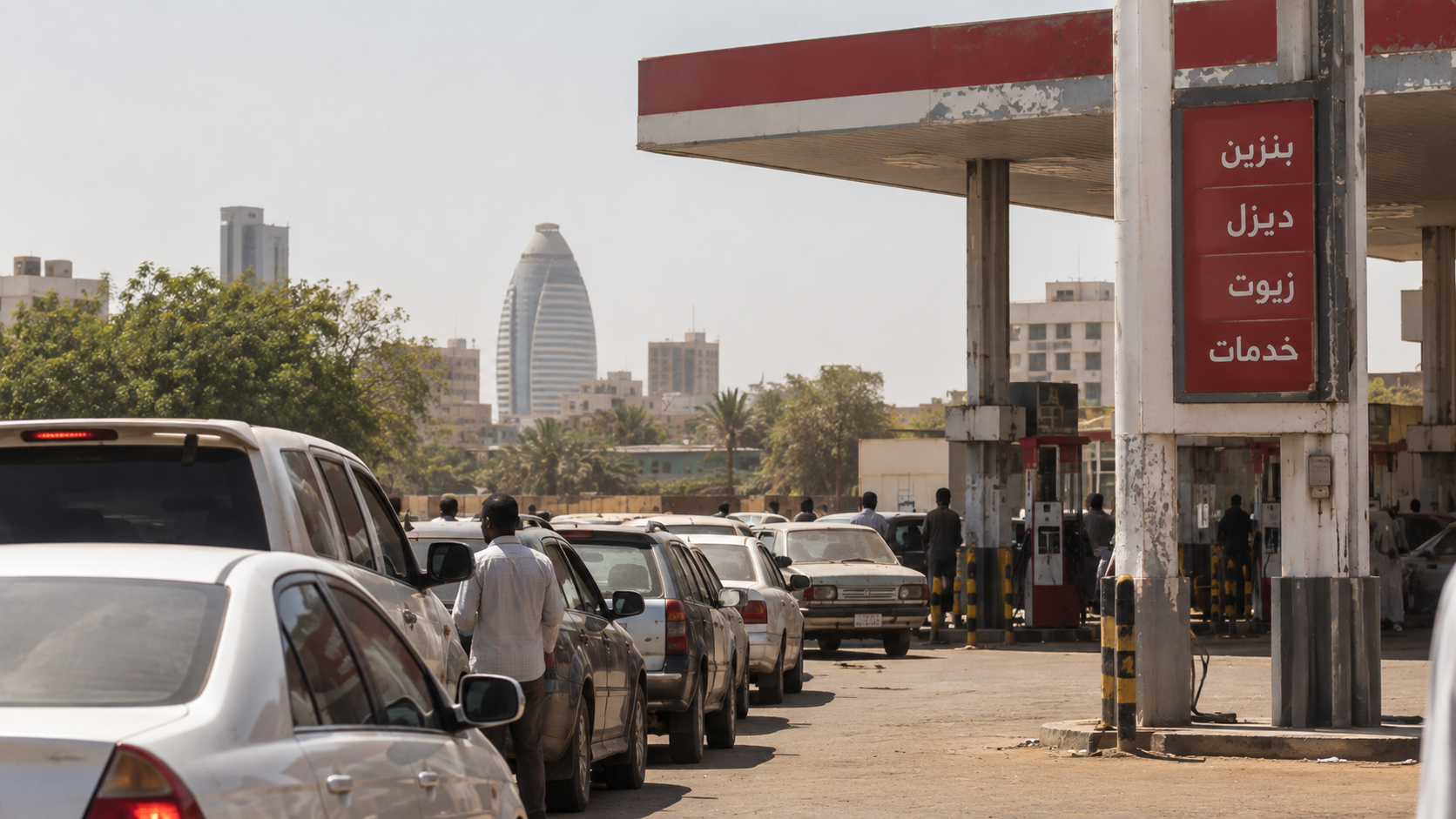
Fuel shortages have returned to Khartoum and several other parts of Sudan, leaving motorists facing long queues as prices rise in several states.
Some petrol stations in the capital have suspended sales or run out of supplies, according to residents cited by Radio Dabanga.
Meanwhile, authorities have introduced new fuel prices in several states. Sudan has also raised the exchange rate used to calculate customs duties.
Fuel shortages affect Khartoum
A Khartoum resident told Radio Dabanga that shortages were affecting both petrol and diesel in parts of the capital.
According to the resident, some stations stopped selling fuel amid expectations of further price increases.
He said some motorists suspected that stations were holding supplies until new prices took effect.
However, the report did not independently establish that fuel was deliberately being withheld.
Motorists have instead faced long searches for available fuel. Some have also turned to the black market, where prices can be higher.
The resident said queues could leave drivers waiting for hours and described fuel shortages and price adjustments as a recurring problem.
Fuel prices rise in several Sudanese states
New prices have also been reported in Red Sea, Kassala, Northern and White Nile states.
In Kassala, petrol reportedly rose to 36,216 Sudanese pounds per gallon. Residents also reported renewed queues and disruptions at petrol stations.
In Port Sudan, diesel reached 36,976 pounds per gallon, while petrol rose to 31,801 pounds.
Northern state raised the petrol price to 36,700 pounds per gallon.
Meanwhile, authorities in White Nile state set the price at 38,805 pounds in Kosti, Rabak, Al-Qutaynah and Al-Duwaym. Transport costs can push prices higher in other areas.
Customs exchange rate also increases
The fuel disruption comes as Sudan has raised the exchange rate used to calculate customs duties.
According to Radio Dabanga, the customs exchange rate increased on September 12 from 3,960.24 to 4,346.65 Sudanese pounds per US dollar.
That represents an increase of about 9.7%.
A higher customs exchange rate can increase the local-currency cost of duties on imported goods, adding pressure to import costs.
Earlier, on September 2, customs authorities denied reports that the rate had increased to 4,960.24 pounds. They said the applicable rate remained 3,960.24 pounds at that time.
The latest adjustment took effect 10 days later at the lower figure of 4,346.65 pounds.
For motorists, rising prices and inconsistent supplies are adding to transport costs across several parts of Sudan.