
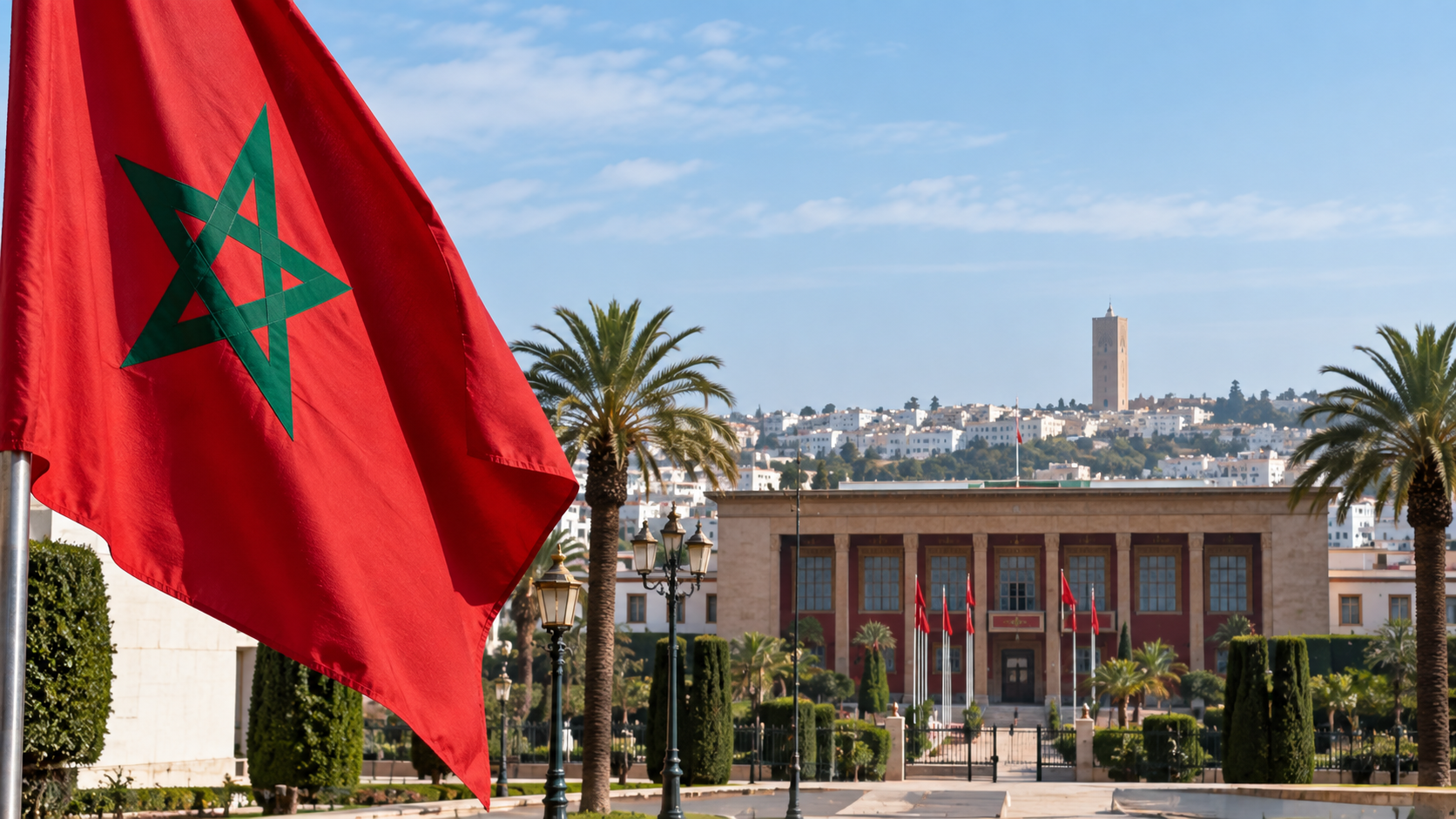
Morocco will hold parliamentary elections on September 23, with jobs, living costs and public services among the major issues facing voters.
A total of 27 political parties are competing for 395 seats in the House of Representatives.
More than 15.8 million people are registered to vote, according to figures cited by Al Jazeera.
Morocco election focuses on jobs and living costs
Economic concerns have become an important part of the campaign.
Morocco’s economy has continued to grow. However, unemployment remains a major challenge, particularly for younger people.
The International Monetary Fund estimated overall unemployment at 13 percent in 2025. Youth unemployment among people aged 15 to 24 reached 37.3 percent, according to figures cited by Al Jazeera.
Meanwhile, political parties have made employment, purchasing power and public services central parts of their campaigns.
The National Rally of Independents (RNI) has promised one million jobs and a gradual increase in the minimum wage to 5,000 dirhams per month.
The Authenticity and Modernity Party (PAM) has also pledged at least one million jobs.
Istiqlal has focused its campaign on purchasing power and public services, alongside healthcare, housing, employment, water management and food security.
Young voters in focus
Political participation among younger Moroccans has also received attention ahead of the vote.
An Afrobarometer survey cited by Al Jazeera found that roughly one-third of Moroccans aged 18 to 35 expressed trust in Parliament, the head of government and political parties.
However, younger Moroccans were more likely than older citizens to share political content online and participate in demonstrations.
Official figures also show a significant age difference among registered voters.
People aged 18 to 24 account for 4 percent of registered voters. Those aged 60 and above represent 29 percent.
Governing parties face opposition
The RNI, PAM and Istiqlal have governed Morocco as a coalition since the previous parliamentary election in 2021.
In that election, the RNI secured 102 seats, while PAM and Istiqlal won 87 and 81 seats respectively.
The Justice and Development Party (PJD), meanwhile, fell from 125 seats in the previous parliament to 13.
Led by former head of government Abdelilah Benkirane, the PJD is campaigning this year on proposals covering economic, social, institutional and foreign policy issues.
How Morocco forms its government
Morocco operates under the constitutional framework adopted in 2011.
Under Article 47 of the constitution, the king appoints the head of government from the political party that finishes first in elections to the House of Representatives.
The king also presides over the Council of Ministers, while the government exercises executive authority and Parliament carries out legislative and oversight functions.
As a result, the September 23 vote will determine the composition of the House of Representatives and play a central role in the formation of Morocco’s next government.
The election campaign runs until September 22, with voting scheduled for the following day.