
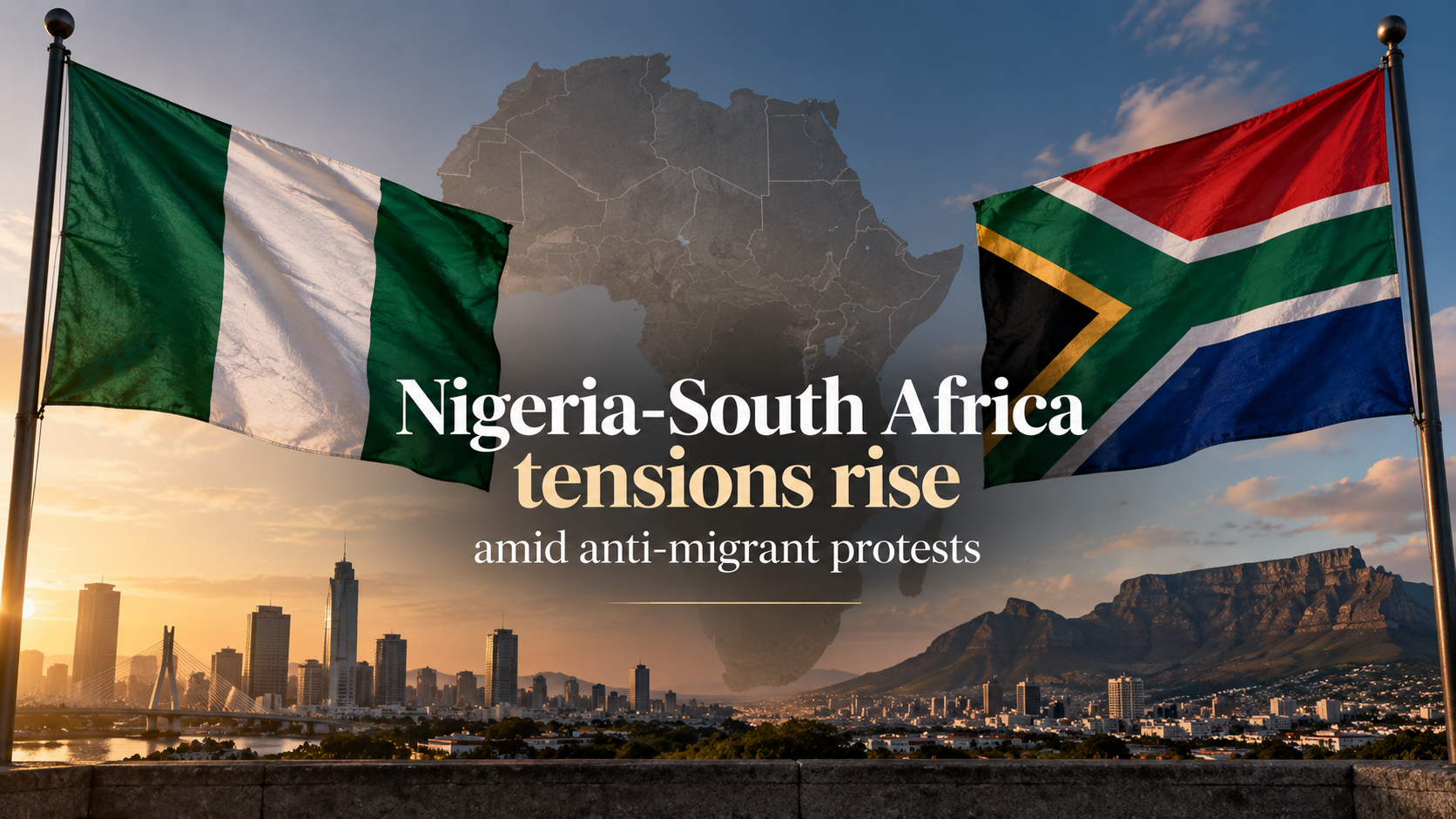
Tensions between Nigeria and South Africa have risen again following anti-migrant protests and concerns about the safety of Nigerians living in the country.
Some protest groups have called on undocumented migrants to leave South Africa by the end of September.
However, the deadline has no legal authority. South Africa’s government has stressed that immigration enforcement is the responsibility of the state.
The latest developments come months after similar protests took place across the country.
Nigeria raises concerns over citizens
Nigeria has raised concerns about violence affecting its citizens in South Africa.
The Nigerian government says nearly 100 of its nationals have died in mob attacks and other incidents linked to anti-migrant violence since 2022, according to Reuters and CNN.
Nigeria’s parliament has also suspended official visits and legislative engagements with South Africa.
Meanwhile, some Nigerians have chosen to leave the country.
Nearly 1,700 Nigerians have voluntarily returned from South Africa this year, according to Nigerian officials cited by CNN.
Nigerian community representatives also told CNN that some people had closed businesses, sought safety near the Nigerian mission or kept their children away from school because of security concerns.
South Africa rejects anti-migrant violence
South Africa’s government has publicly rejected xenophobia and vigilantism.
President Cyril Ramaphosa said in August that his government firmly rejected xenophobia, Afrophobia and discrimination against migrants.
The government has also stressed that private groups do not have the authority to enforce immigration laws.
In July, South African Foreign Minister Ronald Lamola travelled to Abuja for talks with Nigerian officials.
During the talks, both governments condemned xenophobic violence and discussed the protection of foreign nationals.
Recent deaths add to tensions
Concerns increased following the deaths of two Nigerian citizens in South Africa in September.
Nigeria’s foreign ministry said Michael Taiwo Fakunle was shot dead at his Johannesburg home on September 4.
A second Nigerian, James Uchechukwu Nwankwo, died the following day after being detained by police.
Nigeria’s foreign ministry raised allegations about his treatment in custody.
However, South African police gave a different account.
Police said Nwankwo had been arrested on suspicion of drug possession and developed breathing difficulties while being transported to a police station.
They said an inquest had been opened and that there were no visible signs that he had been assaulted.
Migration tensions affect wider relations
The dispute comes as South Africa continues to face a wider debate over immigration.
Migrants from several African countries have been affected by protests and government immigration operations.
Between June 14 and August 20, more than 86,000 foreign nationals were processed for repatriation and deportation, according to South African government figures.
Malawians made up the largest group.
Nigeria and South Africa remain two of Africa’s major economies.
Despite the latest tensions, diplomatic contacts between the two governments have continued.
Both countries have previously said they want to strengthen cooperation while addressing concerns over migration and the safety of foreign nationals.