
African leaders have renewed calls for Africa UN Security Council reform, demanding permanent representation and equal decision-making powers for the continent.
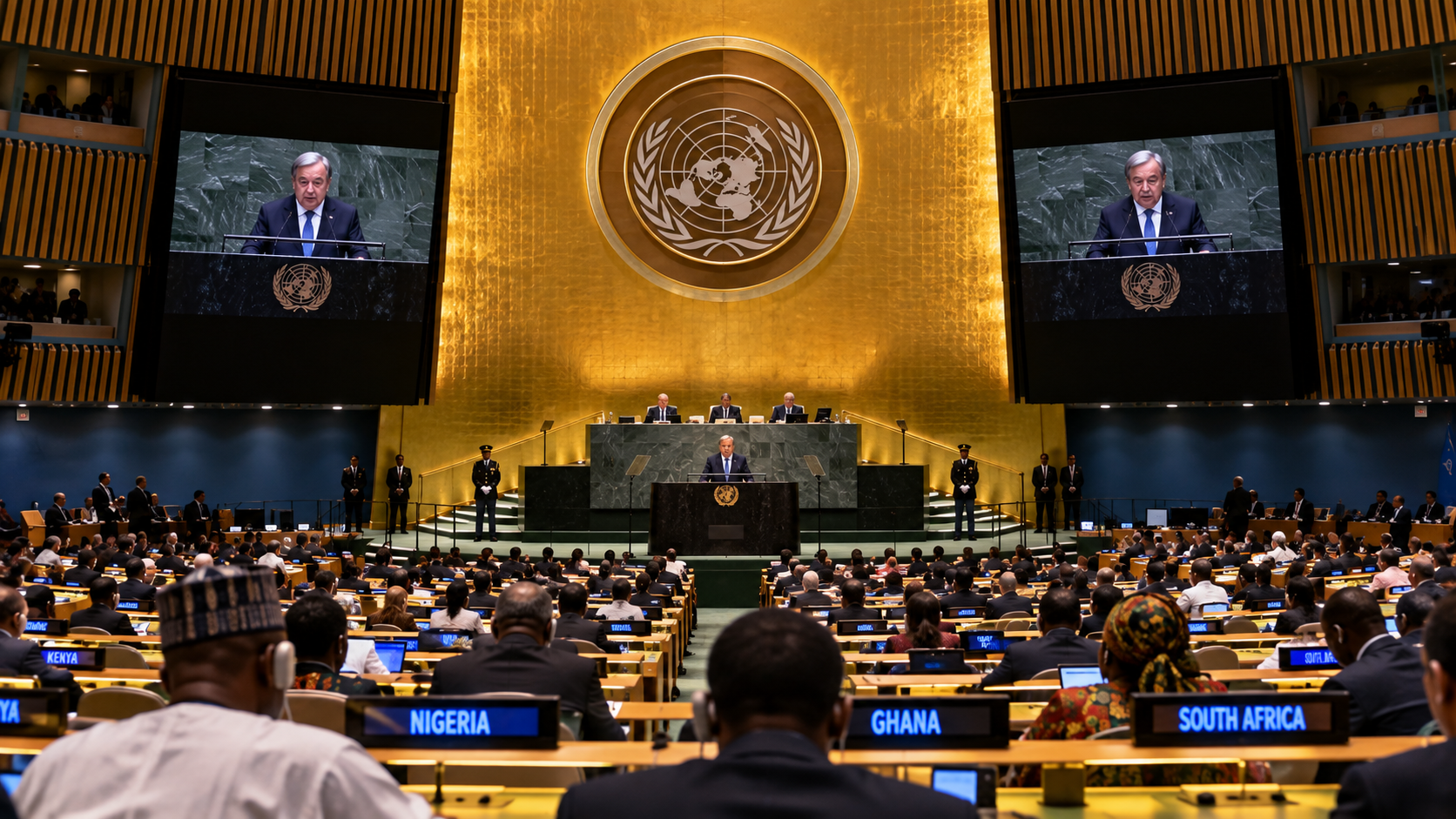
The issue has returned to the spotlight during the 81st United Nations General Assembly in New York.
Africa currently has no permanent member on the 15-member UN Security Council, despite accounting for 54 UN member states.
Nigeria and Ghana were among the countries calling for changes this week, while UN leaders have also acknowledged that Africa remains underrepresented in the organisation’s most powerful decision-making body.
Africa UN Security Council reform returns to UNGA
Nigeria called for at least two permanent Security Council seats for Africa, according to Al Jazeera.
Vice President Kashim Shettima, delivering President Bola Tinubu’s national statement, said the continent should also receive five non-permanent seats.
Nigeria’s position includes veto powers for new African permanent members for as long as the veto remains part of the Security Council system.
Ghana’s President John Mahama also called for reform, arguing that African representation is important to the UN’s legitimacy and credibility, Al Jazeera reported.
The renewed push comes as the UN General Assembly holds its annual high-level debate in New York.
What does Africa want?
The African Union has maintained a common position on Security Council reform for more than two decades.
Under the Ezulwini Consensus and Sirte Declaration, Africa is seeking at least two permanent seats and five non-permanent seats on an expanded Security Council.
The permanent African members should receive the same rights and privileges as existing permanent members, including veto power for as long as that power exists, according to the African Union.
The AU itself would determine which countries represent Africa in the proposed permanent seats.
The organisation reaffirmed that position again in 2026.
Why does Africa have no permanent seat?
The current Security Council has 15 members.
China, France, Russia, the United Kingdom and the United States are its five permanent members. Each has veto power over substantive Security Council decisions.
The remaining 10 seats are held by countries elected for two-year terms.
No African country is among the permanent five.
African governments have long argued that the structure reflects the international system that emerged after World War II rather than today’s geopolitical realities.
The president of the UN General Assembly also highlighted Africa’s underrepresentation during the opening of this year’s general debate, saying fairer representation should remain a priority.
Why has Security Council reform stalled?
Changing the structure of the Security Council requires broad international agreement.
Al Jazeera reported that intergovernmental negotiations on Security Council reform have continued since 2008 without agreement on major questions including permanent membership, regional representation and veto powers.
Changing permanent membership would ultimately require an amendment to the UN Charter.
That creates a high threshold for reform and gives the existing permanent members an important role in determining whether structural changes can proceed.
Former Nigerian Foreign Minister Ibrahim Gambari told Al Jazeera that the existing system gives the five permanent members privileges they may be reluctant to give up.
The question of which African countries would occupy any new permanent seats also remains unresolved.
Nigeria, South Africa and Egypt among potential candidates
Nigeria has repeatedly presented itself as a country prepared to assume a permanent Security Council role.
South Africa and Egypt have also pursued permanent representation, according to Al Jazeera.
However, the African Union has not officially selected the countries that would receive the proposed seats.
Its common position instead states that the AU should determine Africa’s representatives if permanent seats are created.
That means reform would require agreement not only at the UN level but eventually within Africa over representation.
The veto remains another obstacle
The veto is one of the most difficult issues surrounding Security Council reform.
The African Union opposes the veto in principle. However, its position is that if veto power continues to exist, new African permanent members should receive the same right.
The AU reiterated in 2026 that Africa should receive no fewer than two permanent seats with all the privileges of permanent membership, including the veto while it remains in place.
African governments argue that permanent seats without equivalent powers would leave a major imbalance in the Council’s structure.
Africa remains central to Security Council work
The debate is also linked to the Security Council’s extensive involvement in African peace and security issues.
Al Jazeera reported that 18 of the 24 resolutions adopted under Chapter VII of the UN Charter in 2025 concerned Africa.
Gambari told the outlet that African countries nevertheless have limited influence over some of the processes used to draft Security Council resolutions concerning the continent.
The African Union argues that this imbalance strengthens the case for permanent African representation.
For now, however, the fundamental questions remain unresolved.
UN members would need to agree on how the Council should expand, which countries would receive permanent seats and whether new members would receive veto powers.
Until those questions are settled, Africa’s decades-long campaign for permanent representation is likely to remain a central part of the wider debate over UN reform.