
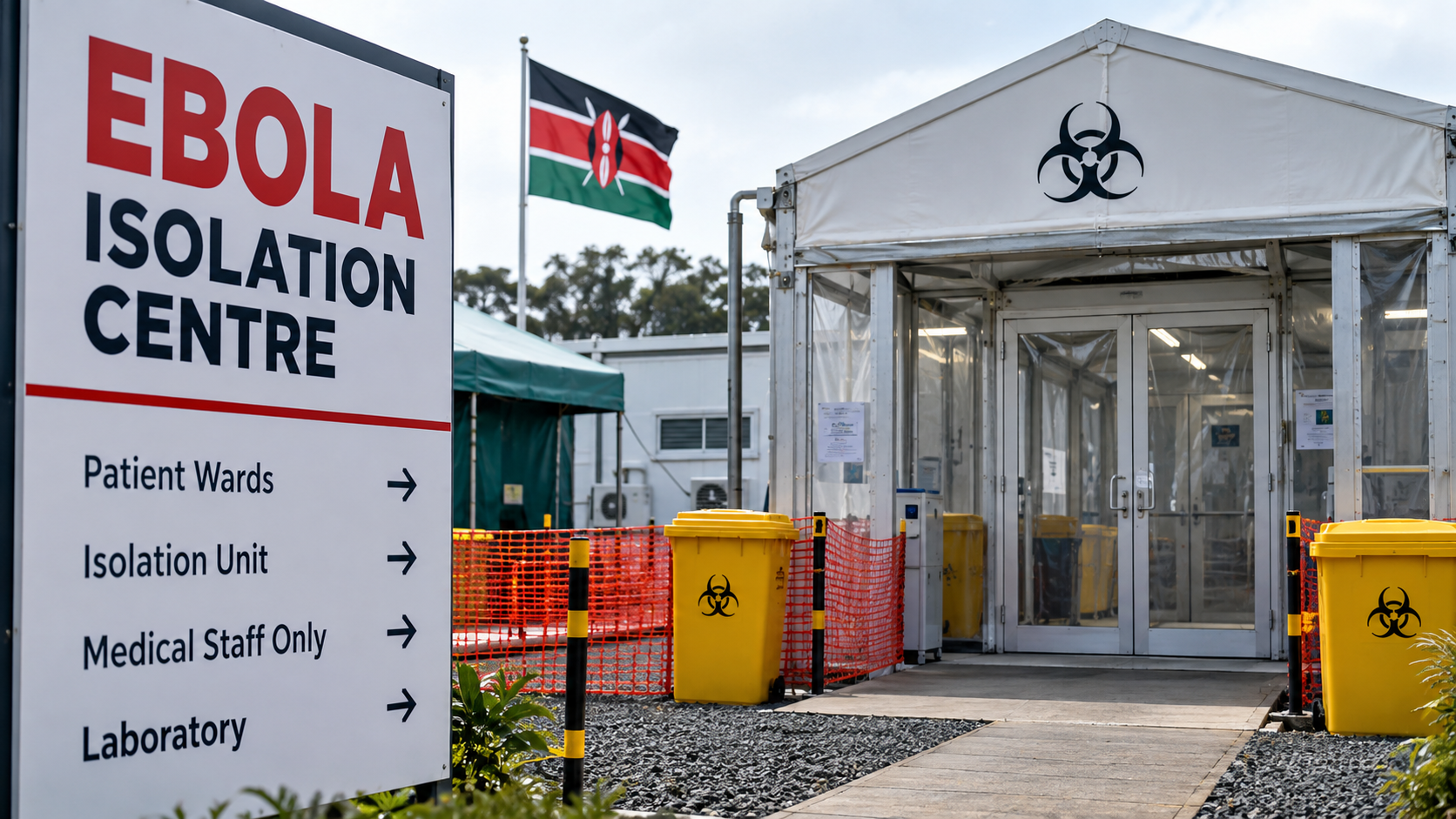
Kenya has strengthened its Ebola surveillance after the country’s first confirmed case raised concerns about border screening and regional health security.
The patient, a Kenyan man who had lived in the Democratic Republic of Congo for seven years, travelled through several countries before doctors detected the virus in Nairobi.
He had been ill for about a month. He travelled by road from Congo to Uganda before flying to Kenya on Saturday.
Doctors confirmed the infection at a Nairobi hospital. The man died on Monday.
According to Africanews, citing reporting from the Associated Press and AFP, the case has raised questions about how an infected traveller passed through several entry points without being detected.
Kenya Ebola surveillance faces scrutiny
The Kenya Ebola surveillance system has come under scrutiny following the patient’s journey.
Africa Centres for Disease Control and Prevention Director-General Jean Kaseya questioned how the man travelled across borders without health authorities identifying his illness.
Speaking to the Associated Press on Tuesday, Kaseya called for stronger surveillance at entry points.
He said countries must ensure that their border screening systems can identify potential Ebola cases.
The incident has highlighted the importance of cooperation between countries when monitoring infectious diseases.
Kenya strengthens border screening
Kenya’s Health Ministry has increased surveillance at border entry points following the confirmed case.
Authorities have also established an Ebola hotline. Members of the public can use it to report symptoms associated with the disease.
The government has designated five healthcare facilities to manage potential Ebola patients.
Together, these facilities provide 241 isolation beds. Officials are working to increase that capacity.
The ministry said Kenya has sufficient supplies of personal protective equipment and other essential materials.
It also said the country had been mobilising resources since the Ebola outbreak began in Congo in May.
Airport introduces special screening measures
Kenya has introduced additional precautions at its main international airport.
The Health Ministry said it had designated a specific gate for passengers arriving from 10 countries within the outbreak-affected region.
The measure forms part of wider efforts to strengthen screening and identify possible infections.
Authorities are also increasing preparedness at healthcare facilities.
How Ebola spreads
Ebola is a serious infectious disease that spreads through direct contact with the bodily fluids of infected people.
These fluids can include blood, vomit and semen.
The virus can also spread through contaminated materials, including clothing and bedding.
Ebola does not spread through ordinary airborne transmission in the way that illnesses such as measles do.
Early detection, safe medical care and contact tracing are important for controlling outbreaks.
Regional cooperation remains important
The first confirmed case has renewed attention on Kenya’s ability to detect infectious diseases entering the country.
The patient’s journey through multiple countries has also raised wider concerns about regional surveillance.
Africa CDC has stressed the need for strong screening systems at borders and other entry points.
Kenya’s latest measures aim to improve early detection and strengthen the country’s response to possible additional cases.