
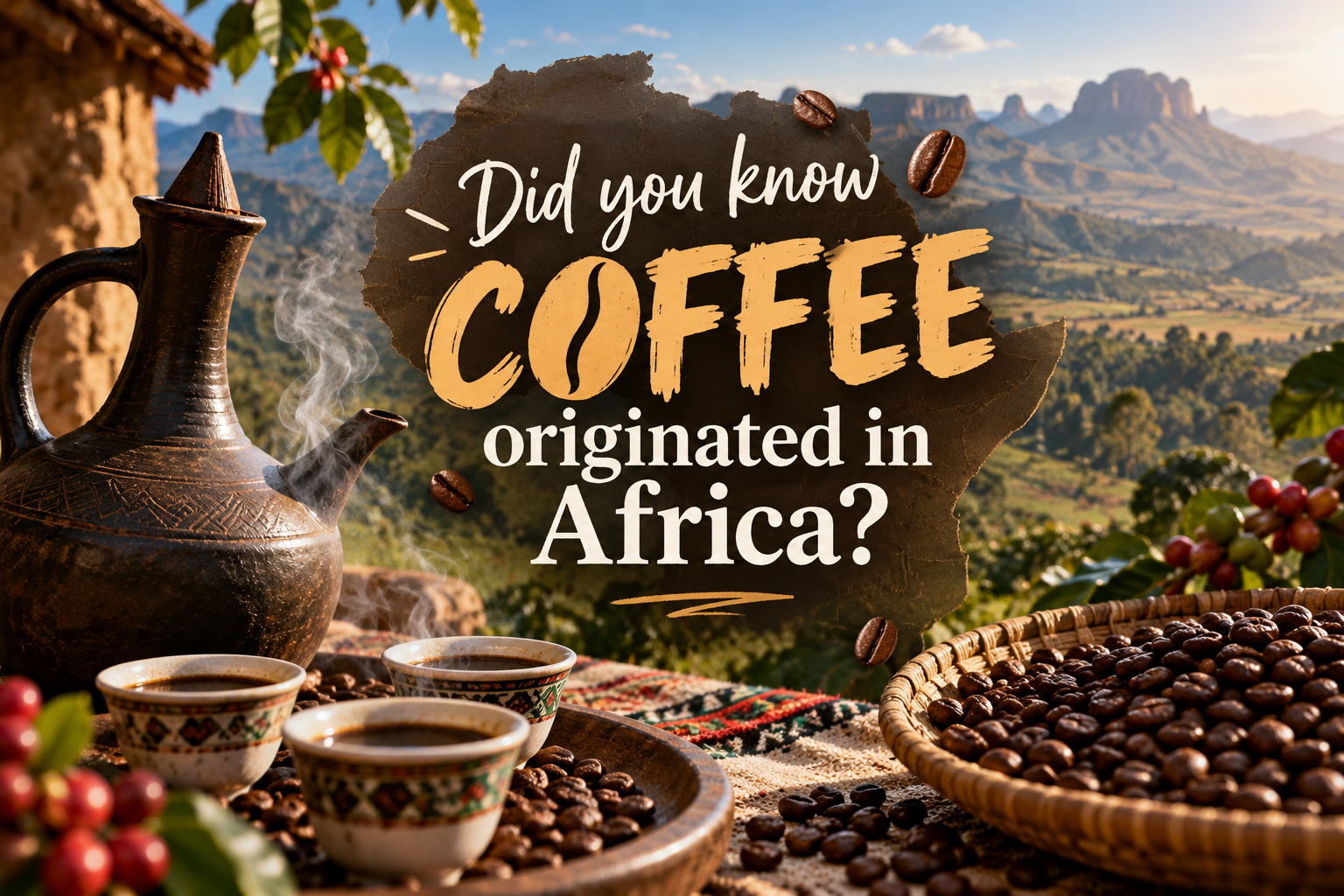
Coffee originated in Africa, with Ethiopia widely recognised as the birthplace of the Arabica coffee plant. Today, coffee is enjoyed by millions of people worldwide, but its history stretches back centuries to the highlands of East Africa.
From traditional Ethiopian coffee ceremonies to modern cafés across the world, coffee has become an important part of daily life in many cultures.
Although the exact circumstances surrounding its discovery remain uncertain, Ethiopia’s connection to coffee is supported by botanical research and longstanding cultural traditions.
Coffee originated in Africa: Ethiopia’s historic connection
The Arabica coffee plant, scientifically known as Coffea arabica, is native to the highlands of Ethiopia and neighbouring parts of East Africa.
These environments provided suitable conditions for wild coffee plants to grow long before coffee became a globally traded commodity.
Ethiopia remains home to significant genetic diversity among wild Arabica coffee plants.
This diversity is particularly important because it provides valuable resources for researchers working to improve coffee production and protect crops against disease and climate change.
However, historians distinguish between the natural origins of the coffee plant and the development of coffee as a prepared beverage.
While Ethiopia is recognised as Arabica coffee’s botanical homeland, evidence suggests that coffee drinking developed into a widespread social practice in Yemen during the 15th century.
The famous legend of Kaldi and his goats
One of the best-known stories about coffee’s discovery involves an Ethiopian goat herder named Kaldi.
According to the legend, Kaldi noticed that his goats became unusually energetic after eating berries from a particular plant.
Curious about their behaviour, he investigated the berries, eventually leading to the discovery of coffee’s stimulating properties.
The story has been repeated in books, tourism materials and popular accounts of coffee history.
However, historians have not established that Kaldi was a real person or that the events actually occurred.
The account is best understood as a traditional legend rather than a verified historical explanation.
How African coffee spread around the world
Coffee’s international journey developed through trade networks connecting East Africa, the Arabian Peninsula and other regions.
By the 15th century, coffee was being consumed in Yemen, where it became associated with social and religious gatherings.
Coffee cultivation and trade subsequently expanded across the Middle East.
During the following centuries, coffeehouses appeared in major cities, providing spaces for conversation, business and cultural exchange.
Coffee later reached Europe and other parts of the world through expanding commercial networks.
European colonial powers also established coffee plantations in tropical regions, sometimes relying on enslaved or otherwise coerced labour.
Over time, coffee became one of the world’s most widely traded agricultural products.
Ethiopia’s traditional coffee ceremony
Coffee continues to hold an important cultural place in Ethiopia.
The traditional Ethiopian coffee ceremony is a social occasion that brings families, friends and neighbours together.
The process typically begins with roasting green coffee beans over heat.
The roasted beans are then ground and brewed, often in a traditional clay coffee pot known as a jebena.
Coffee is commonly served in small cups, with several rounds offered during the gathering.
Beyond preparing a drink, the ceremony represents hospitality, conversation and community.
Practices vary between households and regions, reflecting Ethiopia’s cultural diversity.
Africa remains important to global coffee production
Africa continues to play a significant role in the international coffee industry.
Ethiopia is among the continent’s major coffee producers and is particularly associated with Arabica varieties.
Uganda is another important producer, with both Robusta and Arabica coffee contributing to its agricultural economy.
Robusta coffee, produced from Coffea canephora, also has African origins. The species is native to tropical regions of Central and West Africa.
Other African coffee-producing countries include Kenya, Tanzania, Rwanda, Burundi and Côte d’Ivoire.
Coffee farming supports livelihoods across the continent, although producers face challenges including changing weather patterns, crop diseases and fluctuating international prices.
Why Africa’s coffee history matters
Coffee’s origins demonstrate Africa’s longstanding contribution to global agriculture, trade and culture.
The continent is home to the wild ancestors of major commercially cultivated coffee species, while African farming communities continue to produce beans enjoyed internationally.
At the same time, the history of coffee involves many societies that helped develop cultivation, roasting, brewing and trade practices.
Recognising these different contributions provides a more complete understanding of how coffee became a global drink.
The next time you enjoy a cup of coffee, its history offers an interesting reminder of the important role African plants and agricultural traditions have played in shaping everyday life around the world.