
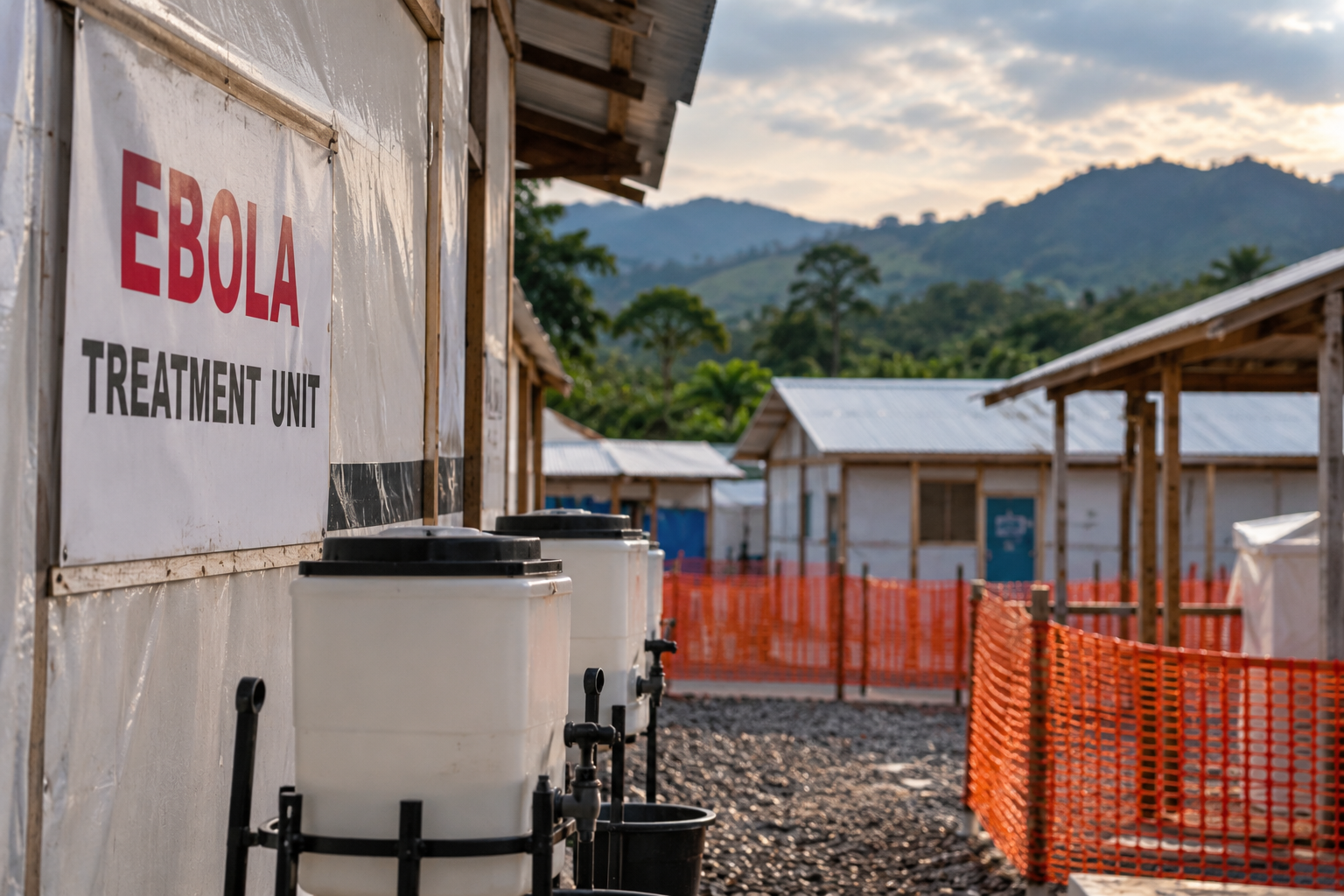
The Ebola outbreak in DR Congo has spread to another health zone in the country’s east, while Kenya has confirmed its first imported case, raising concerns about the risk of transmission across borders.
According to the World Health Organization (WHO), the outbreak had caused 8,728 confirmed infections and 4,205 deaths in the Democratic Republic of the Congo (DRC) as of October 6, 2026.
Health authorities are strengthening surveillance and contact tracing as treatment centres struggle with rising patient numbers.
The outbreak involves Bundibugyo virus disease, a form of Ebola for which there are currently no approved vaccines or specific treatments.
Ebola outbreak in DR Congo reaches new health zone
The WHO reported on October 8 that Alimbongo health zone in North Kivu province had recorded its first confirmed infections.
By October 6, the area had registered four confirmed cases, including two deaths.
The outbreak had reached 64 health zones across seven provinces, according to WHO figures cited by Al Jazeera.
Ituri province remained the worst affected in terms of cumulative infections. However, North Kivu was reporting a growing proportion of new cases.
Across the DRC, 2,269 patients had recovered, while the reported case fatality ratio stood at 48.2 percent.
The spread into additional areas has increased pressure on health authorities already facing insecurity, limited resources and difficulties reaching some communities.
Kenya confirms fatal imported Ebola case
Kenya confirmed its first imported case of Bundibugyo virus disease on October 6.
According to the WHO, the patient was a Kenyan citizen who had been living in the DRC.
The individual became ill while in the DRC and received treatment at several health facilities before travelling through Uganda.
The patient later flew from Kampala to Nairobi, arriving on October 3.
After being admitted to hospital and testing positive for the virus, the patient died on October 5 despite receiving supportive care.
Kenyan authorities identified 28 contacts, including relatives and healthcare workers.
Officials also began efforts to trace passengers and crew members who may have been exposed during the flight.
Kenya and Uganda have since strengthened surveillance and contact tracing measures.
Meanwhile, preliminary laboratory tests for a separate suspected case in Kenya’s Wajir County returned negative results on October 8.
The imported infection highlights the importance of cooperation between neighbouring countries in preventing further transmission.
Treatment centres struggle with rising infections
Healthcare facilities in eastern DR Congo are facing increasing pressure as the outbreak continues.
Medical charity Médecins Sans Frontières (MSF), also known as Doctors Without Borders, warned on October 5 that treatment capacity was under severe strain.
According to MSF, North Kivu accounted for nearly 40 percent of newly confirmed cases nationwide, compared with 24 percent at the end of August.
The organisation also reported that 34 percent of confirmed Ebola patients were receiving care in facilities not specifically equipped to treat the disease as of September 28.
A shortage of dedicated treatment beds and delays in diagnosis have contributed to the problem.
MSF warned that treating Ebola patients in facilities without appropriate infection-control measures could increase risks for other patients and healthcare workers.
Stephanie Hoffmann, who coordinates MSF’s Ebola treatment centre in Butembo, said the shortage of beds was forcing some confirmed patients to be referred elsewhere.
She warned that the situation could create additional risks for surrounding communities.
Misinformation and insecurity complicate response
Health officials are also struggling with misinformation and mistrust in parts of eastern DR Congo.
Community representatives in Beni and Butembo have warned that rumours about Ebola are discouraging some residents from cooperating with response teams.
Insecurity and attacks involving health workers have further complicated efforts to reach affected communities.
According to WHO figures, response teams were following up 23,741 of the 29,535 identified contacts as of October 4.
That represents 80.4 percent of identified contacts, below the response target of at least 85 percent.
Contact tracing is essential because it allows health workers to monitor people who may have been exposed and identify symptoms before further infections occur.
The Africa Centres for Disease Control and Prevention (Africa CDC) has called for stronger community engagement, early identification of cases and consistent monitoring of exposed individuals.
Health authorities call for stronger regional cooperation
The latest developments have renewed concerns about Ebola spreading beyond the DRC.
The country’s 2018–2020 Ebola outbreak, which involved a different Ebola virus species, killed nearly 2,300 people.
The current outbreak presents different medical challenges because no approved vaccine or specific treatment is available for Bundibugyo virus disease.
Early diagnosis, supportive medical care and infection prevention remain central to the response.
Africa CDC Director-General Jean Kaseya has emphasised the importance of identifying and monitoring every person exposed to the virus.
He said the outbreak could only be brought under control once the remaining chains of transmission had been interrupted.
As infections spread into new areas, health authorities face the challenge of expanding treatment capacity, maintaining public trust and strengthening cooperation across national borders.