
The Middle East economy is expected to contract in 2026 as the war involving the United States, Israel and Iran continues to disrupt energy supplies and regional trade, according to the International Monetary Fund (IMF).
In its latest economic outlook, released on Tuesday, October 13, the IMF forecast a 0.3% contraction across the Middle East and Central Asia this year.
The projection represents a sharp downgrade from the 1.9% growth forecast issued in April.
Several Gulf economies are expected to experience particularly severe declines as disruptions to oil exports place pressure on government revenues and economic activity.
Meanwhile, the IMF expects Sub-Saharan Africa to maintain positive growth despite wider global uncertainty.
Middle East economy faces sharp downturn
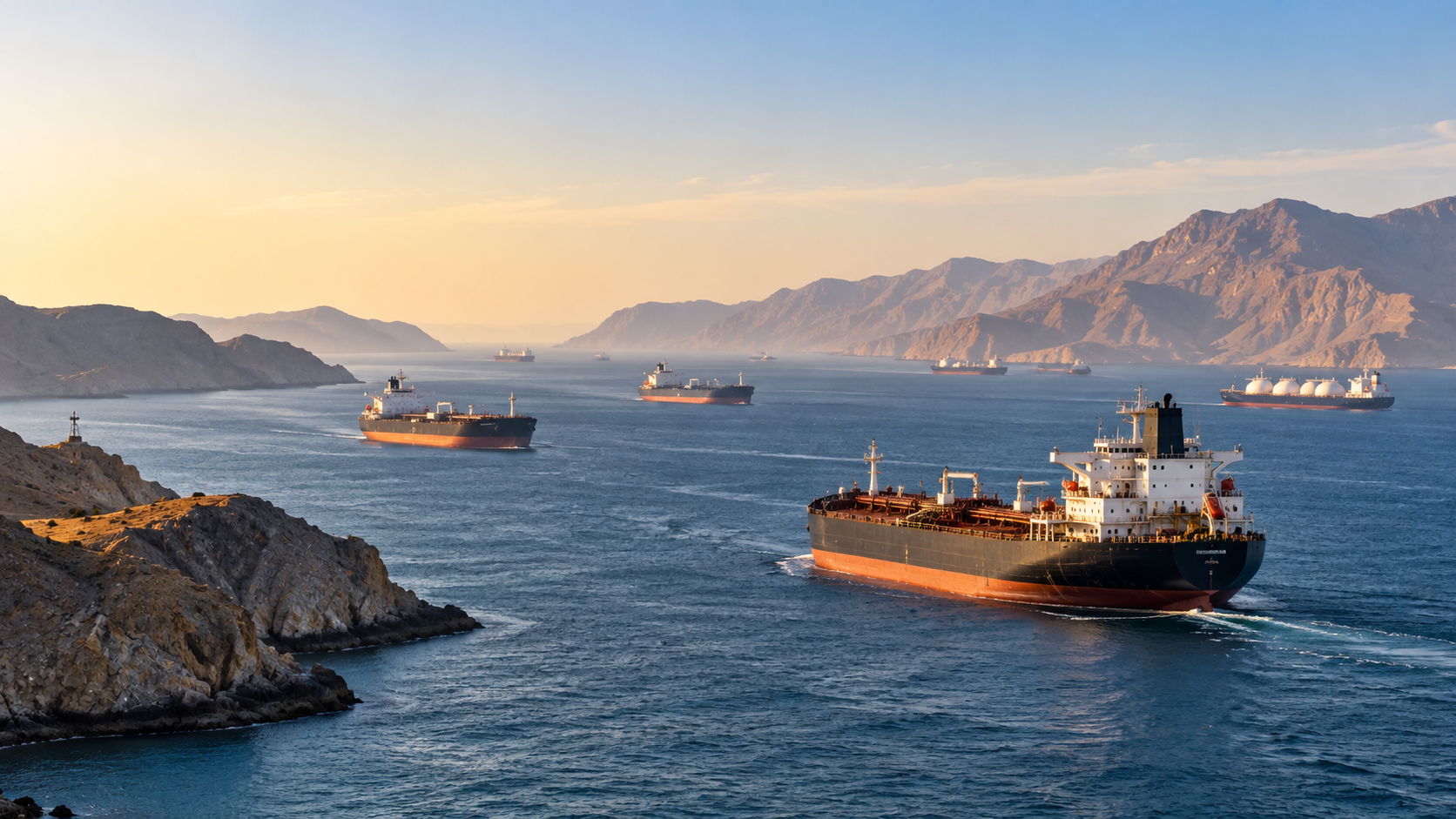
The IMF identified disruptions to shipping through the Strait of Hormuz as a major factor behind the weaker economic outlook.
The strategic waterway normally carries around one-fifth of the world’s oil supplies.
However, the ongoing conflict has severely affected maritime trade and energy shipments.
These disruptions have created significant challenges for oil-exporting countries that depend on access to international markets.
According to the IMF projections reported by Al Jazeera, Kuwait, Iraq and Qatar are among the countries facing the largest economic contractions.
Kuwait’s economy is expected to shrink by 16.7%, while Iraq faces a projected decline of 16%.
Qatar’s gross domestic product (GDP) is forecast to fall by 15.6%.
The figures highlight the scale of the economic disruption affecting several major energy producers.
Gulf economies face double-digit contractions
Bahrain is also expected to experience a substantial downturn.
The IMF forecasts an 11.3% contraction in the country’s economy this year.
Iran, which has been directly affected by the conflict, is projected to record a 7.6% decline.
Saudi Arabia faces a smaller but still significant contraction of 3.3%.
The kingdom has attempted to reduce the impact of disruptions in the Strait of Hormuz by increasing oil exports through its East-West pipeline.
This route allows some crude oil shipments to bypass the affected waterway.
However, the IMF projections suggest that alternative export routes have not fully offset the economic consequences of the conflict.
The forecasts remain subject to change as regional conditions develop.
Sub-Saharan Africa expected to grow 4.5%
Despite the downturn in the Middle East and Central Asia, the IMF expects economic growth to continue in other regions.
Sub-Saharan Africa’s economy is forecast to expand by 4.5% in 2026.
That compares with projected growth of 5.1% across emerging and developing Asia.
Latin America and the Caribbean are expected to grow by 2.3%.
These projections indicate that the Middle East and Central Asia is the only major region expected to experience an overall economic contraction this year.
However, positive regional growth does not mean that individual African economies are unaffected by the conflict.
Changes in global energy prices, shipping costs and trade conditions can influence economic activity across the continent.
Oil-importing countries may face additional pressure if energy costs remain elevated.
At the same time, the effects on individual economies will depend on their trade relationships, energy needs and domestic conditions.
Global economy remains resilient despite conflict
The IMF expects the global economy to expand by 3.1% in 2026.
This represents a slight improvement from its previous forecast of 3%.
The United States is projected to grow by 2.3%, while China’s economy is expected to expand by 4.5%.
The eurozone is forecast to record growth of 1.1%.
Kyrgyzstan is expected to lead growth within the Middle East and Central Asia grouping, with a projected expansion of 9%.
These figures suggest that economic activity remains resilient in several major markets despite geopolitical uncertainty.
Nevertheless, the IMF warned that the outlook continues to face significant risks.
IMF warns of further economic risks
The IMF identified escalating conflicts, renewed trade tensions and fiscal vulnerabilities as potential threats to global growth.
It also highlighted uncertainty surrounding expectations for artificial intelligence investment.
A reassessment of those expectations could affect financial markets and economic activity.
However, the institution said stronger productivity gains from artificial intelligence could support growth.
An easing of geopolitical and trade tensions could also improve the economic outlook.
For the Middle East, the direction of the conflict and the restoration of reliable shipping routes will remain important factors.
Meanwhile, African economies will continue to navigate the wider effects of energy market disruptions and changing global trade conditions.
The latest IMF forecasts underline how regional conflicts can have economic consequences extending far beyond the countries directly involved.