
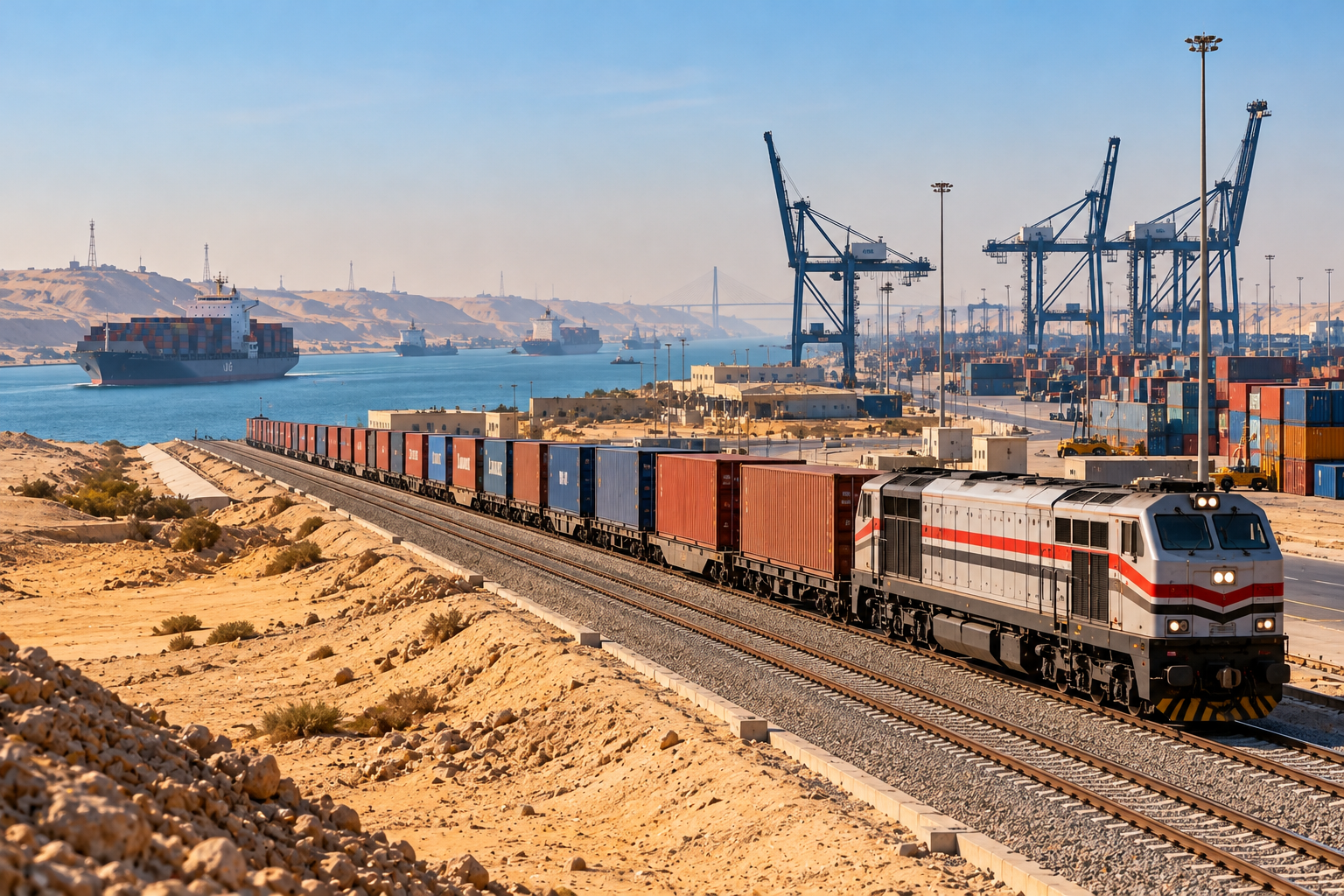
Egypt is developing an $8.7 billion railway network to improve trade between the Red Sea and the Mediterranean. The Egypt railway project aims to reduce shipping delays and provide an alternative freight route during disruptions in the Suez Canal.
The new network will connect major ports, cities and industrial centres across the country. It will also strengthen Egypt’s position as an international trade hub.
According to Africanews, the railway could carry up to 13 million tonnes of freight each year once fully operational.
Why is Egypt investing in a new railway?
The Suez Canal is one of the world’s busiest shipping routes. It traditionally handles around 12% of global maritime trade.
However, security threats in the Red Sea have disrupted shipping operations. As a result, some companies have redirected vessels around South Africa’s Cape of Good Hope.
These longer journeys have increased transport costs and delayed deliveries. They have also reduced Egypt’s revenue from canal traffic.
Therefore, Egypt wants to offer businesses another way to move goods between the Red Sea and the Mediterranean.
The railway will support the canal rather than replace it.
Egypt railway project to connect major ports
The $8.7 billion railway forms part of a wider transport network stretching approximately 2,000 kilometres.
It will connect ports, industrial areas and major cities across Egypt.
The network has earned the nickname “Suez Canal on Rails” because of its role in transporting goods between the country’s coastlines.
For example, companies could unload cargo at Red Sea ports and transfer it onto freight trains.
The trains would then transport the goods to Mediterranean ports for shipment to international markets.
Once completed, the network could handle up to 13 million tonnes of freight annually.
However, the railway is still under development. Its full benefits will depend on efficient connections between ports and rail terminals.
Egypt attracts billions in logistics investment
Egypt is also expanding its roads, ports and industrial infrastructure.
The Suez Canal Economic Zone has attracted more than $16 billion in investment, according to Africanews.
The zone supports manufacturing, logistics and international trade.
Egyptian Economy and Planning Minister Ahmed Rostom said the government had invested heavily in transport infrastructure.
These investments aim to give trading partners more options for moving goods across Egypt.
In addition, the government hopes to attract private companies to new logistics centres.
Improved infrastructure could also create opportunities for businesses involved in freight transport and manufacturing.
How could the railway benefit African trade?
The Egypt railway project could also strengthen trade connections across Africa.
Egypt hopes to connect its transport infrastructure with regional trade corridors.
These links could support the African Continental Free Trade Area (AfCFTA), which aims to increase trade between African countries.
For instance, exporters could use improved transport routes to reach Mediterranean ports and European markets.
Better connections could also reduce delays and support regional supply chains.
However, these benefits will depend on additional infrastructure and cooperation between countries.
Can the railway replace the Suez Canal?
The new railway will provide an alternative freight route, but it will not replace the Suez Canal.
Large cargo ships can transport huge quantities of goods directly through the waterway.
By comparison, rail transport requires companies to unload, transfer and reload shipments.
These additional steps can increase costs.
Nevertheless, railway connections could help businesses avoid certain shipping delays.
They could also provide more flexibility during periods of disruption.
Egypt aims to become a major logistics hub
Egypt continues to invest in transport infrastructure to strengthen its role in international trade.
The railway network could improve connections between the Red Sea and Mediterranean ports.
It may also support industrial growth and expand trade opportunities across Africa.
As construction progresses, the Egypt railway project could become an important part of the country’s wider logistics strategy.
For now, the government sees the railway as another way to protect trade flows and reduce dependence on a single maritime route.