
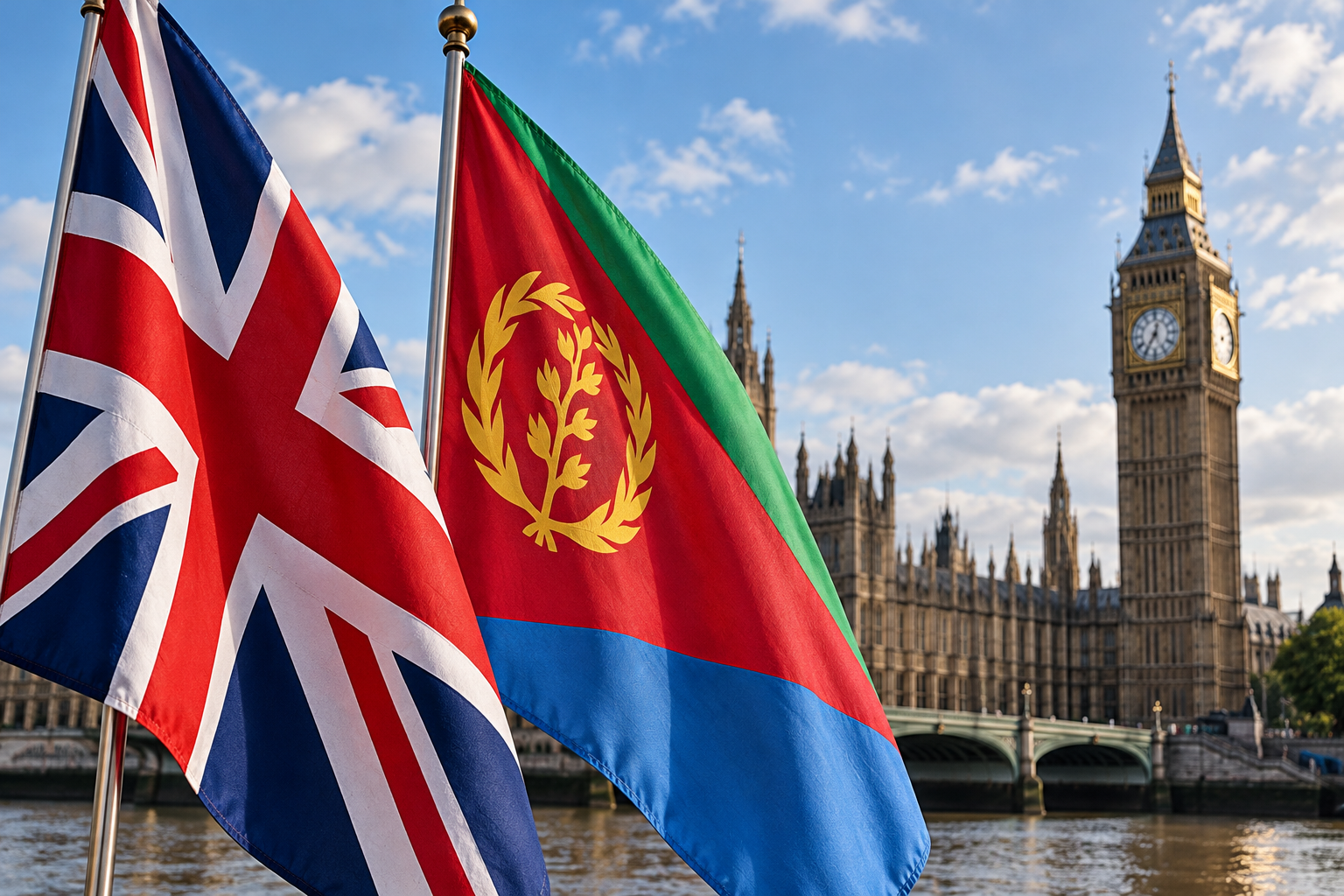
The United Kingdom has threatened to impose a complete visa ban on Eritrean nationals unless Eritrea agrees to cooperate with the return of migrants whose asylum applications have been rejected and convicted criminals.
British Home Secretary Shabana Mahmood announced the warning on Thursday, October 15, as tensions between London and Asmara increased over migration arrangements.
According to Africanews and international news agencies, the British government has already introduced restrictions affecting Eritrean officials and diplomats.
The UK says Eritrea withdrew its cooperation on migrant returns earlier this year, despite repeated diplomatic efforts to resolve the dispute.
UK visa ban threat targets Eritrea over migrant returns
Mahmood warned that Eritrean nationals could face a complete ban on entering the UK if their government does not resume cooperation on returns.
The proposed restrictions would represent a significant escalation in Britain’s efforts to secure the return of individuals who no longer have legal permission to remain in the country.
However, the government has not announced when a complete visa ban might take effect.
The warning follows months of discussions between British and Eritrean authorities.
According to the UK Home Office, Eritrea abruptly stopped cooperating with returns earlier this year.
British officials say they subsequently attempted to resolve the issue through private diplomatic channels.
Those efforts have not produced an agreement, according to the government.
Eritrean diplomats face new UK restrictions
Britain has already introduced measures targeting Eritrean officials.
The government has removed fast-track visa access previously available to Eritrean VIPs and officials.
Additionally, Eritrean diplomats based in Britain now face restrictions on travelling outside London.
Under the new measures, diplomats must obtain permission from the Foreign Office before travelling more than 60 kilometres beyond the capital.
The restrictions took effect on Thursday.
The British government has presented these measures as part of its response to Eritrea’s refusal to cooperate with migrant returns.
However, Eritrea’s government has not been quoted responding to the latest measures in the available reporting.
Eritreans among largest groups arriving by small boat
The dispute comes as Eritrean nationals account for a significant proportion of people arriving in Britain through irregular Channel crossings.
According to British government figures cited in the reporting, Eritreans were the most common nationality among small-boat arrivals during the year ending June 2026.
The government says it has struggled to return Eritrean nationals whose asylum applications have been rejected.
Over the past four years, 2,626 Eritreans reportedly had their asylum claims refused.
However, fewer than 4% of those individuals were deported, according to the British government.
Officials argue that cooperation from countries of origin is necessary to enforce immigration decisions.
The figures concern people whose asylum applications were rejected and should not be interpreted as applying to all Eritrean asylum seekers in Britain.
Britain warns other countries over migrant returns
Mahmood also warned that other countries could face similar restrictions if they refuse to cooperate with the return of their nationals.
The British government says effective returns arrangements are essential to its immigration system.
It wants countries to accept nationals who have exhausted their asylum options or are subject to removal following criminal convictions.
However, immigration enforcement remains subject to Britain’s domestic legal obligations and international protections.
These include rules preventing people from being returned to countries where they face a real risk of persecution or serious harm.
The proposed visa ban would affect entry permissions, while individual removal decisions remain a separate legal matter.
UK-Eritrea diplomatic tensions deepen
The latest warning adds pressure to relations between Britain and Eritrea.
London has linked its visa policy directly to Eritrea’s willingness to cooperate with migration enforcement.
Meanwhile, the new restrictions on diplomats and officials signal a broader diplomatic response.
It remains unclear whether Eritrea will change its position or whether Britain will proceed with a complete visa ban.
The available reporting does not include an official Eritrean response to Thursday’s announcement.
For now, the British government has indicated that further restrictions remain possible if negotiations fail.
The dispute highlights the growing importance of migrant returns in Britain’s immigration policy and its diplomatic relationships with countries of origin.