
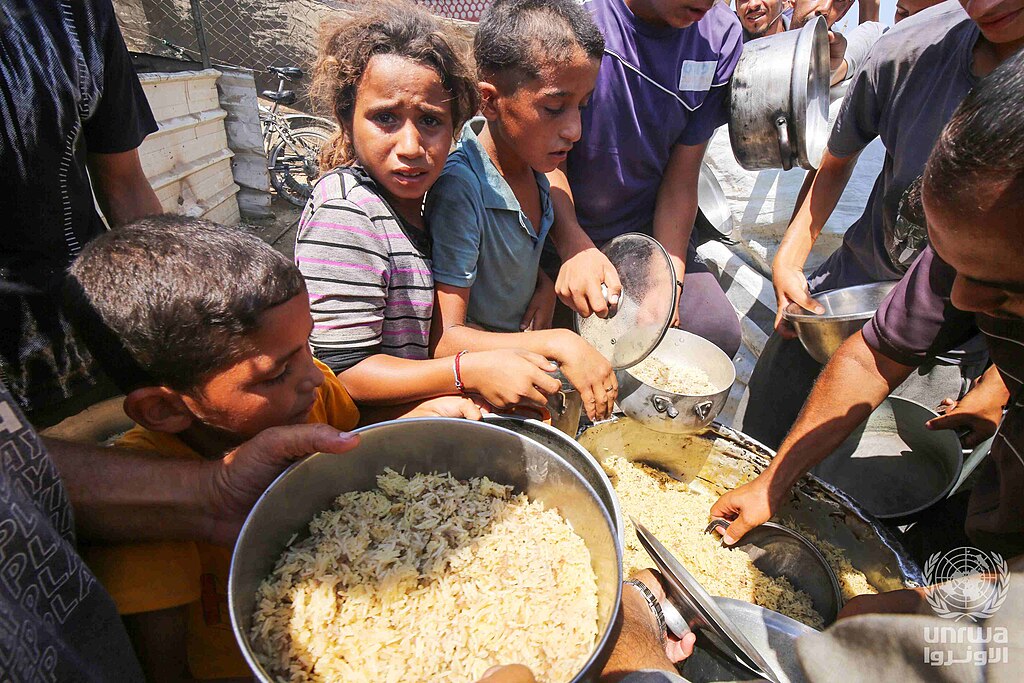
Malnutrition and starvation in Gaza have reached catastrophic levels, according to the Palestinian Ministry of Health. The ministry warned that more than 1.4 million Palestinians could face severe food shortages through the end of 2026.
The warning comes despite a US-brokered ceasefire intended to improve access to food and medical supplies.
According to Al Jazeera, Gaza’s Health Ministry released the figures on Friday to mark World Food Day.
Gaza starvation crisis claims hundreds of lives
At least 466 Palestinians have died from malnutrition and starvation since 2024, the ministry reported.
Children accounted for around one-third of those deaths.
Meanwhile, elderly Palestinians made up the largest group, with 189 reported deaths. That represents 40.5% of the total.
The ministry also reported that 11% of older Palestinians had gone an entire day without eating.
In addition, 48% had reduced their food portions to help feed their families.
These figures highlight the growing pressure on vulnerable communities across Gaza.
Thousands of children need urgent treatment
The ministry estimates that 74,200 children will need treatment for acute malnutrition through April 2027.
Pregnant women also face serious health risks.
According to the ministry, anaemia affected 61% of pregnant women in 2026. Before the war began in October 2023, the figure stood at 41%.
Furthermore, health officials recorded nearly 4,000 pregnancy losses during the first half of 2026.
That number was more than three times the total recorded during the previous six months.
However, the ministry’s figures do not establish how many of those losses resulted directly from malnutrition.
Food insecurity threatens 1.4 million Palestinians
The ministry warned that more than 1.4 million people could face crisis-level food insecurity or worse through December 2026.
That represents approximately 67% of Gaza’s population.
As winter approaches, families face growing concerns over food supplies and access to basic services.
Many Palestinians continue to depend on humanitarian assistance after years of war, displacement and restrictions on essential supplies.
UNICEF warns that progress remains fragile
The United Nations children’s agency, UNICEF, warned that recent improvements in food access could quickly disappear.
According to a UNICEF report published on Friday, increased humanitarian assistance and commercial deliveries helped reduce the risk of prolonged famine.
However, acute malnutrition remains a serious threat.
UNICEF spokesperson Ricardo Pires urged authorities to maintain a reliable flow of essential supplies into Gaza.
He warned that further disruptions could have serious consequences for children and families.
The agency stressed that food, medicine and other essential goods must continue entering the territory.
Israel and Hamas dispute supply restrictions
Meanwhile, Israel said on Wednesday that commercial goods had not entered Gaza for several days.
Israeli authorities blamed the disruption on a tax dispute involving local merchants and Hamas.
However, Hamas rejected the accusation as baseless.
Gaza’s Government Media Office also disputed Israel’s explanation.
The disagreement comes as Palestinians continue to struggle with limited access to food and other essential goods.
Gaza Health Ministry calls for international action
Gaza’s Health Ministry urged the international community to ensure unrestricted access to food and medical supplies.
It also called for support to restore local food production.
The ministry warned that the humanitarian situation could deteriorate further without sustained assistance.
For families across Gaza, reliable access to food remains essential as the territory faces another difficult winter.