
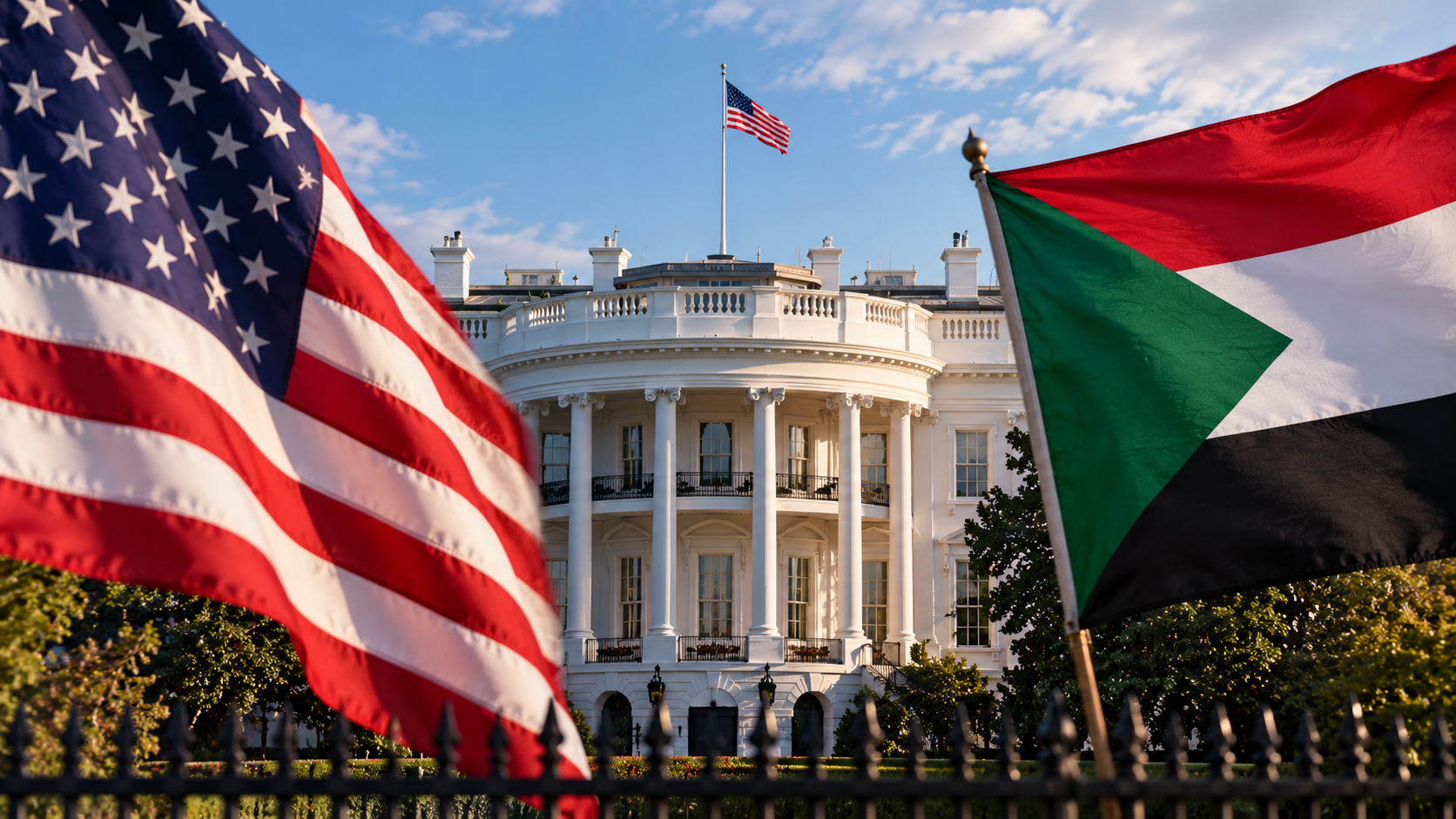
The United States has extended its national emergency relating to Sudan for another year, citing continued threats to American national security and foreign policy.
The White House issued the renewal notice on October 15, 2026.
The decision keeps the emergency framework in place beyond November 3, 2026.
However, the announcement does not introduce new sanctions against Sudan.
Why did the US extend Sudan’s national emergency?
The White House said the conditions behind the emergency remain unresolved.
According to the presidential notice, the US continues to view developments in Sudan as a threat to its national security and foreign policy.
The notice refers to the policies and actions of Sudan’s government.
It also highlights conditions in Sudan and the Darfur region.
As a result, Washington has decided to maintain the existing emergency framework for another year.
However, the renewal does not announce additional restrictions.
Sudan emergency first declared in 1997
The United States first declared a national emergency relating to Sudan in November 1997.
The measure established a legal framework for US restrictions linked to Sudan.
In 2006, Washington expanded the emergency in response to the conflict in Darfur.
The expanded measures included asset freezes targeting certain individuals linked to the region.
However, the scope of US sanctions has changed several times since then.
Some earlier restrictions were revoked in 2017.
The latest renewal does not restore those revoked provisions.
US expanded Sudan measures in 2023
Washington widened the emergency framework again in May 2023.
That decision followed Sudan’s October 2021 military takeover and the outbreak of fighting in April 2023.
The conflict has since created a severe humanitarian crisis.
Millions of Sudanese have been displaced, while communities continue to face insecurity and disrupted services.
The 2023 expansion provided a framework for measures targeting individuals and entities linked to the conflict.
However, the October 2026 renewal does not identify new sanctions targets.
What does the renewal mean for Sudan?
The decision allows the United States to maintain the emergency authorities already in place.
These authorities support certain sanctions and other measures related to Sudan.
However, renewing a national emergency is not the same as imposing a new nationwide trade ban.
The announcement also does not mean that every Sudanese individual or business faces US sanctions.
Instead, the practical effects depend on the specific restrictions and designations currently in force.
Therefore, the latest notice should be understood as a continuation of existing legal authorities.
White House to notify Congress
The presidential notice is scheduled for publication in the Federal Register on October 19.
It will also be transmitted to the US Congress.
These steps form part of the legal process for continuing a national emergency.
The renewal extends the framework for another year beyond November 3, 2026.
However, the White House has not announced a new sanctions package in the notice.
Sudan remains under US emergency measures
The latest decision shows that Washington continues to view the situation in Sudan as a foreign policy and security concern.
The emergency framework has remained in place through several periods of political change and conflict.
Meanwhile, Sudan continues to face major humanitarian and security challenges.
For now, the United States has chosen to maintain its existing emergency authorities rather than announce new restrictions.
Any further sanctions would require separate action by US authorities.