
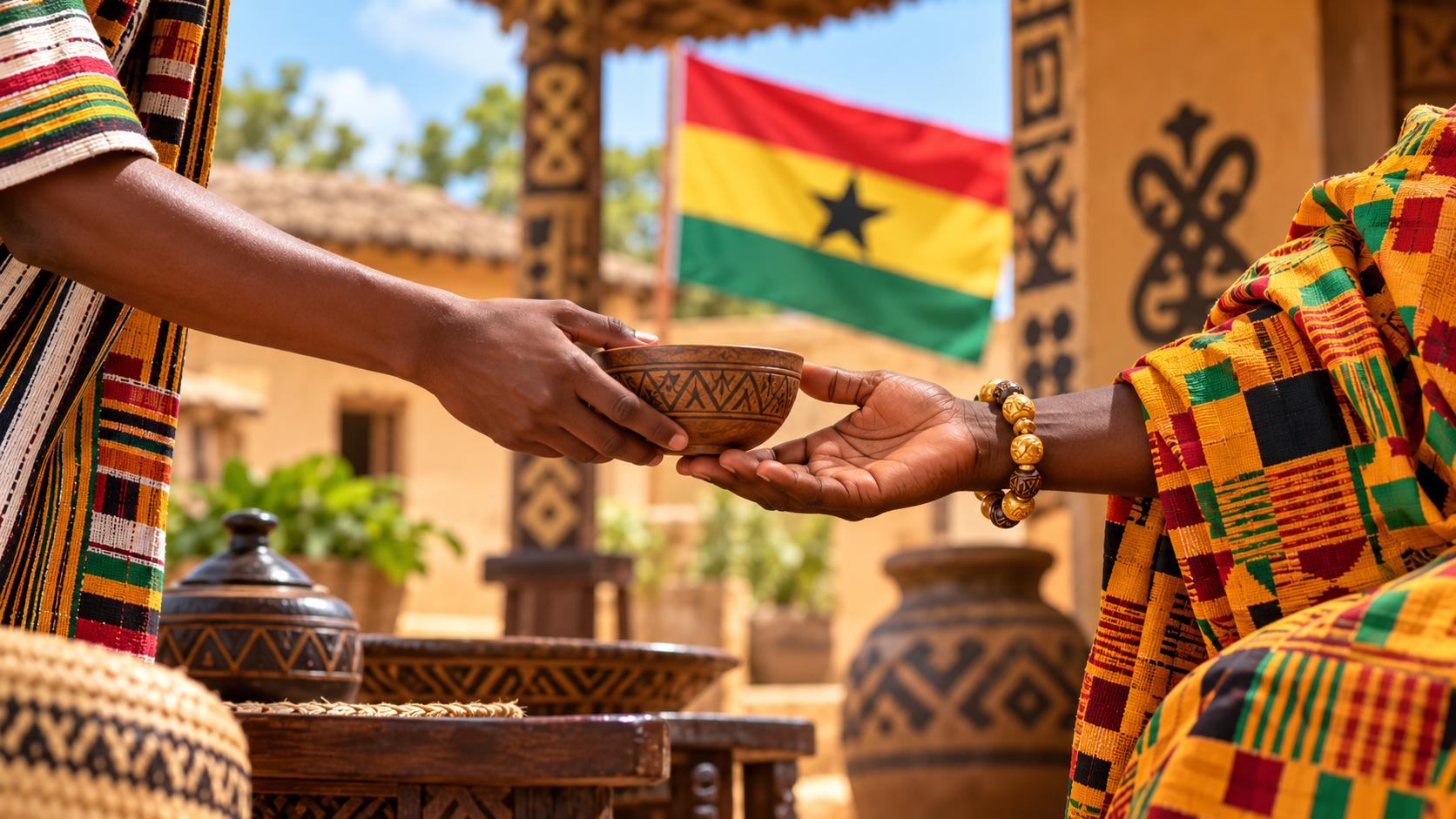
In Ghana, a simple gesture can carry a deeper meaning. Giving someone an item with your left hand may be considered disrespectful in some communities.
For many Ghanaians, using the right hand when greeting, giving or receiving something is an important sign of courtesy.
The custom reflects traditional ideas about cleanliness, respect and good manners.
However, it is not a rule followed by every Ghanaian. Practices vary across families, communities and generations.
Why is the left hand considered disrespectful?
In many Ghanaian communities, the right hand is traditionally preferred for social interactions.
People commonly use it to shake hands, offer food, exchange money or hand over objects.
Historically, the left hand has been associated with personal hygiene in some cultural settings.
As a result, using the right hand became a way of showing consideration for others.
The custom is especially noticeable when interacting with elders or respected community members.
However, the meaning of a gesture depends on the situation and the people involved.
Respect for elders is important in Ghana
Respect for elders is an important value in many Ghanaian families.
Children may learn from an early age to greet older people politely and use their right hand when offering or receiving items.
For example, a young person handing an object to an elder may deliberately use their right hand.
The gesture can communicate respect without a single word.
In some settings, people may also support their right forearm with their left hand when greeting or presenting something.
Such practices reflect wider traditions of courtesy and social responsibility.
What happens if someone uses their left hand?
Using the left hand does not automatically cause offence.
However, some people may consider it impolite, particularly during formal greetings or interactions with elders.
A visitor unfamiliar with the custom might receive a gentle correction.
Others may not mind at all.
Therefore, it is important not to assume that every Ghanaian will react in the same way.
The intention behind the gesture also matters.
Someone using their left hand because of an injury, disability or practical necessity should not be judged as deliberately disrespectful.
Is the tradition connected to religion?
The preference for the right hand also exists in several other societies.
In Islamic teachings, the right hand is encouraged for certain activities, including eating and drinking.
However, Ghana’s social customs should not be explained through religion alone.
Ghana is home to diverse religious and cultural communities.
The practice also exists in non-Muslim settings and reflects longstanding social traditions.
Therefore, it is more accurate to describe the custom as part of Ghanaian etiquette rather than a rule belonging to one religion.
Similar customs exist across Africa
Ghana is not the only African country where the right hand has cultural importance.
Similar customs can be found in parts of Nigeria, Senegal and other West African societies.
In these settings, people may prefer to greet others or offer objects with their right hand.
However, traditions differ between communities.
What is considered polite in one setting may not carry the same meaning elsewhere.
Understanding these differences can help visitors communicate respectfully.
A small gesture with a bigger meaning
Ghana’s right-hand tradition shows how everyday actions can reflect cultural values.
A handshake, a shared meal or the simple act of giving someone an object can express respect.
For visitors, learning these customs can make social interactions more comfortable.
For many communities, the tradition is about more than which hand someone uses.
It reflects the importance of consideration, courtesy and treating others with dignity.