
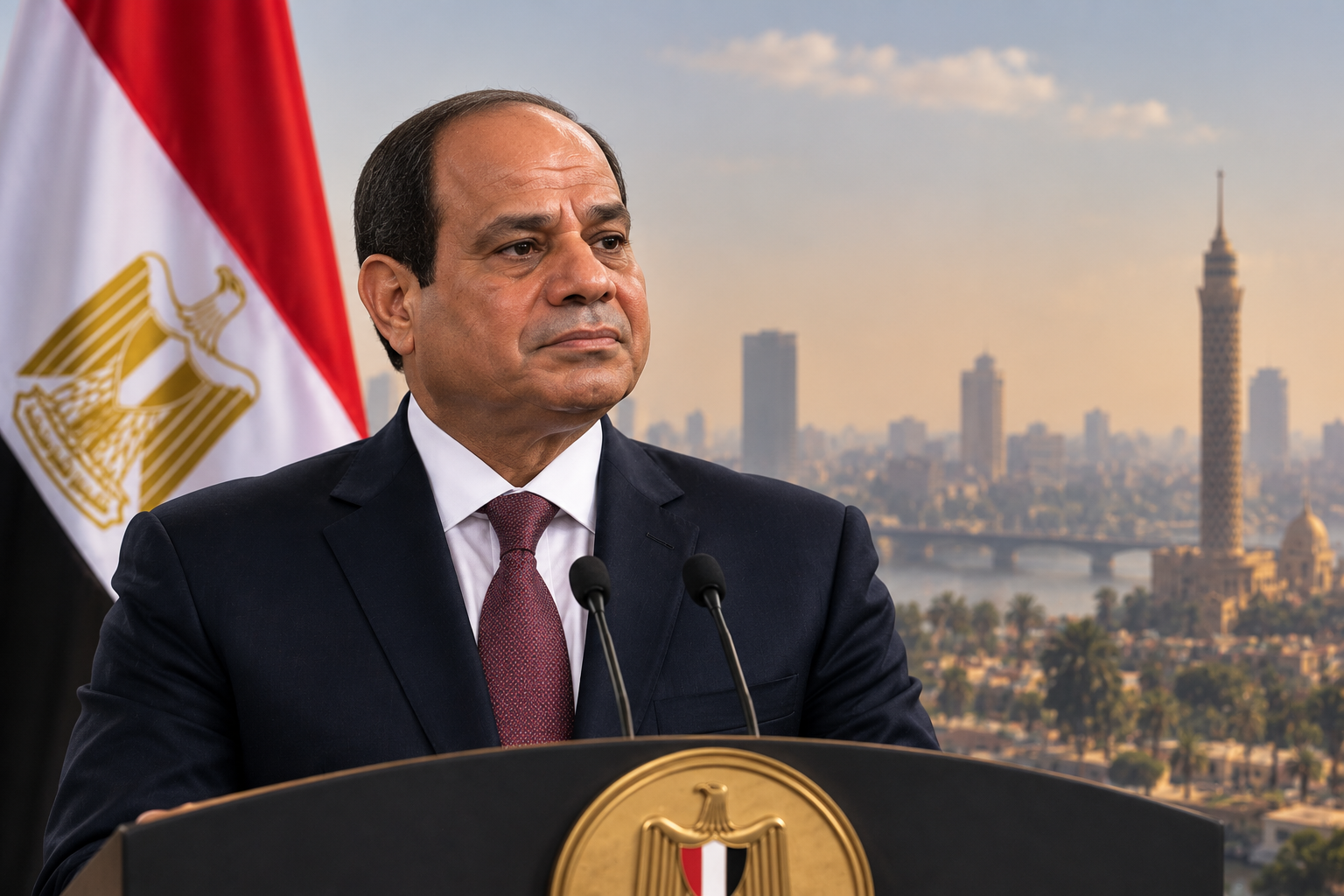
Egyptian President Abdel Fattah el-Sisi has announced that he will leave office when his current presidential term ends in 2030.
Speaking on Saturday, October 17, Sisi said the decision was final. He also ruled out further constitutional changes to extend his presidency.
The announcement comes amid speculation about Egypt’s political future and the possibility of another presidential term.
According to Africanews and the Associated Press, Sisi made the remarks during an event attended by graduates and government officials near Cairo.
Egypt’s Sisi rules out another presidential term
Sisi told the gathering that his presidency would end in 2030, provided he remains alive.
He described the decision as final and said there would be no further discussion about extending his time in office.
The Egyptian president also promised that the constitution would remain unchanged.
His comments addressed concerns about possible amendments that could allow him to seek another term.
However, his announcement remains a statement of intention rather than a completed political transition.
Egypt plans to prepare future leaders
Sisi said the remaining years of his presidency would help prepare a new generation of leaders.
The president did not identify a preferred successor or provide details about the process.
Nevertheless, his remarks have brought attention to Egypt’s political future after 2030.
The country is expected to face important decisions about its next leadership.
Meanwhile, the president’s announcement could influence discussions about succession and political reform.
Constitutional changes extended Sisi’s presidency
Sisi first became Egypt’s president in 2014 after serving as a senior military commander.
At the time, the constitution limited presidents to two four-year terms.
However, constitutional amendments approved through a referendum in 2019 extended presidential terms to six years.
The changes also included provisions that allowed Sisi to seek another term.
As a result, his current presidency is scheduled to continue until 2030.
Critics have previously raised concerns about further amendments that could extend his rule.
Sisi’s latest statement rejects that possibility.
Economic policies draw mixed reactions
During his presidency, Sisi has overseen major infrastructure and development projects.
These include the construction of a new administrative capital east of Cairo.
The government has presented these projects as part of its efforts to modernise Egypt and strengthen the economy.
However, critics argue that extensive borrowing has increased the country’s debt burden.
Egypt has also faced economic pressures affecting households and businesses.
Rising living costs and public debt remain important challenges for the government.
Rights groups criticise political restrictions
Sisi’s presidency has also faced criticism from human rights organisations.
Rights groups have accused Egyptian authorities of restricting political opposition, civil society and freedom of expression.
The government rejects criticism of its security approach and argues that its policies are necessary to maintain national stability.
These competing positions remain central to discussions about Egypt’s political system.
Meanwhile, questions about political participation and civil liberties continue to attract international attention.
What happens next for Egypt?
Sisi’s announcement has placed renewed focus on Egypt’s leadership after 2030.
Although the president has ruled out extending his term, he has not announced a successor.
The coming years may provide more information about how Egypt prepares for its next presidential transition.
Economic challenges, political participation and constitutional arrangements are likely to remain important issues.
For now, Sisi has publicly committed to leaving office when his current term expires in 2030.