
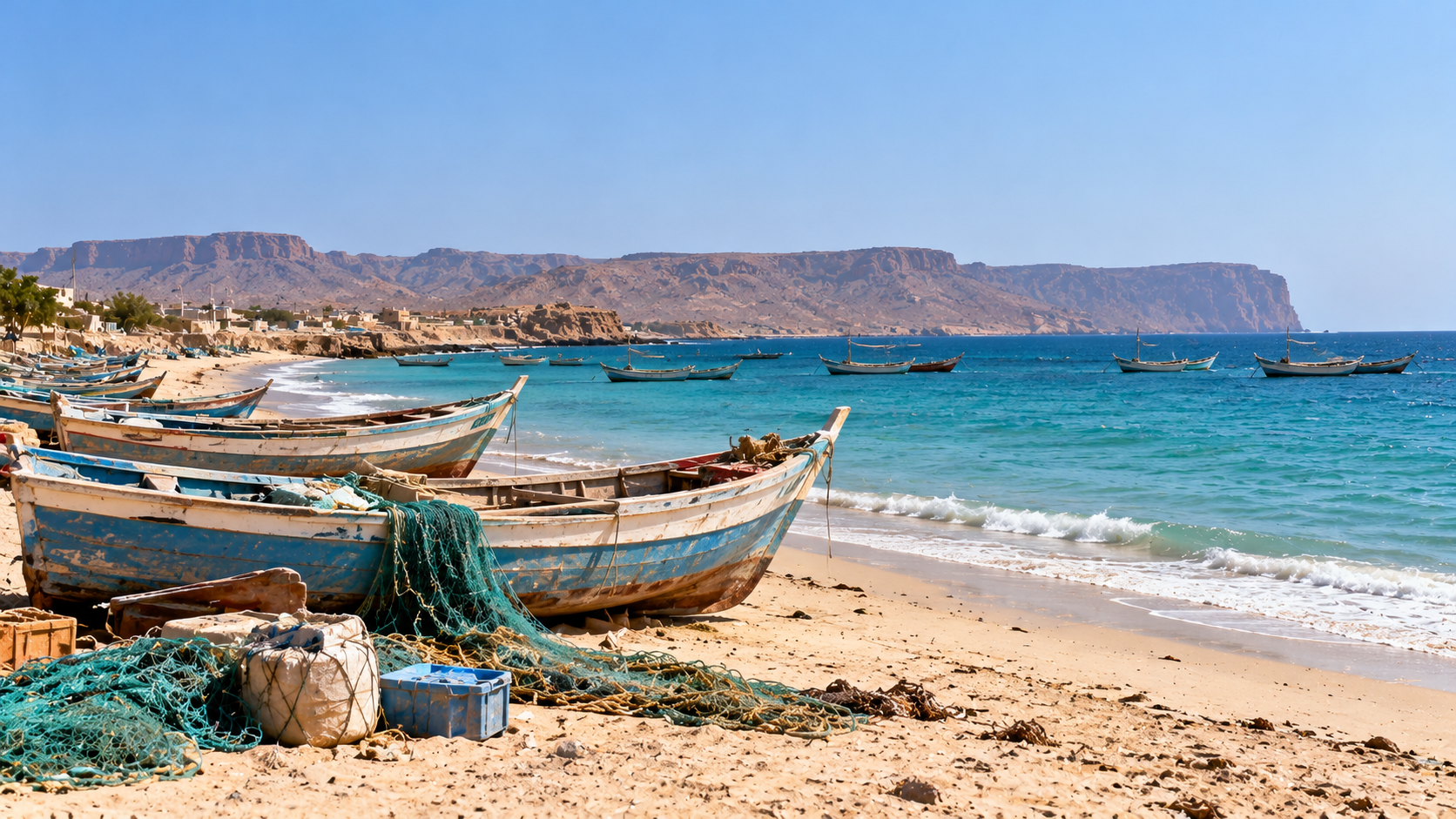
The resurgence of Somali piracy is placing growing pressure on fishing communities along Somalia’s Puntland coast, where security restrictions, declining catches and fears of arrest have disrupted livelihoods.
In the coastal town of Bander Beyla, fishermen say renewed pirate attacks have brought increased surveillance and restrictions on their ability to work at sea.
According to Al Jazeera, residents have faced mounting economic difficulties as authorities attempt to prevent local networks from supporting piracy operations.
Although restrictions imposed in August were lifted on October 1, fishermen say the continued security presence has left them concerned about their livelihoods.
Somali piracy disrupts coastal fishing communities
Bander Beyla has become a focal point of renewed piracy activity off Somalia’s coast, with several hijacked vessels reportedly held near the town.
Local fishermen say the situation has made it increasingly difficult to earn a living.
Abdifatah Mohamed, 35, has worked as a fisherman for two decades. He told Al Jazeera that declining fish catches and competition from foreign trawlers have reduced his income.
He said local fishermen struggle to compete with larger foreign vessels that have more advanced equipment and greater fishing capacity.
Somalia’s maritime sector has faced challenges since the collapse of the central government in 1991, which weakened oversight of its waters.
Illegal fishing and limited economic opportunities have contributed to tensions in coastal communities.
However, Mohamed said piracy has also harmed residents who depend on fishing for their livelihoods.
Fishing restrictions leave families without income
Authorities in Puntland introduced restrictions in late August amid concerns that pirates were disguising themselves as fishermen.
The measures prevented local fishing boats from going to sea for a period initially expected to last two months.
Mohamed said the restrictions affected families who relied on daily catches to meet basic needs.
He also expressed concern that fishermen could be mistaken for pirates or accused of supplying hijacked vessels.
Another fisherman, Abdirizak Said, told Al Jazeera that dozens of people had been arrested, including individuals accused of delivering food or khat to pirates.
Local businesses were also reportedly warned against supplying people involved in piracy.
The restrictions affected commercial activity beyond fishing, adding to economic pressures in Bander Beyla.
Piracy networks extend beyond Somalia’s coastline
Security researchers say Somali piracy depends on networks operating both at sea and on land.
Jethro Norman, a senior researcher at the Danish Institute for International Studies, explained that piracy operations have historically relied on social and family connections to secure financing, equipment and personnel.
These networks can provide logistical support and protection for armed groups involved in maritime attacks.
Norman said understanding such relationships is important for developing effective counter-piracy strategies.
Meanwhile, residents say the consequences of renewed attacks have extended to regional trade.
Said reported that boats previously transporting supplies from Yemen had stopped arriving because of security concerns.
Three hijacked vessels released in October
Local officials told Al Jazeera that security restrictions in Bander Beyla were lifted on October 1 following successful operations against piracy.
The International Maritime Organization confirmed on October 2 that three hijacked vessels had been freed.
The vessels were identified as Honour 25, Seamull, also known as Sibu 1, and Eureka.
According to the organisation, 44 seafarers were released.
However, five crew members died during the rescue operation involving Honour 25.
Despite the release of the vessels, residents say surveillance and security operations have continued along the coast.
Local officials reported that military helicopters regularly patrol Bander Beyla and nearby coastal areas.
Regional security pressures complicate anti-piracy efforts
The resurgence of Somali piracy comes amid wider security challenges in the Red Sea and Gulf of Aden.
Somali political and security analyst Abdinur Abdella told Al Jazeera that international naval attention shifted towards Houthi attacks on shipping routes beginning in late 2023.
He argued that the change created opportunities for armed groups operating off Somalia’s coast.
Meanwhile, Puntland’s maritime security forces have faced competing demands.
Norman said the Puntland Maritime Police Force has been involved in operations against ISIS in the Al-Miskad mountains.
He also pointed to personnel losses connected to the 2023 fighting in Las Anod.
These overlapping security challenges have placed additional pressure on efforts to protect maritime routes and coastal communities.
Coastal residents call for greater protection of livelihoods
Despite the renewed piracy activity, some residents have taken steps to discourage young people from joining armed groups at sea.
Mohamed told Al Jazeera that community members had intervened to prevent local youths from launching attacks, warning that further piracy would harm the town.
Residents say they remain caught between the activities of pirate groups and the security measures introduced to stop them.
Although fishing restrictions have ended, the continued presence of military aircraft has contributed to uncertainty.
For fishermen in Bander Beyla, the priority remains returning to work safely and supporting their families without fear of being mistaken for pirates.