
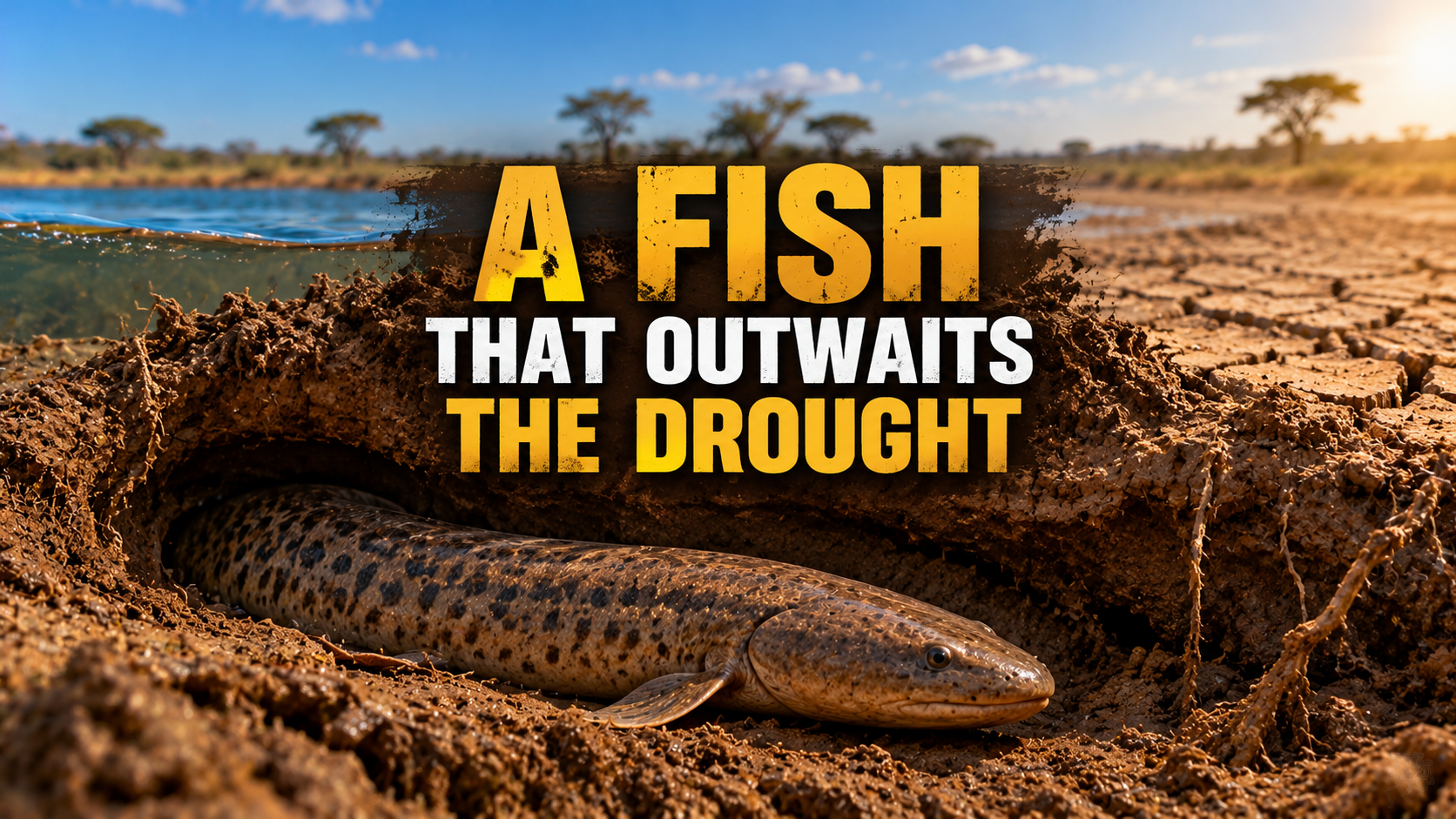
Imagine a fish that can survive without swimming, remain buried underground for months and emerge when the rains return.
It may sound impossible, but African lungfish have an extraordinary ability to survive prolonged droughts by living inside dried mud.
Found in freshwater habitats across parts of Africa, these unusual fish can remain dormant for months and, under suitable conditions, even years.
Their survival strategy makes them one of the most remarkable creatures in the animal kingdom.
How can African lungfish survive without water?
Unlike most fish, African lungfish have lungs that allow them to breathe air.
When rivers, swamps or seasonal pools begin to dry up, some species burrow into soft mud to escape the harsh conditions.
As the mud dries, the fish produce a protective layer of mucus around their bodies, forming a cocoon that helps reduce moisture loss.
They leave a small opening that allows them to continue breathing air.
Inside this protective shelter, the lungfish enters a state of dormancy known as aestivation.
During this period, its metabolism slows dramatically. The fish becomes almost completely inactive and survives using stored energy.
African lungfish can survive for years
African lungfish can endure extremely long periods without access to open water.
Some species can survive in their protective cocoons for several years under suitable conditions.
However, their survival depends on factors such as temperature, moisture and stored energy.
The fish do not survive entirely without water. Instead, they retain moisture inside their bodies and protective cocoons while remaining outside open water.
This remarkable ability helps them endure seasonal droughts that would kill many other freshwater fish.
What happens when the rain returns?
When heavy rains return and the ground becomes wet again, the lungfish begins to emerge from dormancy.
Water softens the surrounding mud and its protective cocoon.
The fish gradually becomes active, resumes normal breathing and returns to swimming and feeding.
This process allows lungfish to survive in environments where freshwater can disappear for extended periods.
What makes African lungfish so unusual?
African lungfish belong to an ancient group of fish with a history stretching back hundreds of millions of years.
They possess both gills and lungs, although African lungfish rely heavily on breathing air.
Their unusual anatomy makes them important to scientists studying the history of vertebrates.
Researchers study lungfish to better understand the biological characteristics associated with air breathing and life in changing aquatic environments.
Their ability to survive outside open water makes them particularly interesting to biologists.
Where are African lungfish found?
African lungfish belong to the genus Protopterus, which includes four living species.
They inhabit rivers, lakes, wetlands and seasonal freshwater environments across parts of sub-Saharan Africa.
Their habitats include sections of the Nile, Congo and other African river systems.
Some species live in environments where seasonal changes can dramatically reduce water levels.
Their ability to breathe air and survive drought gives them an advantage in these challenging habitats.
One of Africa’s most extraordinary survivors
The African lungfish demonstrates how animals can survive extreme environmental conditions.
While most fish depend on continuous access to water, lungfish can endure periods when their aquatic habitats disappear.
Their ability to remain dormant underground and emerge when the rains return is one of the most fascinating survival strategies found in African wildlife.
Fun fact: An African lungfish can survive buried in mud for months, and sometimes years, without swimming in open water.