
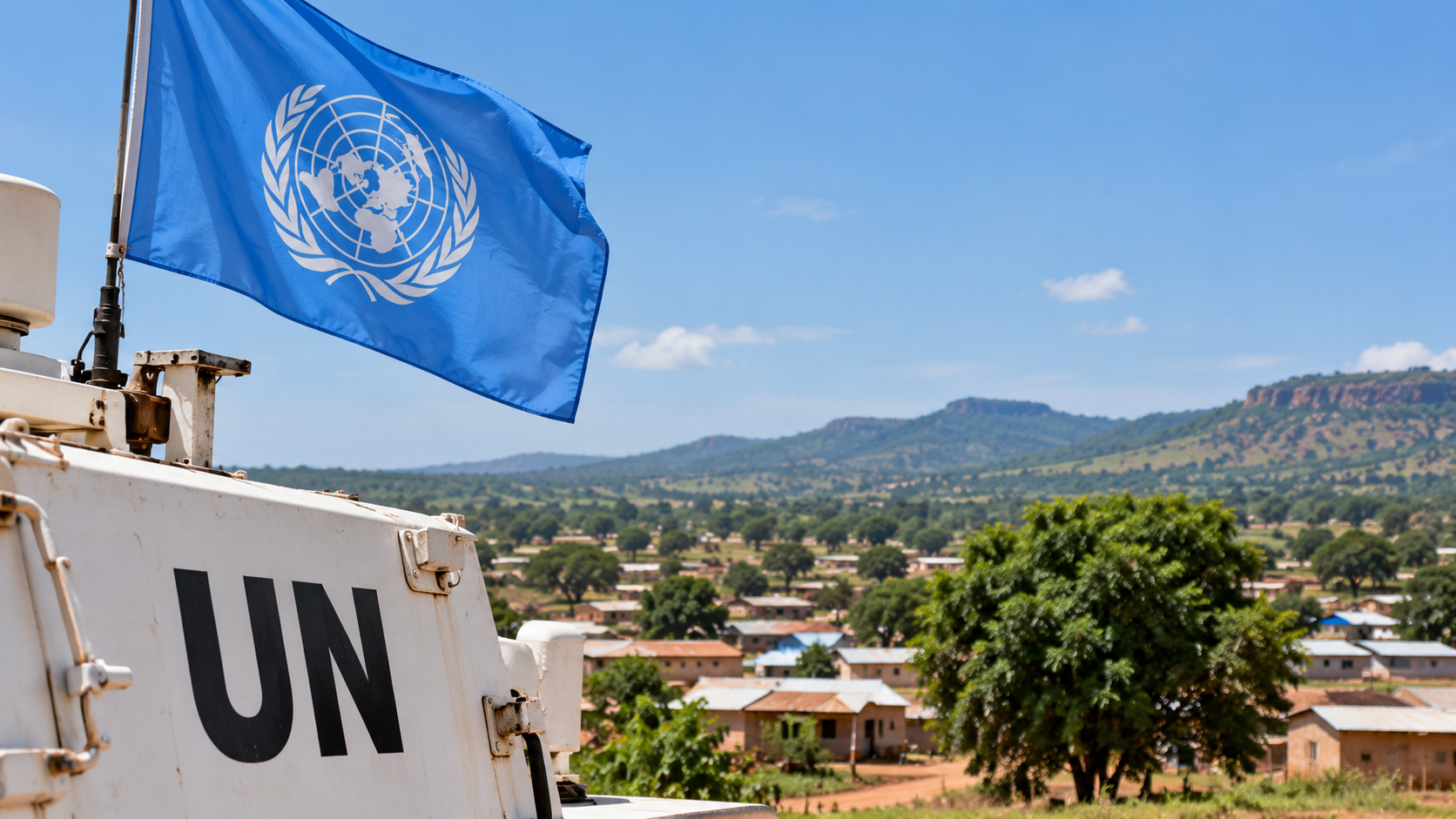
The United Nations has warned that withdrawing peacekeepers too early from the Central African Republic (CAR) could threaten recent security gains. The warning comes as the war in neighbouring Sudan increases instability along the country’s eastern border.
Valentine Rugwabiza, the UN’s top official in CAR, addressed the Security Council on Tuesday. She urged members to maintain the UN peacekeeping mission, known as MINUSCA, to protect civilians and support stability.
According to Africanews and The Associated Press, the warning comes ahead of a decision on whether to extend the mission’s mandate.
Sudan conflict raises security concerns in CAR
Rugwabiza highlighted the growing security challenges along CAR’s border with Sudan.
She referred to a June 30 attack on Am-Dafock, a border town affected by armed violence.
During the attack, an armed group killed civilians and security personnel. The violence also displaced approximately 17,000 people and injured six UN peacekeepers.
The attackers briefly seized control of the town before retreating into Sudan.
However, Rugwabiza said MINUSCA’s rapid response helped prevent further deaths. Peacekeepers also supported efforts to restore government control.
The incident highlighted the importance of maintaining security forces in vulnerable border communities.
UN peacekeepers help disarm nearly 2,000 fighters
Despite continuing security concerns, the Central African Republic has made progress in stabilising parts of the country.
According to Rugwabiza, authorities have disarmed 1,907 fighters since July 2025.
The country has also established municipal councils in 127 of its 177 municipalities.
These developments have strengthened local administration and supported efforts to restore government services.
However, many newly established councils still lack sufficient resources.
Rugwabiza called for greater international support to help local authorities operate effectively.
She also urged development partners, including the UN Peacebuilding Fund, to provide additional assistance.
Humanitarian crisis continues across Central African Republic
The country continues to face serious humanitarian challenges.
Nearly two million people experienced acute food insecurity between April and August 2026.
Meanwhile, the UN humanitarian response plan remained less than half funded.
The funding shortage has limited efforts to provide food, healthcare and other essential assistance.
In addition, insecurity continues to disrupt communities in several parts of the country.
These challenges have raised concerns about the consequences of reducing international support before national institutions can assume greater responsibility.
UN Security Council to decide MINUSCA’s future
The Security Council must decide before mid-November whether to renew MINUSCA’s mandate.
The mission currently has more than 12,000 peacekeepers deployed across the Central African Republic.
However, it has already closed several bases in areas considered stable.
In those locations, national security forces have gradually taken over responsibilities previously handled by UN personnel.
UN Secretary-General António Guterres has recommended extending the mission for another year.
The proposed extension would preserve rapid-response capabilities needed to address security threats and protect civilians.
UN calls for continued international support
Rugwabiza warned that reducing the peacekeeping mission too quickly could reverse progress made in recent years.
She stressed that national authorities still need international assistance to strengthen security and governance.
The UN official also highlighted the risks posed by instability along the Sudanese border.
Although CAR has made progress in disarmament and local administration, several regions remain vulnerable to armed violence.
The Security Council’s upcoming decision will determine whether MINUSCA can continue supporting these efforts over the next year.
For now, the United Nations maintains that a continued peacekeeping presence is important for protecting civilians and preserving recent security gains.