
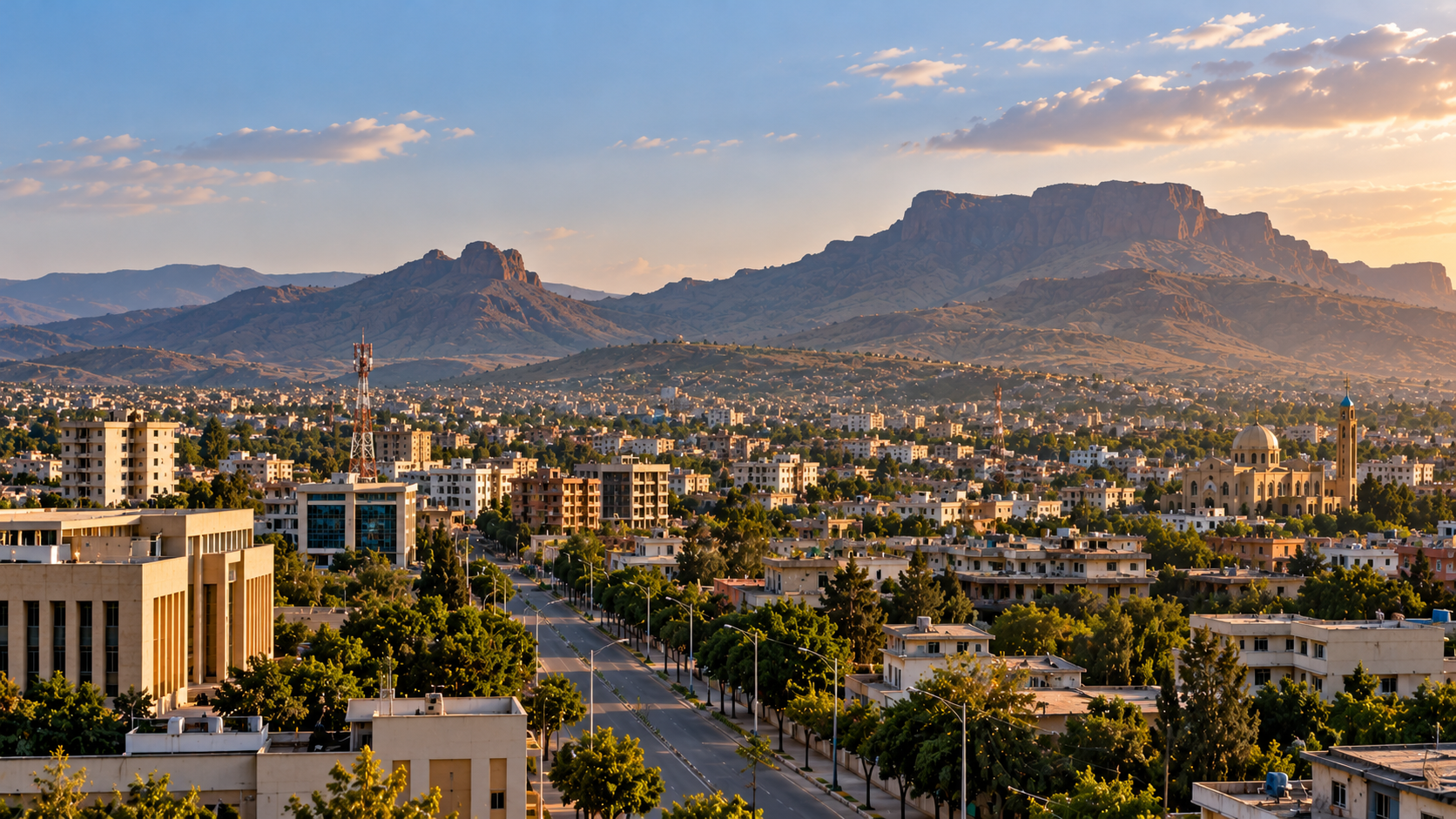
Daily life is slowly returning to Ethiopia’s Tigray region, but residents remain concerned about renewed fighting, economic hardship and the possibility of a wider conflict with Eritrea.
Shops and banks have reopened in Mekelle, the regional capital, after Ethiopian federal forces and allied fighters retook the city on October 4.
However, many families continue to struggle with unpaid salaries, rising living costs and uncertainty over security.
According to Al Jazeera, residents fear that further violence could reverse the region’s fragile recovery from years of conflict.
Mekelle reopens as economic hardship continues
Businesses and financial institutions have gradually resumed operations in Mekelle.
However, the reopening has brought limited relief to households struggling to afford food, rent and other necessities.
Many public employees have experienced lengthy salary delays. Meanwhile, years of fighting have exhausted family savings.
One civil servant told Al Jazeera that reopening businesses would not solve the financial difficulties facing residents.
The region’s funding problems have also affected government services.
In March, Tigray’s interim administration said it could no longer pay monthly salaries to approximately 137,000 civil servants.
Officials blamed the problem on delayed federal budget transfers.
In April, the regional finance bureau reported a funding shortfall of 8.5 billion Ethiopian birr.
The shortage has affected salaries and development projects.
As a result, many residents remain unable to meet basic household expenses.
Students fear another year of lost education
Renewed fighting has also disrupted education across Tigray.
Many students lost valuable years of schooling during the 2020–2022 war.
Now, they fear further delays to their studies and graduation.
In Adigrat, a secondary school student told Al Jazeera that another interruption could leave him even further behind.
University students have also sought alternatives outside the region.
Ethiopia’s Ministry of Education announced temporary placements at universities elsewhere in the country for students affected by the instability.
More than 5,000 returning students had applied for transfers by mid-September, according to reporting cited by Al Jazeera.
Some students travelled to Addis Ababa to request placements at other institutions.
For many, the priority is to complete their education without further disruption.
However, continued insecurity could make that increasingly difficult.
Ethiopia and Eritrea tensions raise war fears
Military developments near Tigray’s northern border have increased concerns about a wider regional conflict.
Ethiopia and Eritrea have exchanged accusations over military movements in disputed border areas.
On October 8, The Associated Press reported allegations that Eritrean troops had entered Adigrat and Idaga Hamus.
However, the news agency said it could not independently verify those claims.
Conflict-monitoring organisation ACLED separately reported that Eritrean forces had crossed the border near Zalambessa.
On October 13, Reuters reported that Ethiopian government forces had advanced into Zalambessa.
However, it remained unclear whether Eritrean troops or Tigrayan opposition fighters were still present in the town.
The competing reports highlight the difficulty of independently confirming military developments in the region.
Eritrea denies Ethiopian accusations
Ethiopia’s Foreign Minister Gedion Timothewos accused Eritrea of sending troops up to 60 kilometres into Ethiopian territory.
He called on the United Nations Security Council to respond to the alleged incursions.
However, Eritrea rejected the accusations.
Its government denied invading Ethiopian territory and accused Ethiopia of escalating tensions.
Eritrea also appealed to the Security Council.
The diplomatic dispute has raised fears of a direct confrontation between the neighbouring countries.
Ethiopia and Eritrea previously fought on the same side during the 2020–2022 Tigray war.
During that conflict, Eritrean forces supported Ethiopia’s federal government against the Tigray People’s Liberation Front (TPLF).
However, relations between Addis Ababa and Asmara have since deteriorated.
Ethiopia announces new Tigray administration
On October 16, Ethiopian Prime Minister Abiy Ahmed announced a six-month caretaker administration for Tigray.
The decision followed the federal government’s takeover of Mekelle and other major towns.
The administration is expected to restore public services, support the return of displaced families and prepare the region for elections.
Federal authorities say the temporary arrangement will help stabilise Tigray.
However, the TPLF has opposed the military advance.
Questions also remain about the new administration’s ability to operate across the region.
The political uncertainty has added to concerns among residents already struggling with economic hardship.
Tigray residents fear renewed conflict
Tigray continues to recover from the devastating war that began in November 2020.
The conflict caused widespread displacement, damaged infrastructure and severely disrupted public services.
Although a peace agreement was reached in November 2022, the region has struggled to rebuild.
The latest fighting has renewed concerns about civilian safety and the future of the peace process.
Residents near the Eritrean border are particularly worried about the possibility of further military escalation.
Meanwhile, families across Tigray remain focused on immediate needs.
They want salaries restored, schools reopened and essential services functioning again.
For now, daily life is gradually resuming in Mekelle. However, the threat of renewed conflict continues to overshadow Tigray’s recovery.