
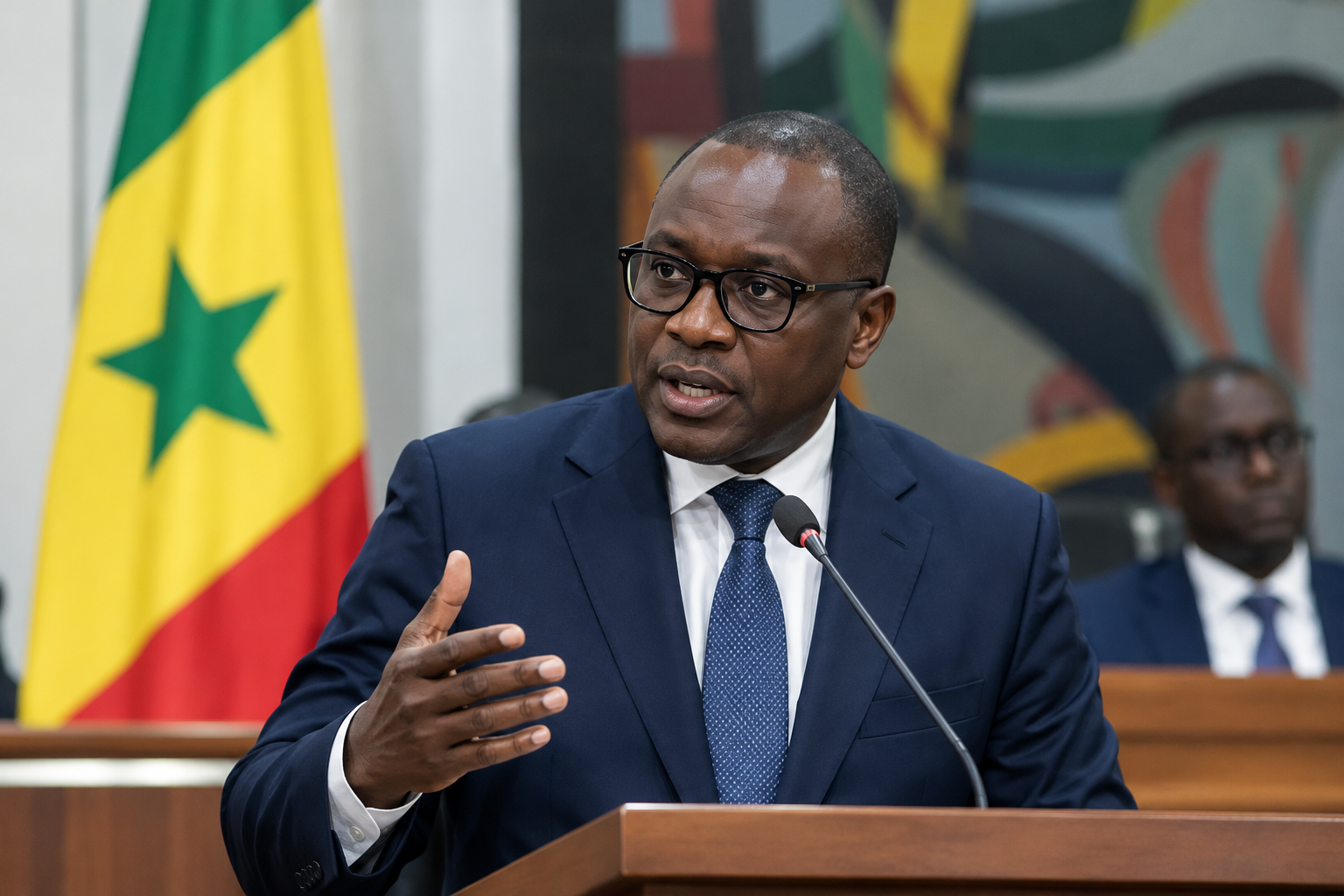
Senegal’s parliament is preparing to reconsider a revised national budget after a dispute threatened to delay negotiations over a $2.2 billion financial programme with the International Monetary Fund (IMF).
The finance committee of Senegal’s National Assembly is expected to review the proposed budget following an appeal by Finance Minister Cheikh Diba.
The draft had previously been rejected by the Pastef party, which holds a commanding parliamentary majority.
The disagreement comes as Senegal struggles with a heavy debt burden, economic uncertainty and growing public frustration over living costs.
Senegal seeks agreement to avoid budget deadlock
Diba urged lawmakers on Tuesday to reconsider the revised budget and find a solution that would prevent further disruption.
He warned that political differences should not lead to an institutional shutdown at a critical moment for Senegal’s economy.
According to Africanews, citing AFP, the finance minister called for greater responsibility and cooperation between political institutions.
Ousmane Sonko, identified in the report as Pastef’s leader and National Assembly speaker, agreed to facilitate further discussions.
He said he would work to establish dates for the finance committee’s review and a subsequent parliamentary vote.
The renewed talks could help resolve the budget dispute and keep Senegal’s negotiations with the IMF on track.
Senegal’s $2.2 billion IMF programme at risk
Senegal is seeking a new 36-month financial programme worth approximately $2.2 billion from the IMF.
The proposed agreement is intended to help stabilise public finances and address the country’s mounting debt challenges.
However, delays in approving the revised budget could complicate negotiations.
Senegal’s debt burden reached an estimated 132% of gross domestic product by the end of 2024, according to the IMF.
The figure followed the discovery of billions of dollars in previously misreported borrowing under the former administration.
The revelations intensified concerns about fiscal transparency and Senegal’s ability to manage its financial obligations.
Securing an IMF agreement is therefore a major priority for the government as it seeks to restore economic confidence.
Economic pressure adds urgency to negotiations
The parliamentary dispute comes amid wider economic and social challenges.
High youth unemployment and rising living costs have increased pressure on Senegalese households.
A three-day general strike last week highlighted growing public frustration over the country’s economic situation.
Meanwhile, Prime Minister Ahmadou Al Aminou Mohamed urged political opponents on Monday to avoid blocking the budget process.
He warned that prolonged disagreements could disrupt the country’s functioning and called for renewed dialogue.
The government hopes that a compromise in parliament will allow Senegal to move forward with its economic recovery plans.
What happens next?
The National Assembly’s finance committee is expected to reconsider the revised budget before lawmakers hold another vote.
An agreement could strengthen Senegal’s position in negotiations with the IMF.
However, continued political disagreements could delay the proposed $2.2 billion programme and prolong uncertainty over the country’s finances.
With debt levels elevated and economic pressures mounting, the outcome of the budget negotiations could have significant implications for Senegal’s financial stability.