
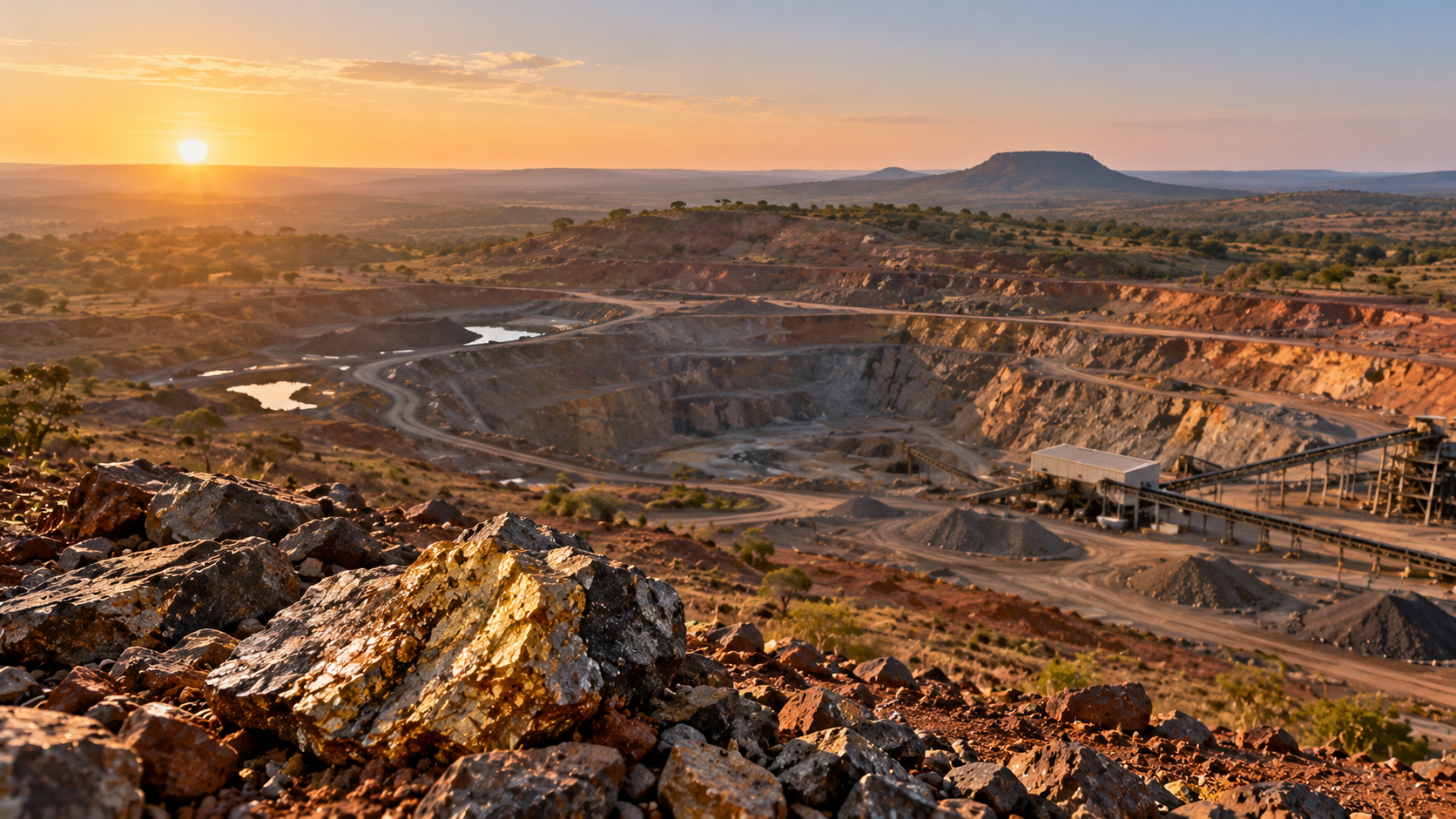
Russia, the United States and European companies are expanding efforts to map Africa’s mineral resources as competition intensifies over valuable deposits of gold, lithium, cobalt and copper.
The growing interest highlights the strategic importance of geological data, which can help identify mineral deposits before mining operations begin.
Mali has become the latest country to sign a major geological mapping agreement with Russia, covering more than half its territory.
Meanwhile, American and European companies are pursuing similar projects elsewhere on the continent.
The developments raise an important question for African governments: who will control the information about their mineral wealth?
Russia signs major mineral mapping agreement with Mali
According to Business Insider Africa, citing Reuters, Russian state-owned geological company Rosgeologiya signed an agreement with Mali’s Ministry of Mines during the Russia-Africa forum in Moscow on October 28.
Under the agreement, Rosgeologiya’s overseas subsidiary, Zarubezhgeologia, will produce geological maps covering two areas representing more than half of Mali’s territory.
The project aims to identify locations with potential for future mineral exploration.
The agreement also includes developing a digital system to manage geological information, mining licences and regulatory oversight.
Alexey Desyatkin, head of Zarubezhgeologia, said the initiative would make information about Mali’s mineral resources more accessible to potential investors.
Mali is already one of Africa’s leading gold producers and is seeking to expand exploration of other minerals, including lithium.
Russia expands mining cooperation across Africa
The Mali agreement reflects Russia’s growing economic presence across the continent.
Since Mali’s 2020 military coup, the country’s authorities have strengthened relations with Moscow while reducing cooperation with traditional Western partners.
Neighbouring Burkina Faso and Niger have also developed closer ties with Russia.
Beyond Mali, Rosgeologiya and its subsidiaries have undertaken or pursued geological mapping projects in Sudan, Angola, Equatorial Guinea and the Central African Republic.
The company has also reported mineral exploration activities in Algeria.
These initiatives form part of Russia’s wider efforts to expand its role in Africa’s mining and natural resources sectors.
European companies survey DR Congo’s mineral deposits
European companies are also increasing their involvement in geological mapping.
In the Democratic Republic of Congo, Spanish company Xcalibur Smart Mapping launched a three-year geological and geophysical survey programme in October.
The project covers nearly 700,000 square kilometres.
The DRC is among the world’s most important producers of cobalt and copper, minerals used in batteries, electronics and industrial manufacturing.
The country is also developing a national geological database.
According to the reported plans, sensitive geological information is expected to remain under government control.
Such databases can help authorities better understand mineral resources, assess exploration opportunities and manage mining licences.
US company seeks access to colonial-era mining records
Competition over Africa’s mineral resources extends beyond new geological surveys.
American mineral exploration company KoBold Metals has sought to digitise historical geological documents held at Belgium’s AfricaMuseum.
The records date from the colonial period and contain information that could help identify mineral deposits in the DRC.
The documents may provide insights into areas containing copper, cobalt, lithium and other valuable resources.
However, the proposed digitisation has raised questions about access to the archives and the potential commercial use of historical geological information.
A separate European Union-backed digitisation initiative is also underway.
The developments demonstrate that historical records can remain economically valuable long after they were originally collected.
Why Africa’s geological data matters
Geological mapping plays an important role in identifying mineral deposits and attracting mining investment.
Detailed surveys can help governments understand the location and potential value of natural resources.
They can also support better planning, licensing and oversight of mining operations.
However, foreign involvement raises questions about data ownership, access and commercial rights.
Companies with detailed geological information may gain advantages when identifying investment opportunities or negotiating future exploration agreements.
For African governments, maintaining control over sensitive information could be important when negotiating with international mining companies.
Africa faces new questions over mineral sovereignty
Africa’s mineral resources are increasingly important to industries involved in renewable energy, electric vehicles, electronics and advanced manufacturing.
As global demand for critical minerals grows, geological information is becoming a valuable strategic asset.
Foreign mapping projects could provide African countries with technical expertise, improved data systems and opportunities to attract investment.
However, the benefits will depend partly on how agreements are structured and who retains control of the information produced.
The competition between Russia, American companies and European firms highlights the growing economic importance of Africa’s mineral resources.
For African governments, the challenge is ensuring that improved geological knowledge translates into stronger domestic industries, greater investment and long-term economic benefits.