
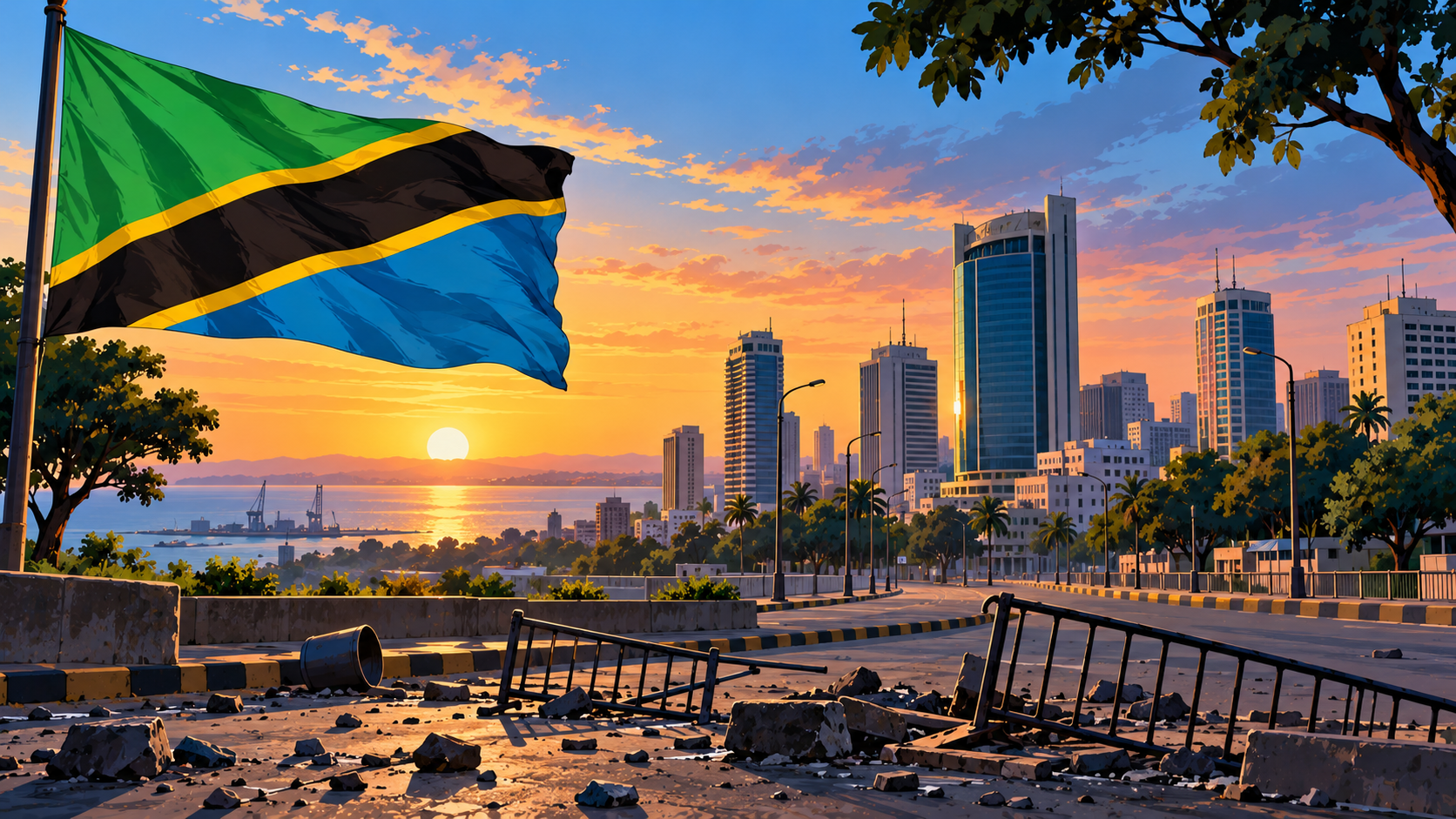
One year after Tanzania’s disputed presidential election triggered deadly protests, victims and their families are still seeking justice as concerns grow over political repression and human rights.
The October 29, 2025, election saw President Samia Suluhu Hassan secure 98% of the vote after most opposition candidates were excluded.
The results sparked demonstrations that were met with a violent security crackdown.
A government-appointed commission reported 518 deaths, while opposition groups and human rights organisations have claimed the toll was significantly higher.
As Tanzania marks the first anniversary, survivors say they continue to face physical injuries, financial difficulties and uncertainty about accountability.
Tanzania election violence leaves lasting scars
According to Africanews, citing AFP, many people injured during the 2025 election unrest are still struggling with the consequences.
Among them is 61-year-old Twaha Bomeza, who was wounded during a confrontation involving security forces and protesters in Dar es Salaam.
Bomeza said he suffered injuries to his eye and lost four front teeth during the incident.
He continues to experience headaches and breathing difficulties.
The survivor said he requires eye surgery but cannot afford the treatment.
Another victim, 37-year-old Joseph Zakayo, suffered a gunshot wound to his thigh.
The injury has prevented him from continuing his work as a motorcycle taxi driver.
For both men, the violence has had lasting consequences for their health and livelihoods.
Their experiences highlight the challenges facing survivors who require medical care and financial support.
Tanzania marks anniversary amid heavy security
The anniversary was marked by religious services and opposition calls for mourning.
The Catholic Church held masses on Thursday to remember those killed during the unrest.
Meanwhile, the main opposition party, Chadema, announced seven days of mourning.
Dar es Salaam remained relatively quiet, with a heavy police presence reported across the city.
Some residents expressed sadness over the events of the previous year.
Churchgoer Noela Kigosi told AFP that Tanzania needed to recognise the importance of dialogue rather than resorting to force during political disagreements.
However, rights activists said the atmosphere remained tense.
Some families have reportedly been unable to bury relatives who died during the violence.
Opposition warns of growing political repression
Chadema has accused the Tanzanian government of undermining democratic institutions and restricting political freedoms.
The party described the country as increasingly authoritarian.
Rights activist Tito Magoti said fear remained widespread among government critics.
He pointed to reports of arbitrary arrests, disappearances and criminal charges against opposition figures.
Over the past week, opposition official John Pambalu was charged with treason.
Another Tanzanian dissident, Twaha Mwaipaya, was reportedly abducted in Kenya and remains missing.
The circumstances surrounding his disappearance have not been independently established in the supplied report.
Anna Bwana, director of civil society organisation Twaweza East Africa, said the authorities appeared increasingly willing to use restrictive measures against critics.
The allegations have intensified concerns about the political environment in Tanzania.
Tundu Lissu treason trial adds to tensions
The anniversary comes as opposition leader Tundu Lissu faces an ongoing treason trial.
Lissu was arrested ahead of the 2025 election after campaigning under the slogan “No reform, no election”.
His trial has become a major focus of attention among opposition supporters and human rights organisations.
A court decision is expected on November 6.
Lissu also began a brief hunger strike this week to demand access to his lawyer.
The case has raised further concerns about political participation and the treatment of opposition figures.
Meanwhile, Tanzania’s Legal and Human Rights Centre said it was representing approximately 56 people facing terrorism-related charges.
The organisation expressed concern that such laws were being used against government critics.
Rights groups demand accountability for election deaths
Tanzania established a presidential commission to investigate the violence following the disputed election.
The commission reported that 518 people had died.
However, opposition groups and human rights organisations have disputed that figure, with some claiming that thousands were killed.
Those higher estimates have not been independently verified in the supplied reporting.
Critics have also questioned the commission’s independence and whether its findings will lead to accountability.
Amnesty International has criticised the authorities for failing to ensure justice for victims.
The organisation has also accused Tanzania of using counterterrorism legislation to suppress dissent.
These allegations have increased international scrutiny of the government’s response to the unrest.
International pressure grows on Tanzania
Tanzania has faced criticism from Western governments over the election violence and its aftermath.
The United States ambassador warned on Thursday that the killings would not be forgotten.
Meanwhile, President Hassan attended the Russia-Africa Summit in Moscow this week as Tanzania continued strengthening diplomatic relations with Russia.
The developments come amid wider debate over Tanzania’s international partnerships and domestic political direction.
For human rights organisations, however, the central issue remains accountability for the violence.
Survivors continue waiting for justice
One year after the election, many victims remain affected by injuries, lost livelihoods and the deaths of family members.
Opposition parties and civil society organisations continue to demand independent investigations and accountability for those responsible.
The government-appointed commission has documented hundreds of deaths, but disagreements over the scale of the violence remain unresolved.
With political tensions continuing and major opposition figures facing criminal proceedings, concerns about Tanzania’s democratic future persist.
For survivors such as Bomeza and Zakayo, the anniversary is a reminder that the consequences of the violence have not ended.
Their demands extend beyond recognition of what happened.
They are still waiting for medical support, answers and justice.