
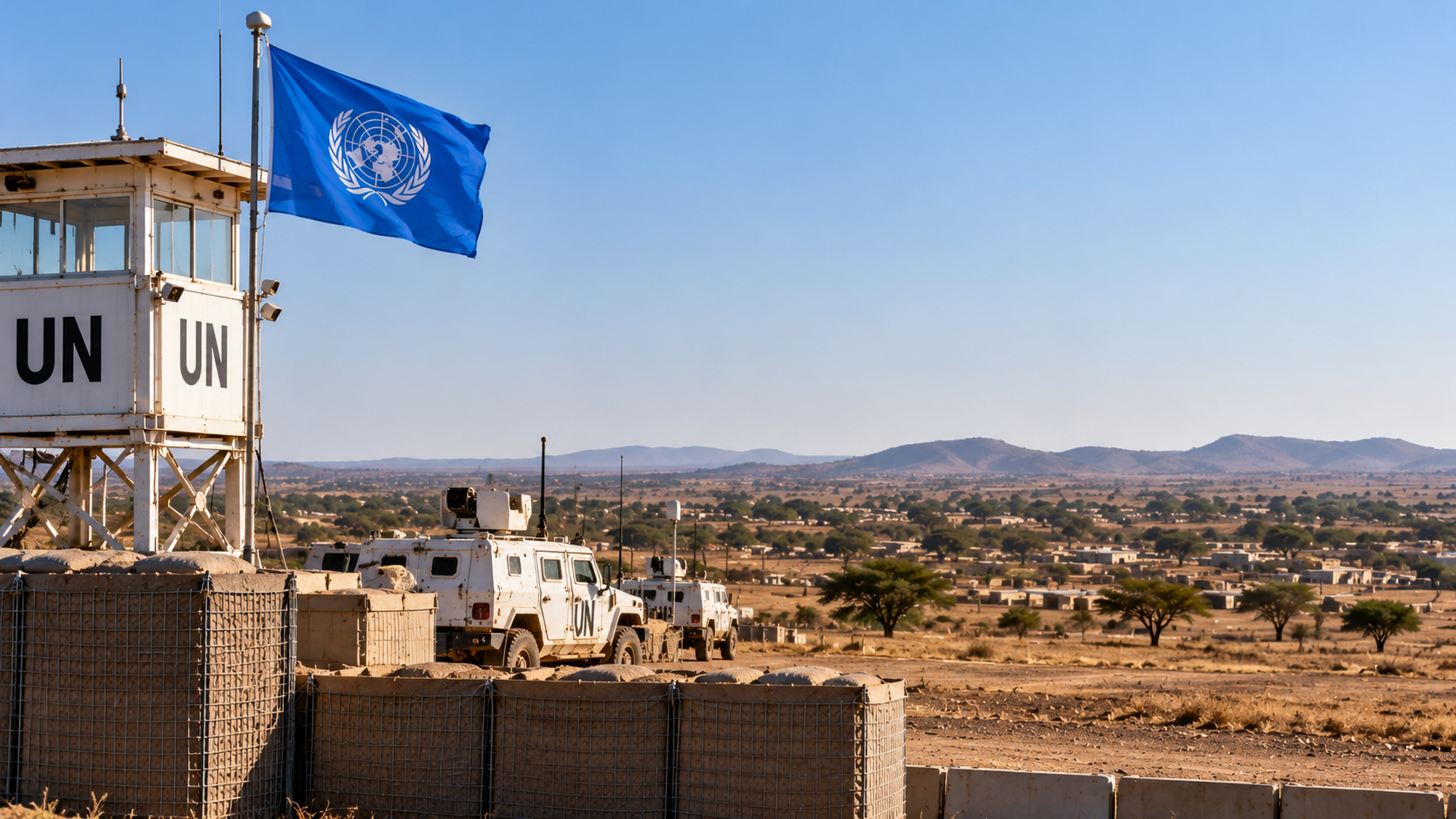
United Nations peacekeepers have strengthened security in Abyei after deadly drone strikes blamed on Sudan’s military killed dozens of civilians in the disputed border region.
The October 19 attacks targeted Amiet Market and the nearby Todach area. According to the United Nations, more than 80 people were killed. However, local officials reported at least 153 deaths.
South Sudan accused the Sudanese Armed Forces (SAF) of carrying out the strikes. Sudan’s military authorities have denied responsibility.
Meanwhile, UN peacekeepers have deployed anti-drone equipment and increased patrols to prevent further attacks.
The incident has raised concerns about Sudan’s conflict spreading into the disputed territory between Sudan and South Sudan.
South Sudan accuses Sudan army of drone strikes
South Sudan’s Foreign Ministry condemned the attacks and summoned Sudan’s ambassador.
The ministry accused the SAF of conducting the strikes, which caused extensive destruction at Amiet Market.
A senior Sudanese military officer also reportedly acknowledged the operation during an interview with the Associated Press.
Speaking anonymously, the officer said the military had targeted fuel tankers allegedly transporting supplies to the Rapid Support Forces (RSF).
The officer claimed that RSF members and fuel smugglers were the intended targets.
However, these claims have not been independently verified.
Authorities in Port Sudan subsequently denied that the military was responsible.
The United Nations has not formally identified those responsible for the attacks.
UN deploys anti-drone equipment in Abyei
The United Nations Interim Security Force for Abyei (UNISFA) has reinforced its security arrangements following the deadly strikes.
Chinese peacekeepers deployed equipment designed to detect and disrupt unmanned aircraft.
In addition, reconnaissance drones have been used to monitor the surrounding area and identify potential threats.
A Chinese rapid-response unit was also sent to support Pakistani peacekeepers already stationed in Abyei.
UN personnel increased security patrols and strengthened protection around vulnerable locations.
The measures aim to prevent further attacks and protect civilians living in the disputed region.
However, the growing use of drones in Sudan’s conflict presents new challenges for peacekeeping operations.
Sudan conflict raises fears of regional escalation
The attacks have increased concerns about the conflict spreading beyond Sudan’s existing battlefields.
Abyei remains a disputed territory between Sudan and South Sudan. It is protected by a United Nations peacekeeping mission.
Sudanese political figures have warned that continued military operations near the border could threaten regional stability.
Urwa al-Sadiq, a senior official in Sudan’s National Umma Party, said the attacks highlighted the growing dangers facing peacekeepers and civilians.
He warned that drone warfare could undermine existing security arrangements.
Al-Sadiq also expressed concern about armed groups aligned with the Port Sudan authorities and their potential role in widening the conflict.
Meanwhile, political analyst Ihab Madbo warned that continued escalation could threaten humanitarian routes and international personnel.
Both called attention to the need for stronger security measures in Abyei.
UN calls for investigation and accountability
UN Secretary-General António Guterres condemned the October 19 attacks and called for accountability.
The strikes killed civilians, including women and children, and caused extensive damage to the market.
Following the incident, UNISFA deployed emergency medical teams and firefighters.
Peacekeepers also assisted with rescue operations and efforts to contain the fires.
More than 27 injured people received treatment at a UN medical facility in Todach.
The UN Security Council subsequently called for a transparent investigation into the attacks.
Council members warned that deliberate attacks against civilians and civilian infrastructure could constitute war crimes.
They also reaffirmed that Abyei must remain demilitarised, with UNISFA serving as the only authorised military force in the territory.
Abyei faces growing security threats
The drone strikes have exposed the vulnerability of civilian communities in Abyei.
The region already faces longstanding political uncertainty because of its disputed status.
Now, Sudan’s expanding drone warfare has created additional security concerns.
The attacks have also raised questions about the ability of international peacekeepers to protect civilians from aerial threats.
For the United Nations, preventing further violence remains a priority.
Meanwhile, calls for an independent investigation continue as families seek answers about the deadly October 19 attacks.
The incident underscores the risk that Sudan’s ongoing conflict could destabilise neighbouring areas and threaten humanitarian operations.