
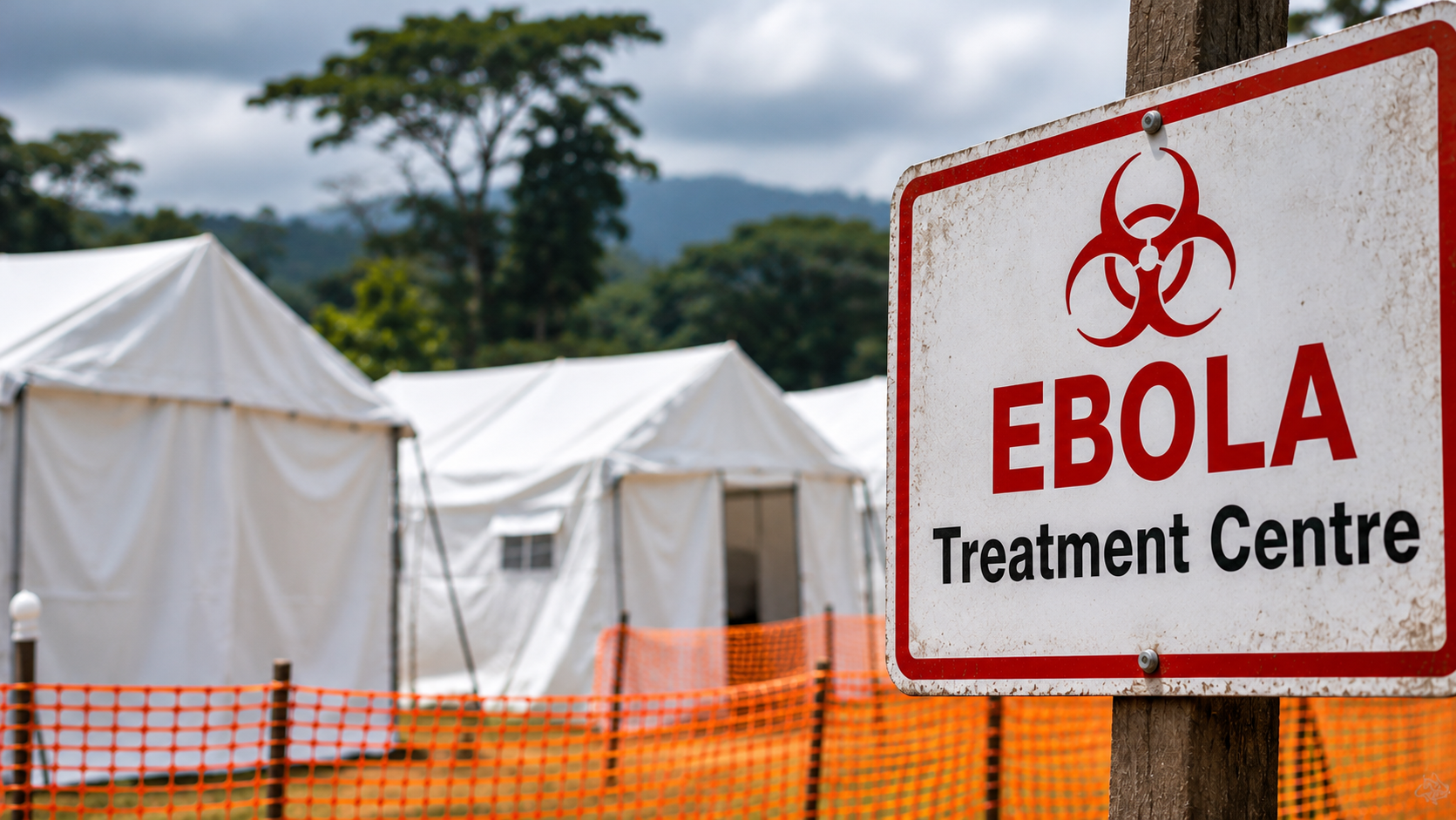
The Ebola death toll in the Democratic Republic of Congo has surpassed 5,000, according to government figures, as the country’s deadliest outbreak on record continues to spread beyond its borders.
More than 10,000 infections have been recorded since the outbreak began in May 2026.
The latest figures, announced on Friday, October 30, highlight the growing scale of the health emergency.
According to Reuters, the outbreak has reached eight of DR Congo’s 26 provinces, while several other African countries have reported cases.
Health authorities are struggling to contain the virus amid conflict, delayed detection and pressure on medical services.
DR Congo Ebola outbreak claims over 5,000 lives
The current Ebola outbreak is the deadliest recorded in DR Congo.
Government data indicate that more than 5,000 people have died since May.
The number of confirmed and reported infections has exceeded 10,000.
The outbreak involves the Bundibugyo strain of Ebola, for which no approved strain-specific vaccines or treatments are currently available, according to the report.
This has complicated efforts to control infections and reduce fatalities.
Health authorities are also facing challenges in identifying cases quickly and providing care in affected communities.
Delays in detecting infections can allow the virus to spread before patients receive medical attention.
Ebola spreads to other African countries
The outbreak has expanded beyond DR Congo, raising concerns about regional transmission.
Nigeria became the fourth African country to report an Ebola case last week.
The development extended the outbreak’s reported geographic reach to West Africa.
Kenya and Uganda have also recorded cases.
The spread has prompted governments to strengthen border monitoring and introduce travel restrictions.
However, the scale of transmission outside DR Congo remains unclear from the available figures.
The situation has increased pressure on regional health authorities to coordinate their response.
Conflict and weak health services complicate response
Several factors have contributed to the outbreak’s rapid spread.
According to Reuters, delayed detection, ongoing conflict and strained healthcare services have made containment more difficult.
Some affected areas face challenges in accessing medical facilities and essential health services.
Conflict can also disrupt the movement of healthcare workers and medical supplies.
Meanwhile, overstretched health systems may struggle to identify and isolate suspected cases quickly.
Ebola spreads through direct contact with the blood or other bodily fluids of an infected person who is symptomatic, or through contaminated materials.
It does not spread through ordinary airborne transmission.
Early detection, infection prevention measures and safe medical care remain essential to controlling outbreaks.
Saudi Arabia introduces new travel restrictions
The outbreak has also prompted international travel restrictions.
On Friday, Saudi Arabia announced new measures affecting travel to and from Kenya.
According to the Saudi Press Agency, Saudi citizens have been prohibited from travelling to Kenya.
The kingdom has also suspended the issuance of visas to travellers from the country.
Entry restrictions apply to travellers arriving from Kenya, including some passengers transiting through other countries.
The measures also cover people who have recently stayed in Kenya or other Ebola-affected countries within the previous 21 days.
Saudi Arabia previously introduced travel restrictions involving DR Congo, Uganda and South Sudan in June.
The restrictions reflect growing international concern about the outbreak’s spread.
Second-largest Ebola outbreak on record
The current outbreak is now the second-largest Ebola epidemic recorded globally, according to the reported figures.
The largest occurred in West Africa between 2014 and 2016.
That epidemic infected more than 28,600 people and killed over 11,000 across Guinea, Liberia and Sierra Leone.
The latest outbreak has already surpassed previous Ebola emergencies in DR Congo in terms of reported deaths.
However, the situation continues to evolve as health authorities monitor infections across affected regions.
African countries face growing health emergency
The spread of Ebola beyond DR Congo highlights the importance of regional disease surveillance and cooperation.
Health authorities face the challenge of identifying infections, protecting healthcare workers and maintaining essential medical services.
Countries reporting cases must also monitor potential transmission and provide accurate public health information.
The absence of approved strain-specific medical countermeasures for the Bundibugyo variant adds to the difficulty of the response.
Meanwhile, international travel restrictions demonstrate the wider impact of the outbreak.
As infections continue to be reported, containing the virus will depend on effective surveillance, timely medical care and cooperation between affected countries.