
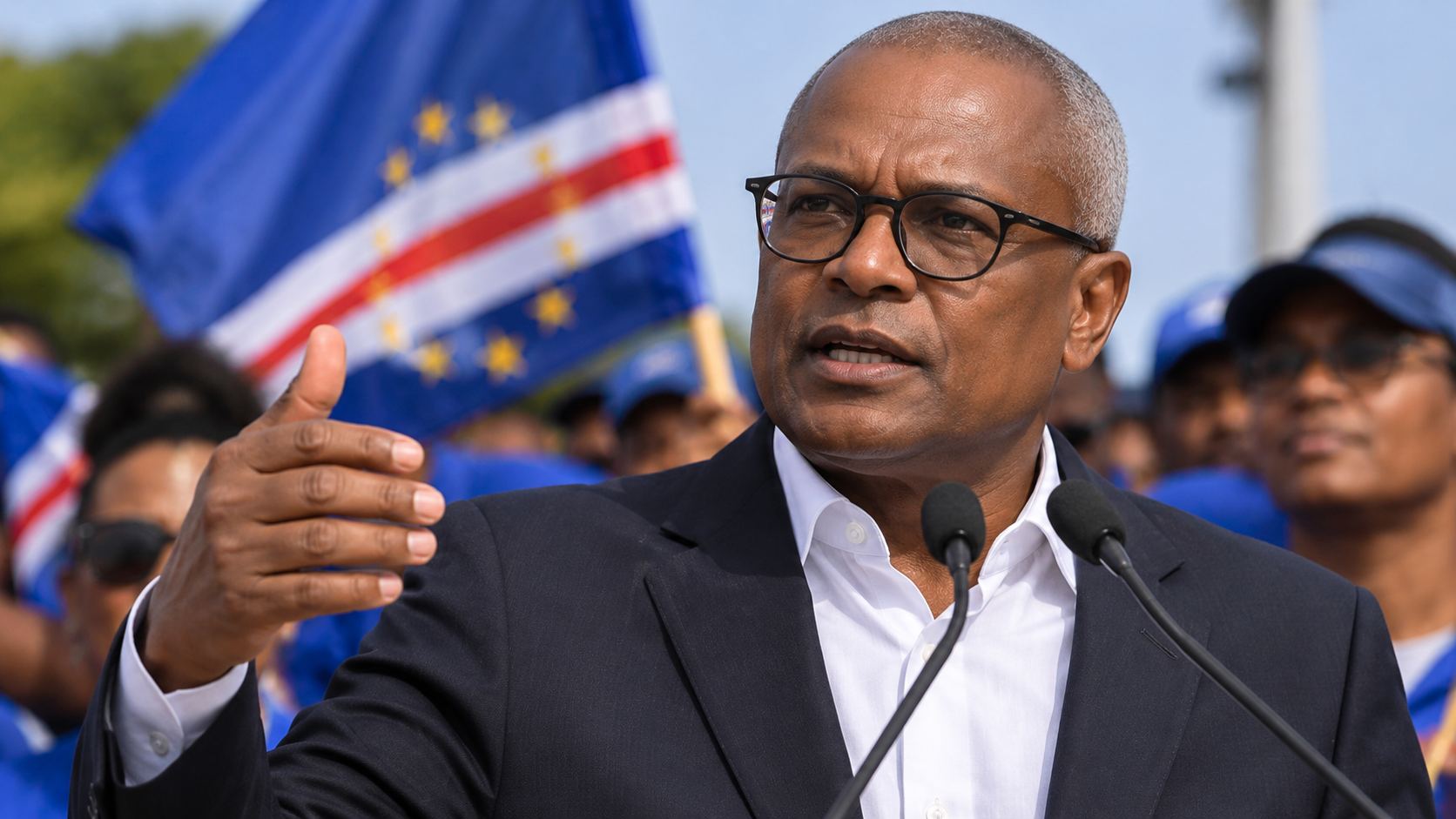
Cape Verde’s presidential election campaign has officially begun, with President José Maria Neves seeking a second term in the November 15 vote.
Hundreds of supporters gathered in São Vicente on Saturday, October 31, to back the incumbent president as campaigning got underway.
Supporters waved signs and chanted slogans in support of Neves, who is backed by the African Party for the Independence of Cape Verde (PAICV).
According to Africanews, citing AFP reporting, six candidates are competing in the presidential election.
The campaign comes as the island nation faces economic challenges, including poverty, low wages and youth unemployment.
Cape Verde election campaign opens with major rally
President Neves launched his campaign with a rally in São Vicente, where he outlined his economic priorities.
The president called for reforms aimed at increasing salaries and improving household incomes.
He argued that Cape Verde could not build a competitive economy through low wages.
Instead, Neves said the country needed economic reforms that would support higher earnings and better living conditions.
His message places wages and economic development at the centre of his re-election campaign.
The PAICV, which supports Neves, won a majority in May’s legislative elections, according to the report.
As a result, the party enters the presidential contest with recent electoral momentum.
Six candidates compete in November 15 election
Six candidates are running in Cape Verde’s presidential election.
President Neves is seeking another term after serving as the country’s head of state.
His main challenger is expected to be former Justice Minister Joana Rosa.
Rosa is backed by the Movement for Democracy (MpD), one of Cape Verde’s major political parties.
The contest will therefore feature candidates supported by the country’s two leading political movements.
However, the outcome remains uncertain as campaigning continues.
According to the National Elections Commission, the official campaign period ends on November 13.
Voters are scheduled to cast their ballots two days later, on November 15.
Wages and unemployment shape election debate
Economic concerns are expected to play an important role in the presidential election.
Cape Verde continues to face challenges involving poverty, household incomes and youth unemployment.
These issues affect opportunities for young people and the country’s broader economic development.
During his campaign rally, Neves emphasised the need to improve wages.
He also called for reforms that would increase household purchasing power.
Meanwhile, candidates are expected to present their competing visions for the country’s future.
Although the presidency is an important national institution, Cape Verde operates under a semi-presidential political system.
Consequently, many economic policies depend on the government and parliament rather than the president alone.
Cape Verde’s history of peaceful elections
Cape Verde is widely regarded as one of Africa’s more stable democracies.
The Atlantic island nation gained independence from Portugal in 1975.
It introduced multiparty democratic elections in 1991.
Since then, the country has experienced peaceful political competition and changes in government.
Cape Verde has also experienced periods when the presidency and government were controlled by different political parties.
Despite these political differences, the country has maintained relative institutional stability.
According to Africanews, its elections have generally taken place without the violence seen in some other political contests across the continent.
This democratic record remains an important part of Cape Verde’s international reputation.
What to know about Cape Verde
Cape Verde is an archipelago located in the Atlantic Ocean, approximately 600 kilometres off Africa’s western coast.
The country has a population of around 520,000 people.
Its economy relies heavily on services, including tourism, alongside trade and other economic activities.
However, its geographic isolation and limited domestic resources create development challenges.
Youth employment, living costs and economic opportunities remain important concerns for many residents.
These issues are expected to influence the political debate ahead of the vote.
Cape Verde prepares for November presidential vote
The presidential election will provide voters with an opportunity to choose the country’s next head of state.
Neves is seeking a second term, while Joana Rosa is expected to present one of the main challenges to his re-election bid.
The remaining candidates will also compete for support during the campaign.
With campaigning scheduled to end on November 13, candidates have less than two weeks to reach voters.
The November 15 election will test public support for the incumbent president and the competing political visions presented by his challengers.
For Cape Verde, the vote represents another chapter in its longstanding tradition of competitive elections.