
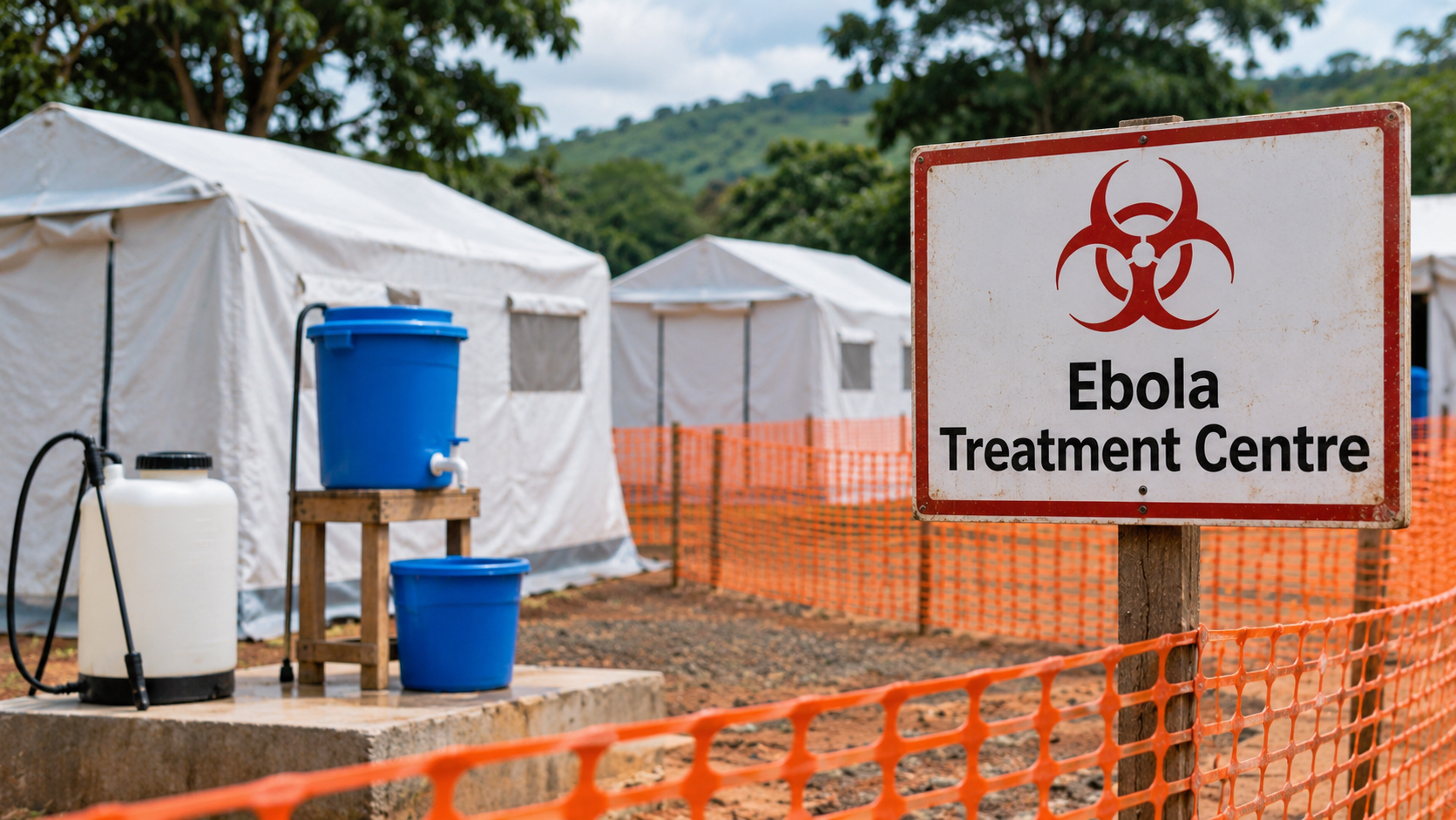
The DR Congo Ebola outbreak has claimed 5,372 lives, with the fatality rate rising above 50%, according to the latest figures released by health authorities.
The Democratic Republic of the Congo recorded 10,414 confirmed Ebola cases as of October 30, 2026.
The country’s National Institute of Biomedical Research (INRB) reported a case fatality rate of 51.6%. This means more than half of the recorded patients have died.
According to Africanews and the Associated Press, the latest figures were released on Sunday, November 1.
Health officials continue to face challenges in tracking infections and preventing further transmission.
DR Congo Ebola outbreak records more than 5,000 deaths
The latest health report confirms the scale of the ongoing Ebola outbreak.
As of October 30, authorities had recorded:
- 10,414 confirmed Ebola cases
- 5,372 reported deaths
- A case fatality rate of 51.6%
However, officials explained that the sharp increase in the reported death toll did not reflect a sudden rise in fatalities over a single day.
Instead, the increase resulted from a retrospective adjustment of previously collected data.
The adjustment followed a review involving local data teams and the outbreak management team in Ituri province.
As a result, the latest figures provide an updated picture of the outbreak’s overall impact.
Why is the Ebola fatality rate so high?
The current outbreak is caused by the Bundibugyo strain of the Ebola virus.
According to the report, there is no approved vaccine or strain-specific treatment for this form of Ebola.
Healthcare workers therefore focus on supportive treatment and managing patients’ symptoms.
Ebola can cause severe illness, including fever, vomiting, diarrhoea and internal or external bleeding in some patients.
The disease can also lead to dehydration and organ failure.
Early medical care is important because supportive treatment can improve a patient’s chances of survival.
However, access to healthcare remains difficult in some affected communities.
The reported 51.6% fatality rate reflects deaths among confirmed cases. It does not mean that every person infected with Ebola has the same individual risk of dying.
Health authorities struggle to track infections
The DR Congo Ebola outbreak was declared in mid-May 2026.
Since then, health authorities have worked to identify cases, monitor contacts and limit transmission.
However, tracing infections remains a major challenge.
According to the Africa Centres for Disease Control and Prevention, approximately 80% of new cases are being detected outside known contact-monitoring networks.
This suggests that many infections are linked to transmission chains that health authorities have not yet identified.
Consequently, teams may struggle to locate people who have been exposed to the virus.
Contact tracing is an important part of Ebola outbreak management.
It allows health workers to monitor people who may have been exposed and respond quickly when symptoms appear.
When cases emerge outside monitored groups, controlling the spread becomes more difficult.
Ebola cases reported beyond DR Congo
The outbreak has also raised concerns about cross-border transmission.
According to the report, Ebola cases have been recorded in Uganda, Kenya and Nigeria.
These developments have increased attention on regional disease surveillance.
Cross-border travel and movement between communities can complicate outbreak monitoring.
Therefore, cooperation between neighbouring countries is important.
Health authorities need to identify suspected infections, share information and strengthen public health responses.
However, the report does not provide detailed case numbers for the affected countries outside DR Congo.
It also does not establish how many infections in those countries are directly linked to transmission from the Congolese outbreak.
Healthcare workers face difficult conditions
Medical teams in affected areas continue to treat patients while working to prevent further infections.
Ebola spreads through direct contact with the blood or other bodily fluids of an infected person who is symptomatic.
It can also spread through contaminated materials.
As a result, healthcare workers must follow strict infection prevention procedures.
These include protective equipment, safe handling of medical waste and careful disinfection.
Treatment centres also need reliable supplies of medical equipment, fluids and protective materials.
However, responding to a large outbreak requires substantial resources.
The number of infections and the difficulties surrounding contact tracing have placed additional pressure on the health response.
What happens next in the DR Congo Ebola outbreak?
The latest figures highlight the continuing public health emergency in DR Congo.
With more than 10,000 confirmed infections and over 5,000 reported deaths, the outbreak remains a serious concern.
Health authorities are expected to continue surveillance, contact tracing and patient treatment.
Regional cooperation will also remain important as neighbouring countries monitor potential infections.
Meanwhile, the high proportion of cases detected outside known contact networks presents a major challenge.
Improving early detection and access to medical care will be essential to reducing further deaths.
For now, the DR Congo Ebola outbreak continues to demand a coordinated public health response as authorities work to contain transmission and protect vulnerable communities.