
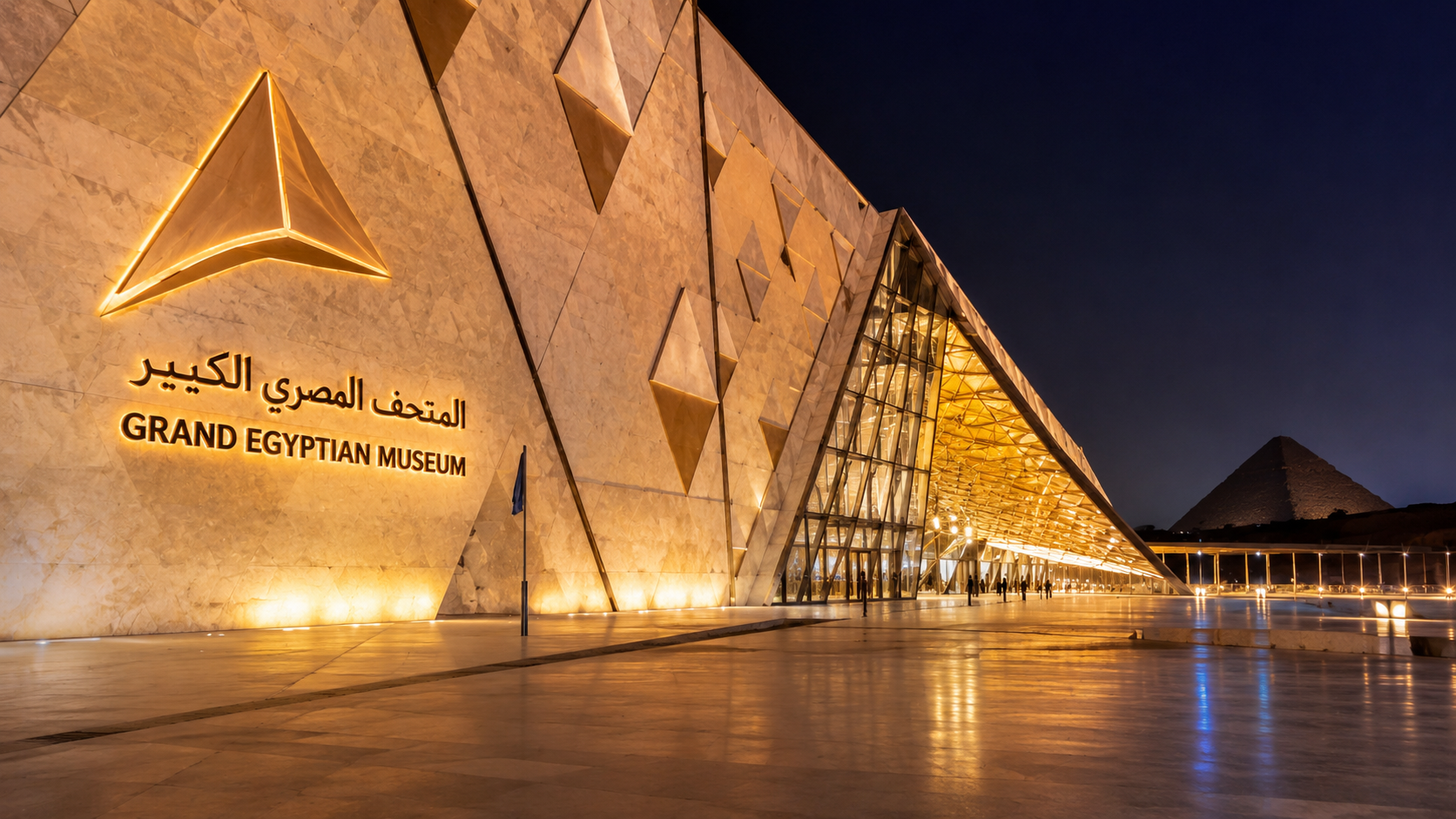
The Grand Egyptian Museum has celebrated its first anniversary with a spectacular light and sound show near the Pyramids of Giza.
The event, called Eternal Sun, began on Sunday, November 1, 2026. It combines modern technology, music and visual effects to tell stories from ancient Egyptian civilisation.
The celebration comes one year after the museum’s grand opening. Since then, the landmark attraction has welcomed approximately five million visitors.
According to the Associated Press, around 60% of those visitors came from outside Egypt.
Grand Egyptian Museum lights up for anniversary
The museum’s exterior became the centre of a colourful performance as lights illuminated its walls.
The show also featured the iconic statue of Pharaoh Ramses II, one of the museum’s most recognisable attractions.
Organisers designed the performance to bring ancient Egyptian history to life through technology.
Amr Abdel Nasser, the show’s creative director, said the aim was to present Egypt’s history in new ways.
He explained that Egypt continues to share its heritage with the world by using modern technology.
The performance combines historical storytelling with light, sound and visual effects.
Visitors can experience the show after sunset.
Organisers plan to run Eternal Sun for six months.
Five million visitors in the first year
The Grand Egyptian Museum has attracted significant international interest since opening in 2025.
Museum CEO Ahmed Ghoneim said approximately five million people visited during its first year.
Foreign tourists accounted for around 60% of that total.
The figures highlight the museum’s importance as a major cultural attraction.
Located near the Pyramids of Giza, the museum offers visitors access to thousands of years of Egyptian history.
Its location also allows tourists to explore several of Egypt’s most famous historical landmarks during the same trip.
Meanwhile, the museum continues to promote Egyptian heritage to international audiences.
What can visitors see at the Grand Egyptian Museum?
The Grand Egyptian Museum houses nearly 50,000 ancient artefacts.
Its collections cover different periods of Egyptian civilisation.
Among its most important attractions are treasures discovered in the tomb of King Tutankhamun.
Archaeologists discovered the famous tomb in the Valley of the Kings in 1922.
The discovery became one of the most significant archaeological events of the twentieth century.
Today, the museum displays objects associated with Tutankhamun alongside many other ancient Egyptian treasures.
Visitors can also explore exhibits covering royal history, religious traditions, art and everyday life.
The museum uses modern presentation techniques to make these collections more accessible.
A $1 billion investment in Egyptian heritage
The Grand Egyptian Museum cost approximately $1 billion to develop.
Its opening in 2025 marked a major moment for Egypt’s cultural and tourism sectors.
The museum was promoted as the world’s largest archaeological museum.
Beyond preserving ancient objects, the project aims to attract international visitors and strengthen Egypt’s tourism industry.
Tourism remains an important source of revenue for the Egyptian economy.
Therefore, major attractions such as the Grand Egyptian Museum play a role in the country’s wider economic plans.
The museum’s first-year visitor figures suggest strong interest from both domestic and international audiences.
However, the report did not provide detailed figures for ticket revenue or the museum’s overall economic contribution.
Technology brings ancient Egyptian history to life
The museum is also using technology to change how visitors experience historical collections.
According to Ghoneim, the goal is to offer more than traditional displays of ancient objects.
Instead, the museum aims to create an experience that combines history with modern presentation methods.
Digital technology, visual effects and immersive storytelling are central to this approach.
The Eternal Sun show reflects that strategy.
By using light and sound, the performance presents Egyptian history in a format designed for contemporary audiences.
It also creates an additional attraction for visitors after sunset.
Grand Egyptian Museum strengthens Egypt’s tourism appeal
The museum’s anniversary celebration comes as Egypt continues to promote its cultural heritage internationally.
Its location near the pyramids makes it an important addition to the country’s tourism attractions.
Furthermore, its extensive collection provides visitors with opportunities to explore ancient Egyptian civilisation in one location.
The first anniversary offers a chance to assess the museum’s progress since its opening.
With around five million visitors in its first year, the attraction has already drawn substantial attention.
The six-month Eternal Sun programme is expected to provide another reason for tourists to visit.
For Egypt, the Grand Egyptian Museum represents both an investment in preserving history and an effort to present that heritage to future generations.