
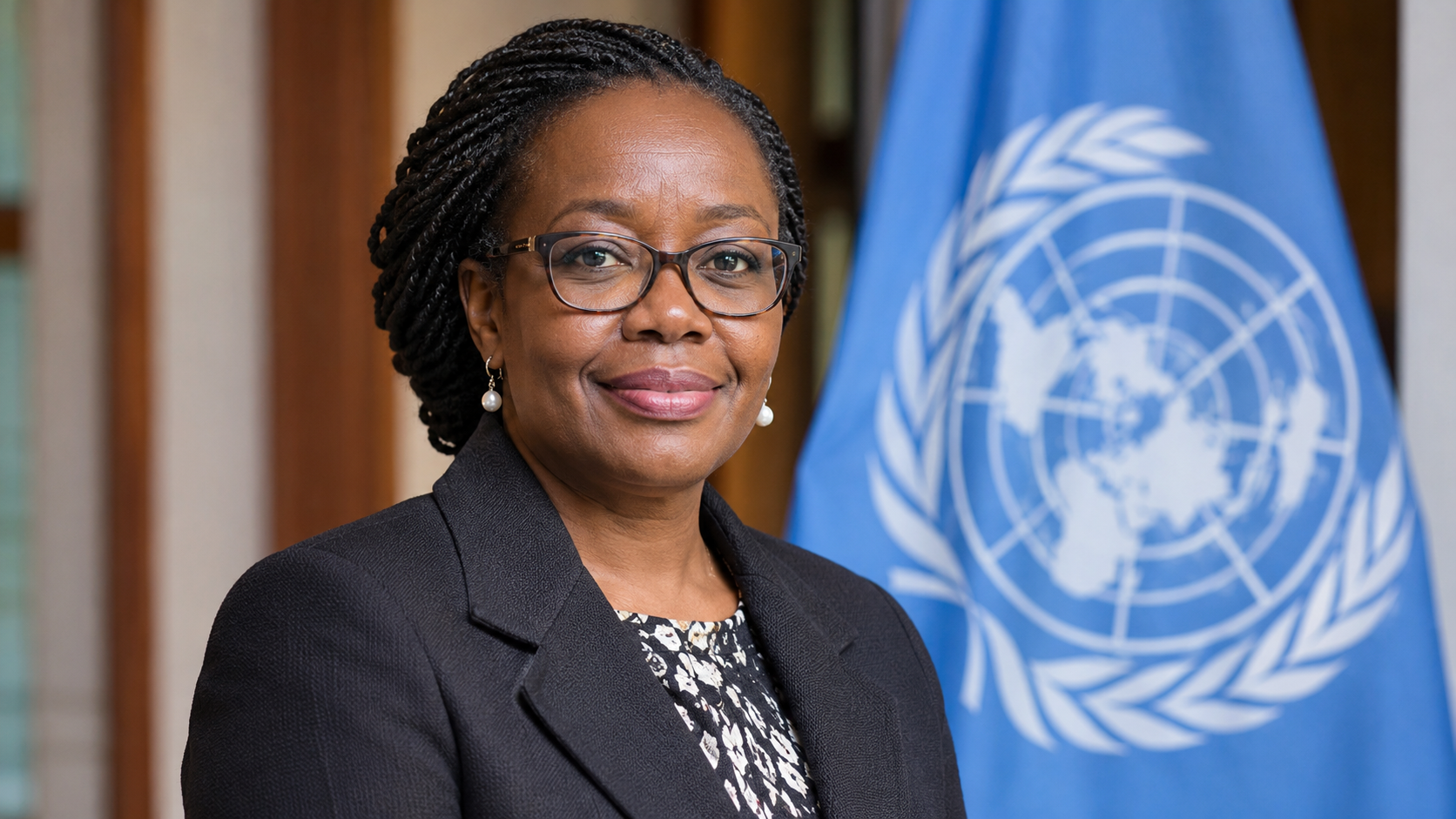
Kenyan legal scholar Phoebe Okowa has secured a full nine-year term at the International Court of Justice (ICJ), the United Nations’ principal judicial body.
According to a November 4 report by Africanews, Okowa received 183 votes in the UN General Assembly and 13 votes in the Security Council.
Her new term will begin in February 2027.
However, the election does not mark her first appointment to the court. Okowa initially joined the ICJ in November 2025 to complete the remaining term of another judge.
Her latest victory secures her position for a full term on the 15-member court, which settles legal disputes between countries and provides advisory opinions on international law.
Who is Kenya’s Phoebe Okowa?
Okowa is a professor of public international law at Queen Mary University of London.
She has also served on the United Nations International Law Commission, which works to develop and clarify international law.
Her academic career has focused on legal questions involving relations between states, international responsibilities and the application of international law.
In November 2025, Okowa was elected to the ICJ to fill a vacancy for the remainder of an existing judicial term.
Her successful election in 2026 now allows her to continue serving for another nine years, beginning in February 2027.
The result represents an important achievement for Kenyan legal expertise within international judicial institutions.
Five judges elected to the ICJ
Okowa was among five candidates elected to the court.
According to Africanews, the other successful candidates were Dapo Akande of the United Kingdom, François Alabrune of France, Mahmoud Daifallah Hmoud of Jordan and Rena Lee of Singapore.
All five will begin nine-year terms in February 2027.
The ICJ consists of 15 judges, with five positions normally filled through elections every three years.
This system allows the court to maintain continuity while regularly renewing part of its membership.
Judges serve in their individual capacities rather than representing their national governments.
How are ICJ judges elected?
Candidates must secure an absolute majority in both the UN General Assembly and the Security Council.
The two bodies vote separately through secret ballots.
Unlike most substantive Security Council decisions, permanent members cannot exercise veto power during ICJ elections.
Furthermore, the court cannot include two judges who are nationals of the same country.
These procedures are designed to support judicial independence and representation of the world’s principal legal systems.
What does the International Court of Justice do?
The International Court of Justice is based at the Peace Palace in The Hague, Netherlands.
It serves as the United Nations’ principal judicial organ and handles legal disputes submitted by states.
The court also provides advisory opinions on legal questions referred to it by authorised UN institutions.
Its work covers territorial disputes, international treaties, state responsibilities and the interpretation of international law.
Unlike the International Criminal Court, which prosecutes individuals for certain international crimes, the ICJ addresses disputes between states and provides legal advisory opinions.
Okowa’s election secures her continued participation in the court’s work as it examines international disputes and questions of global legal importance.