
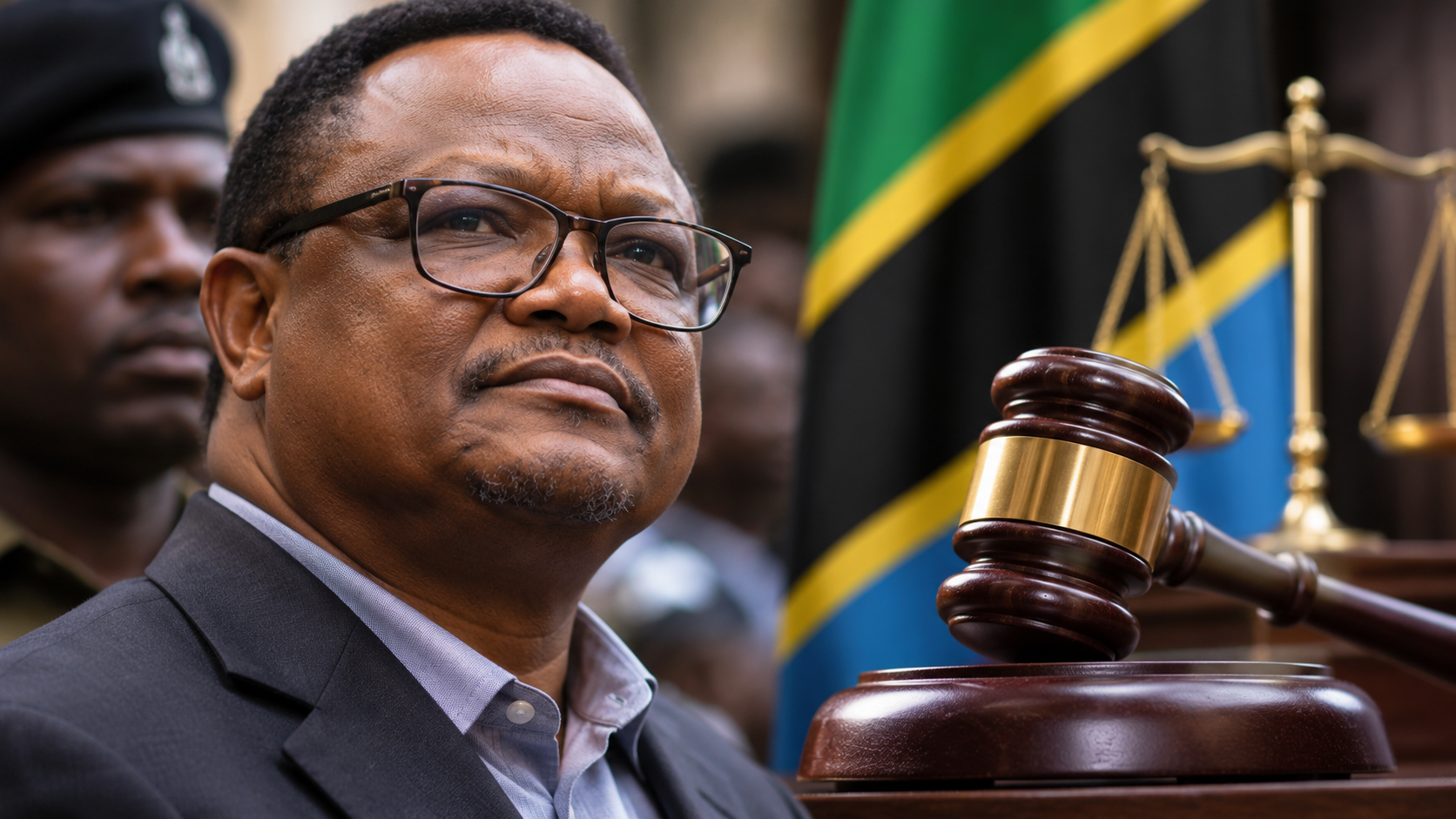
Tanzania’s opposition leader Tundu Lissu is awaiting a court verdict in a treason case that could result in a death sentence.
The High Court in Dar es Salaam is expected to deliver its ruling on November 6.
Lissu, who leads the opposition Chadema party, has been detained since April 2025. Authorities arrested him after he addressed a political rally calling for electoral reforms.
According to Africanews and the Associated Press (AP), the case has raised concerns among human rights groups and opposition supporters.
The verdict comes amid continuing debate over political freedoms and opposition activity in Tanzania.
Tundu Lissu faces possible death sentence
Tundu Lissu was arrested on April 9, 2025, following a rally demanding changes to Tanzania’s electoral system.
Authorities charged him with treason the following day.
Under Tanzanian law, treason can carry the death penalty.
Lissu has remained in detention while the legal proceedings continue.
His supporters argue that the charges are politically motivated. However, the court has yet to deliver its verdict.
The case has attracted attention because Lissu is one of Tanzania’s most prominent opposition politicians.
Rights groups question treason charges
Human rights advocates have raised concerns about the case.
Hussein Khalid, chief executive of the rights organisation Vocal Africa, questioned the basis of the charges.
He argued that a conviction could seriously weaken Tanzania’s political opposition.
Khalid also accused the authorities of using the case to silence political criticism.
However, these claims remain allegations made by rights advocates.
The court’s decision will determine the outcome of the current proceedings.
Meanwhile, opposition supporters continue to call for Lissu’s release.
Opposition leader survived 2017 assassination attempt
Lissu has faced serious threats during his political career.
In 2017, he survived an assassination attempt in which attackers shot him 16 times.
He later spent periods outside Tanzania, citing concerns about his personal safety.
Despite those threats, Lissu returned to political activity and continued advocating democratic reforms.
His political career has focused heavily on electoral accountability and government transparency.
As a result, his arrest has become a major issue for opposition groups.
Prison conditions spark further concerns
Lissu has also raised complaints about his treatment in detention.
In October 2026, he threatened to begin a hunger strike.
He accused prison authorities of refusing to allow private meetings with his lawyers, despite a court order.
Earlier, in May 2025, Lissu went on hunger strike over arrangements requiring him to attend court remotely.
He demanded the opportunity to appear before the court in person.
These disputes have added to concerns about his access to legal representation.
However, the allegations concerning prison conditions have not been independently verified in the supplied reporting.
Tanzania’s 2025 election faced protests
The case follows a disputed political period in Tanzania.
Candidates from the country’s two main opposition parties were prevented from contesting the October 2025 presidential election.
The restrictions triggered protests and unrest.
According to Africanews and AP, the election period was also marked by deadly violence.
Opposition groups criticised the political environment and called for greater electoral freedoms.
The developments increased international attention on Tanzania’s democratic institutions.
Lissu’s case has since become another major issue in the country’s political debate.
Court ruling could shape opposition’s future
The expected verdict could have significant consequences for Tanzania’s opposition.
A conviction could prevent Lissu from returning to political leadership for the foreseeable future.
It could also increase concerns among rights organisations about political participation.
However, an acquittal could open the way for a different political and legal outcome.
For now, the opposition leader remains in detention as the court prepares to announce its decision.
The ruling will be closely watched by his supporters, human rights organisations and political observers.