
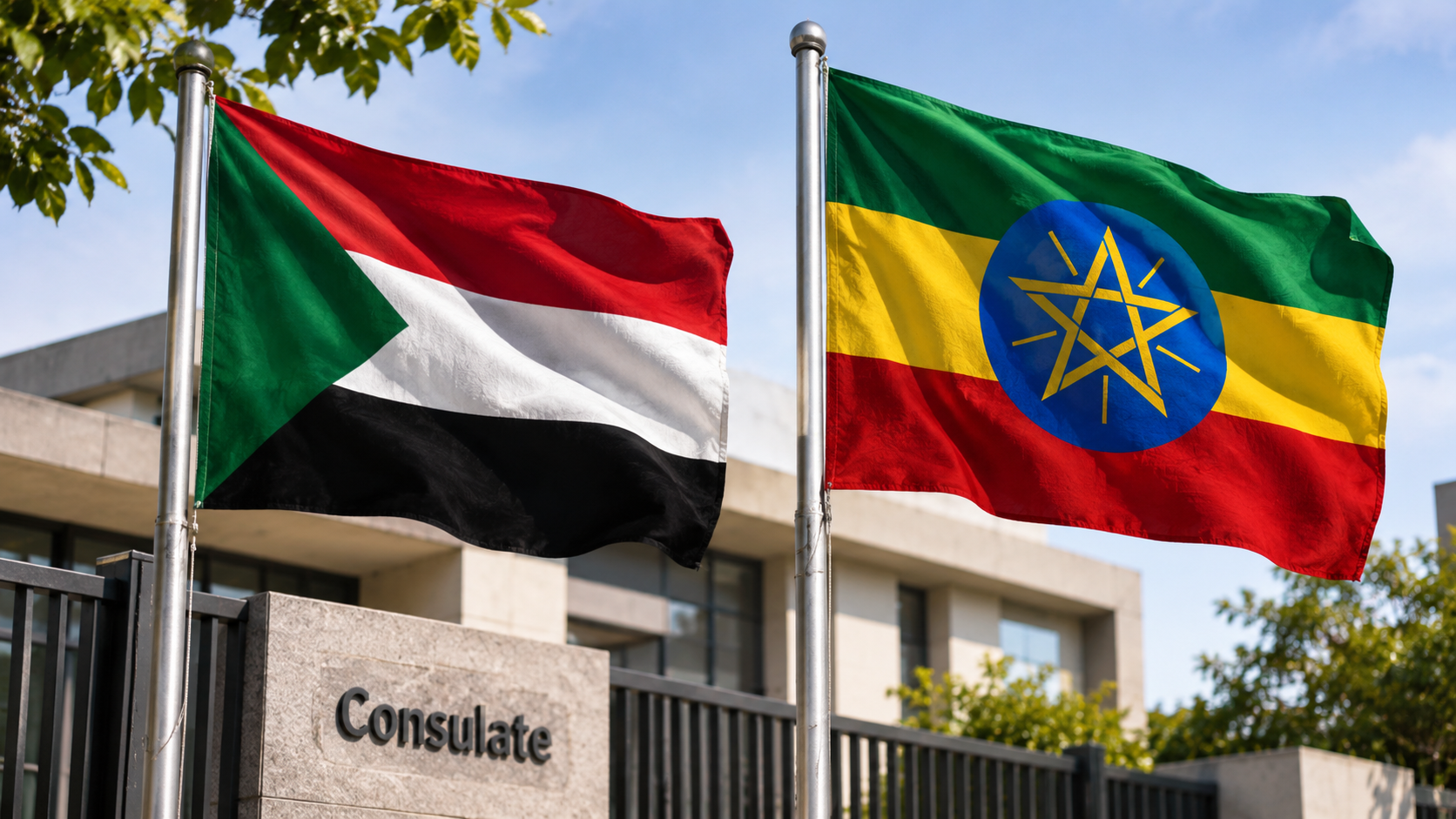
Sudan’s TASIS-backed Government of Peace and Unity has reportedly welcomed Ethiopia’s decision to close the Sudanese consulate in Assosa, amid growing diplomatic tensions between Addis Ababa and the authorities in Port Sudan.
In a statement reported on Thursday, the TASIS Ministry of Foreign Affairs and International Cooperation described Ethiopia’s decision as a positive development for relations between the two countries.
The administration also reportedly called for greater international diplomatic pressure on the military-aligned authorities in Port Sudan.
The statement follows Ethiopia’s decision to expel Sudanese diplomatic personnel and a retaliatory move by Port Sudan to close Ethiopia’s consulate in eastern Sudan.
TASIS welcomes Ethiopia’s diplomatic decision
The TASIS administration reportedly expressed its commitment to strengthening relations with Ethiopia.
According to reports of the statement, the ministry called for cooperation based on mutual interests, regional stability and respect between neighbouring countries.
It also accused the Port Sudan authorities of using diplomatic missions to pursue political objectives.
Furthermore, the ministry reportedly alleged that groups linked to Sudan’s former Islamist government continued to influence the military-aligned administration.
These allegations reflect the position attributed to TASIS and have not been independently verified.
The reported statement also questioned the legitimacy of the Port Sudan authorities.
It argued that continued international engagement with the administration could reinforce Sudan’s existing political divisions.
Ethiopia closes Sudanese consulate in Assosa
Ethiopian authorities ordered six Sudanese diplomatic personnel to leave the consulate in Assosa, near the shared border.
According to Reuters, Ethiopia gave the diplomats 48 hours to depart.
The Associated Press (AP) also reported the expulsions, citing Ethiopian and Sudanese officials.
A Sudanese official said Ethiopia had summoned Sudan’s ambassador before announcing the closure.
The affected diplomats reportedly left Ethiopia on Tuesday evening.
However, Ethiopian authorities did not publicly explain the decision.
The move came amid growing disagreements between Addis Ababa and Port Sudan over regional security.
Port Sudan responds with diplomatic expulsions
Following Ethiopia’s decision, the authorities in Port Sudan ordered the closure of Ethiopia’s consulate in Gedaref.
They also declared Ethiopian diplomatic personnel persona non grata, giving them 48 hours to leave.
Sudanese officials confirmed the measures to Reuters and AFP.
The reciprocal decisions have increased diplomatic tensions between the neighbouring countries.
However, neither side has announced a complete break in diplomatic relations.
The closures could also affect consular cooperation in communities near the shared border.
Dispute follows accusations over armed groups
The diplomatic confrontation comes amid competing accusations involving Sudan’s conflict and instability in northern Ethiopia.
Port Sudan has accused Ethiopia of allowing the Rapid Support Forces (RSF) to conduct operations from Ethiopian territory.
The authorities have also linked alleged cross-border activity to drone attacks against infrastructure in Sudan.
However, Ethiopia has denied supporting the RSF.
Meanwhile, Addis Ababa has accused Sudan of backing armed groups involved in Ethiopia’s internal conflict.
Sudan has rejected those accusations.
The competing allegations have not been independently established.
The dispute has raised concerns about possible tensions along the shared border.
TASIS calls for international diplomatic reassessment
The TASIS administration has reportedly urged regional and international governments to reconsider their diplomatic approach towards Port Sudan.
According to reports of its statement, the ministry accused the military-aligned leadership of undermining Sudan’s political transition and prolonging the country’s conflict.
It also alleged that elements associated with Sudan’s former Islamist government continued to influence political decisions.
These claims remain allegations attributed to the TASIS administration.
Meanwhile, the Government of Peace and Unity, headquartered in Nyala, has pursued diplomatic contacts with regional and international actors.
The administration has presented stronger cooperation with neighbouring countries as one of its diplomatic priorities.
Its reported response to Ethiopia’s decision highlights the different diplomatic positions emerging from Sudan’s competing political authorities.
Sudan-Ethiopia tensions raise regional concerns
Sudan and Ethiopia share a long border, making cooperation important for trade, security and civilian movement.
However, relations have become increasingly strained amid Sudan’s ongoing conflict and political tensions in Ethiopia.
The diplomatic dispute also comes as fighting continues in areas near the shared border, including Sudan’s Blue Nile region.
These developments have raised concerns about wider regional instability.
A further deterioration in relations could complicate diplomatic communication and cross-border cooperation.
Meanwhile, TASIS has reportedly welcomed Ethiopia’s decision and called for stronger bilateral ties.
For now, the consulate closures highlight how Sudan’s internal political divisions are increasingly affecting relations with neighbouring countries.