
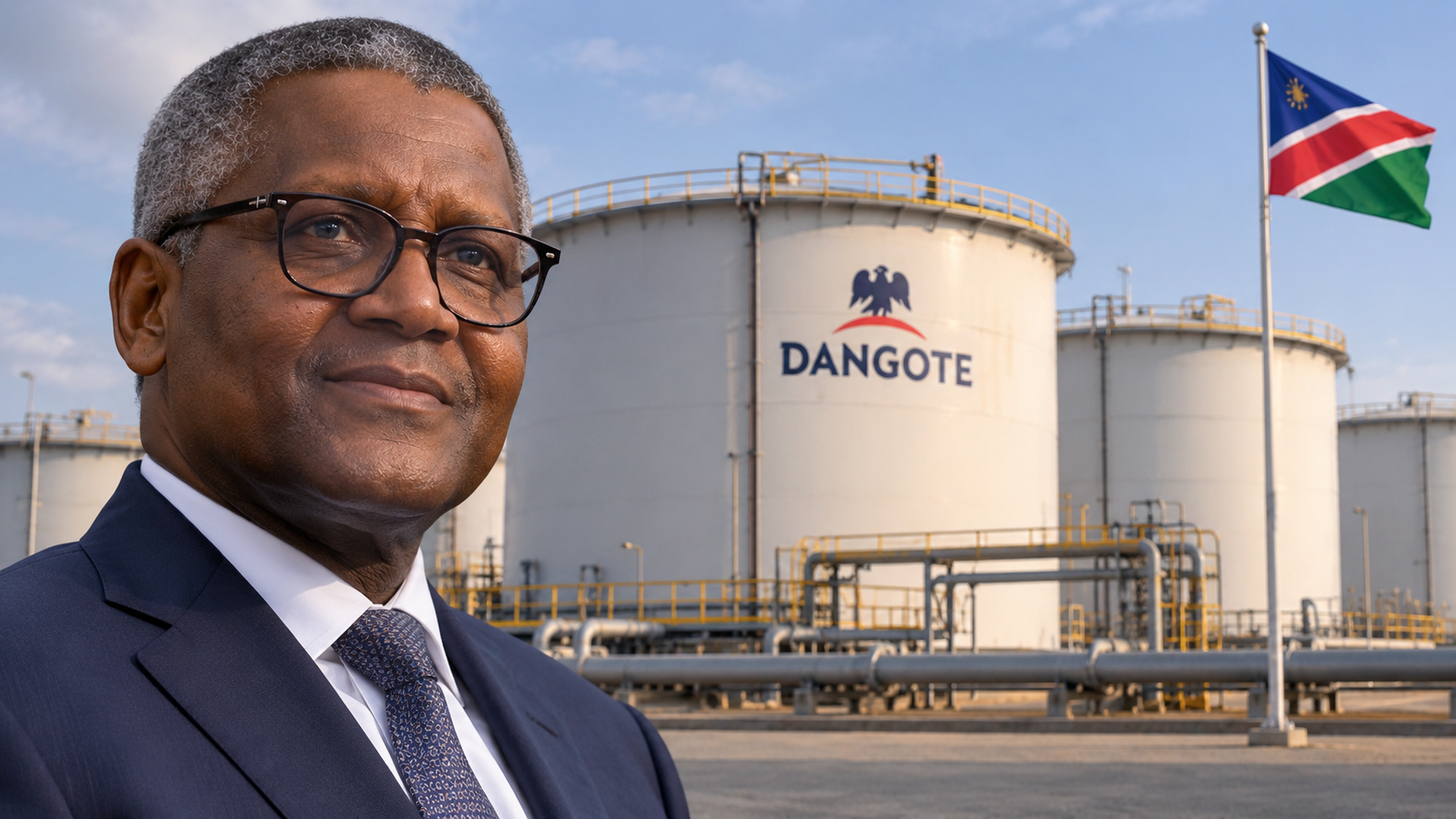
Dangote’s Namibia fuel storage project marks a major investment in Southern Africa’s energy sector, with plans for a $2.5 billion facility in Walvis Bay.
Nigerian billionaire Aliko Dangote has launched a major fuel storage project in Namibia.
The $2.5 billion facility aims to strengthen fuel supplies across Southern Africa.
According to Al Jazeera, the project is located in Walvis Bay, a major port city on Namibia’s Atlantic coast.
The investment forms part of Dangote’s growing energy business across Africa.
It also highlights Namibia’s potential role as a regional fuel storage and distribution hub.
Dangote’s Namibia fuel storage project
The new project involves a large fuel storage facility in Walvis Bay.
The facility is designed to support fuel supplies across Southern Africa.
As a result, it could strengthen the region’s ability to store and distribute petroleum products.
The project also expands Dangote’s presence in Africa’s energy sector.
However, the report did not provide details about the facility’s storage capacity.
It also did not specify when the project would become fully operational.
Why Dangote chose Namibia
Namibia has an important geographical position along Africa’s southwestern coast.
Walvis Bay provides access to Atlantic shipping routes.
The port also serves trade networks connecting Namibia with neighbouring countries.
Therefore, a major fuel storage facility could support regional distribution.
The investment may also strengthen Namibia’s position in the energy industry.
Meanwhile, the project reflects growing interest in developing African energy infrastructure.
Fuel storage could strengthen Southern Africa’s energy security
Fuel storage facilities play an important role in energy supply.
They allow companies to hold petroleum products before distributing them to customers.
They can also help manage supply disruptions.
For Southern Africa, additional storage infrastructure could provide greater flexibility.
Moreover, regional fuel distribution depends on reliable transport and logistics networks.
The Dangote project aims to support these needs.
However, its long-term impact will depend on operations, transport connections and regional demand.
Dangote expands energy investments across Africa
Aliko Dangote is widely recognised as Africa’s richest businessman.
His business interests include cement, fertiliser and petroleum.
In Nigeria, the Dangote Group has developed a major oil refinery near Lagos.
The refinery represents one of Africa’s largest private industrial investments.
Meanwhile, the Namibia project marks another step in the group’s energy expansion.
The investment also reflects Dangote’s interest in building infrastructure that serves African markets.
Walvis Bay could benefit from major energy investment
The planned fuel storage facility could create new opportunities for Namibia’s energy sector.
Large infrastructure projects can support transport, logistics and related services.
They may also attract additional business activity.
However, the number of jobs linked to the project has not been announced in the supplied report.
Similarly, detailed construction plans remain unclear.
Nevertheless, the investment could strengthen Walvis Bay’s role in regional energy trade.
What happens next for the Namibia project?
The $2.5 billion project represents a major planned investment in fuel storage.
Its goal is to improve fuel supply resilience across Southern Africa.
However, further information is needed about construction, financing and operations.
The project’s completion date has also not been confirmed in the report.
For now, Dangote’s Namibia fuel storage project highlights growing investment in Africa’s energy infrastructure.