
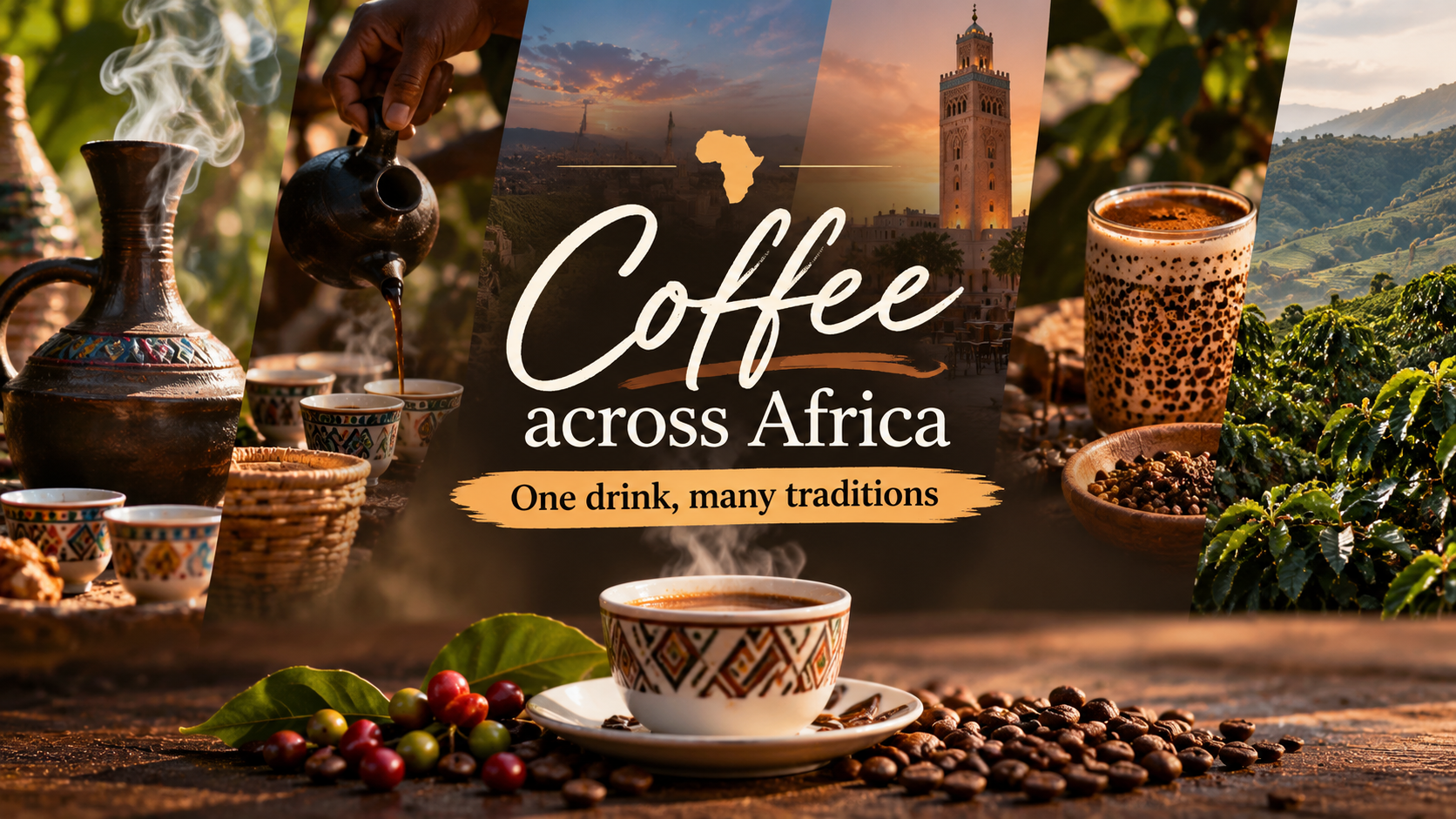
African coffee traditions offer a fascinating look at how different countries prepare, serve and enjoy one of the world’s most popular drinks.
From Ethiopia’s coffee ceremonies to Senegal’s spiced coffee, each tradition reflects local history and culture.
Coffee also brings people together. Across Africa, families and friends enjoy it during conversations, celebrations and everyday gatherings.
Here are five African countries with interesting coffee traditions.
Ethiopia: The birthplace of Arabica coffee
Ethiopia is widely recognised as the birthplace of Arabica coffee.
One of its best-known customs is the traditional coffee ceremony. During this ceremony, people roast fresh coffee beans before grinding and brewing them.
They often prepare the coffee in a clay pot called a jebena.
The ceremony can include several rounds of coffee. It also gives family members, friends and neighbours time to talk.
As a result, coffee plays an important role in Ethiopian hospitality.
Eritrea: Coffee brings people together
Coffee ceremonies are also an important part of Eritrean culture.
Like Ethiopia, Eritrea has a tradition of roasting coffee beans and brewing them in a jebena.
Hosts often serve coffee in small cups. Meanwhile, guests enjoy conversation and spend time together.
These gatherings can last for hours.
Therefore, coffee is not simply a drink. It also represents hospitality and social connection.
Senegal: The unique taste of Café Touba
Senegal offers a different coffee experience.
One of its best-known drinks is Café Touba, a spiced coffee traditionally prepared with Guinea pepper.
The spice gives the drink a distinctive aroma and flavour.
Today, people can find Café Touba in markets, neighbourhoods and street stalls across Senegal.
Unlike traditional coffee ceremonies, Café Touba is often enjoyed as a convenient everyday drink.
Morocco: A growing café culture
Morocco is famous for its mint tea. However, coffee also has a place in the country’s social life.
Across Moroccan cities, cafés provide spaces for conversation and relaxation.
Many people enjoy espresso or coffee with milk.
Coffee shops also bring together friends, colleagues and families.
Although tea remains an important cultural symbol, coffee continues to be part of everyday routines.
Uganda: The home of Robusta coffee
Uganda has a special place in African coffee history.
The country is one of the natural homes of Robusta coffee, a variety known for its strong flavour.
Unlike Ethiopia’s Arabica heritage, Uganda is especially associated with Robusta production.
Coffee also supports many Ugandan farmers and rural communities.
In addition, the crop contributes to the country’s agricultural exports.
Therefore, coffee is both a cultural product and an important source of income.
Why African coffee traditions matter
African coffee traditions show how one drink can connect different cultures.
In Ethiopia and Eritrea, coffee ceremonies bring people together. Meanwhile, Senegal offers a distinctive spiced drink.
Morocco has its own café culture, while Uganda plays an important role in coffee production.
Although these traditions differ, they share a connection to Africa’s history and communities.
Today, African coffee continues to influence how people grow, prepare and enjoy coffee around the world.