
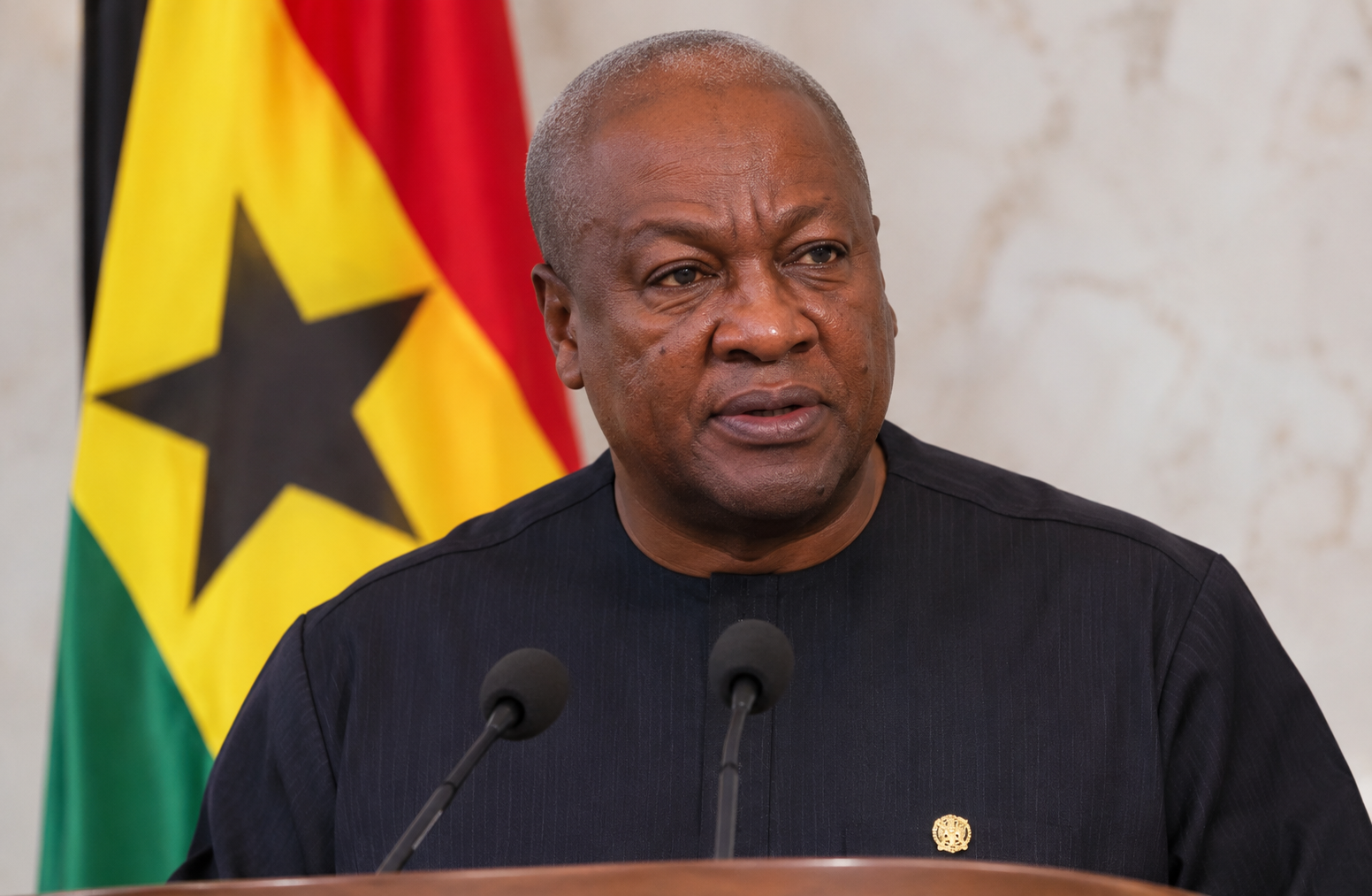
Ghanaian President John Dramani Mahama says slavery reparations should go beyond direct cash payments. Instead, he wants countries to consider investments that address the lasting effects of the transatlantic slave trade.
Mahama said education, healthcare, economic development and debt relief could all form part of reparatory justice.
According to Africanews, his remarks come as Ghana continues to push for international action on the legacy of slavery.
Ghana calls for broader slavery reparations
Mahama believes slavery reparations should focus on improving lives and addressing historical inequalities.
He identified education and healthcare as key areas for investment. In addition, he called for measures that support economic growth and address debt burdens.
These proposals aim to tackle the long-term harm caused by the transatlantic slave trade.
Ghana has become a leading voice in Africa’s campaign for reparatory justice. Moreover, Mahama has sought greater international support for the issue.
UN resolution strengthens reparations debate
In March 2026, the United Nations adopted a resolution describing the transatlantic slave trade as the gravest crime against humanity.
Ghana pushed for the resolution, which received support from 123 UN member states.
Although the measure is not legally binding, it calls for restitution and compensation. It also urges countries involved in the slave trade to address historical injustices.
The vote marked an important diplomatic victory for Ghana’s campaign.
However, the resolution does not require countries to make payments or establish a specific compensation system.
Britain faces pressure over slavery legacy
The debate has also drawn attention to Britain’s historical role in the transatlantic slave trade.
According to Africanews, British Prime Minister Andy Burnham has expressed openness to a formal apology. However, he has ruled out direct financial reparations.
He discussed the issue during a Commonwealth meeting in Antigua and Barbuda.
Meanwhile, British Foreign Secretary Ed Miliband said financial reparations were not feasible. Nevertheless, he suggested that countries could work together on other forms of cooperation.
These positions highlight the gap between demands for reparatory justice and the willingness of former colonial powers to provide financial compensation.
Ghana establishes panels on reparatory justice
Mahama has announced three working panels to examine practical approaches to slavery reparations.
The panels will explore possible measures to address historical harm and support affected communities.
For Ghana, the campaign is about more than financial compensation. It also involves education, development and recognition of the lasting consequences of slavery.
However, major questions remain over how reparations would work, who would contribute and how benefits would be distributed.
Ghana’s latest proposals are expected to keep the issue on the international agenda.