
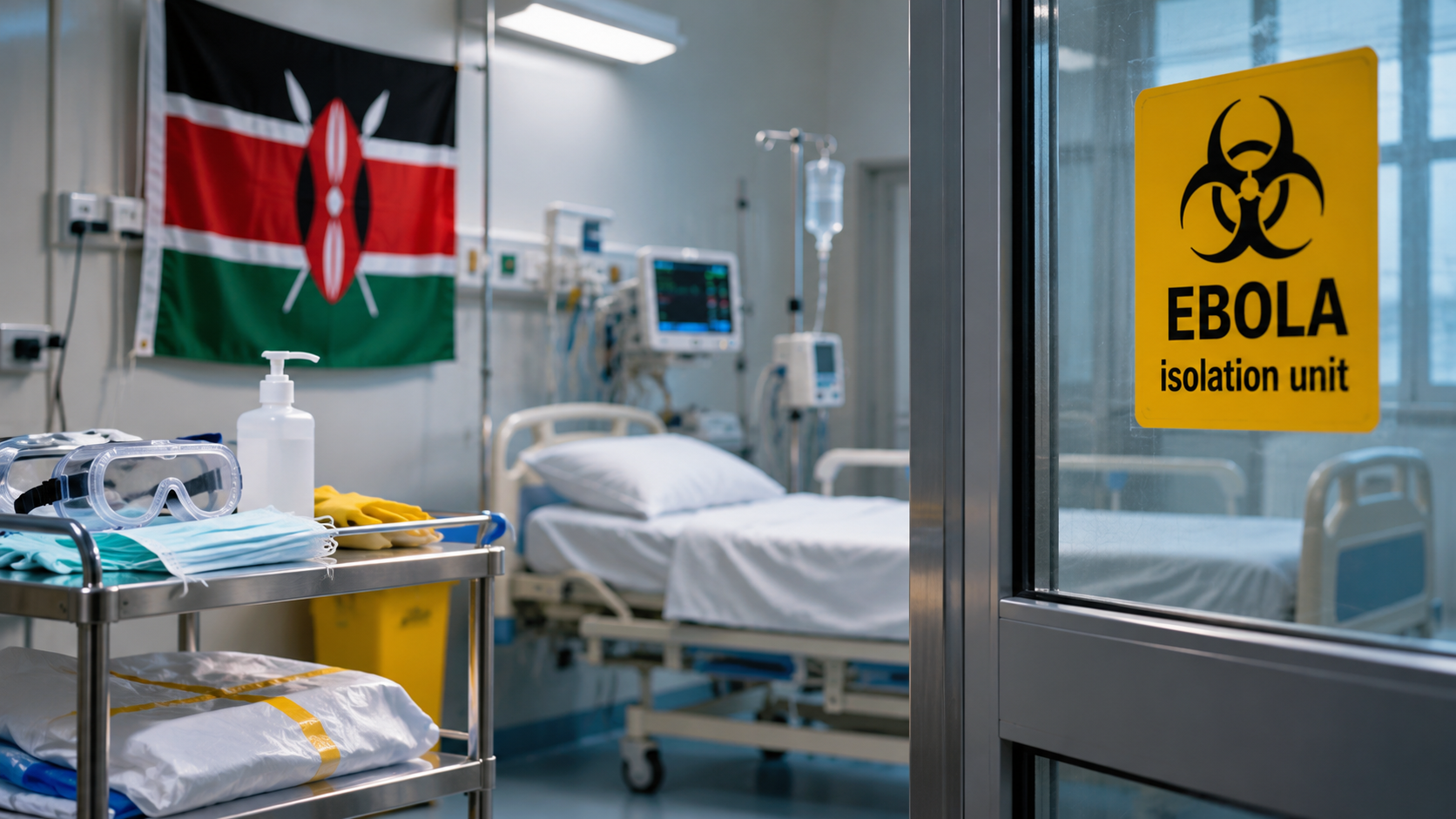
Kenya has discharged its last Ebola patient and started a 42-day countdown toward being declared Ebola-free. However, health officials say the country must remain alert as the outbreak continues elsewhere in Africa.
Health Minister Aden Duale announced the development on Wednesday, November 11.
According to Africanews and the Associated Press, Kenya recorded nine Ebola cases in October. Seven patients recovered, while two died.
The country can be declared Ebola-free if no new infections emerge during the monitoring period.
Kenya reports seven Ebola recoveries
Kenya’s outbreak began after an infected person travelled from the Democratic Republic of Congo through Uganda.
The patient later transmitted the virus to four family members and four healthcare workers.
The first patient and his mother died. However, the remaining seven patients have now recovered.
Health officials identified 135 people who had contact with the first patient.
According to the Ministry of Health, all confirmed infections were linked to the original case.
As a result, officials said they had found no evidence of wider community transmission.
Ebola-free countdown ends December 23
Health Minister Aden Duale said the 42-day monitoring period will end on December 23 if no additional cases emerge.
The waiting period covers twice the maximum incubation period of the Ebola virus.
However, Kenya will continue its prevention measures throughout the countdown.
Authorities have strengthened screening at the country’s main airport. Travellers arriving from affected countries and neighbouring areas face additional health checks.
These measures include temperature screening and health declaration forms.
The government aims to detect possible infections early and prevent further transmission.
Congo outbreak continues to spread
Although Kenya has discharged its remaining patients, the regional Ebola outbreak remains a serious concern.
According to figures reported by Africanews and AP, authorities in the Democratic Republic of Congo have recorded 11,042 infections and 5,387 deaths.
The outbreak began in May and has also affected Uganda and Nigeria.
Health authorities have identified the Bundibugyo strain as the cause of the current outbreak.
Meanwhile, regional governments continue to monitor cross-border travel and strengthen disease surveillance.
Travel restrictions affect Kenyan workers
The outbreak has also affected international travel.
Saudi Arabia suspended visas for Kenyan nationals on October 30, according to the report.
The restrictions have affected workers seeking employment in the Gulf, particularly in domestic services and hospitality.
Kenya’s Health Ministry urged Saudi authorities to reconsider the decision.
Officials argued that the country’s confirmed infections were linked to one imported case and that contact tracing had contained further transmission.
However, the report did not confirm when Saudi Arabia might review the restrictions.
Kenya maintains Ebola prevention measures
Kenya’s latest announcement marks progress in controlling the outbreak.
Nevertheless, health authorities must complete the monitoring period before confirming that transmission has ended.
Officials will continue screening travellers, monitoring possible cases and maintaining public health precautions.
Meanwhile, the wider regional outbreak remains active.
For now, Kenya’s focus is on preventing new infections and completing the 42-day countdown safely.