
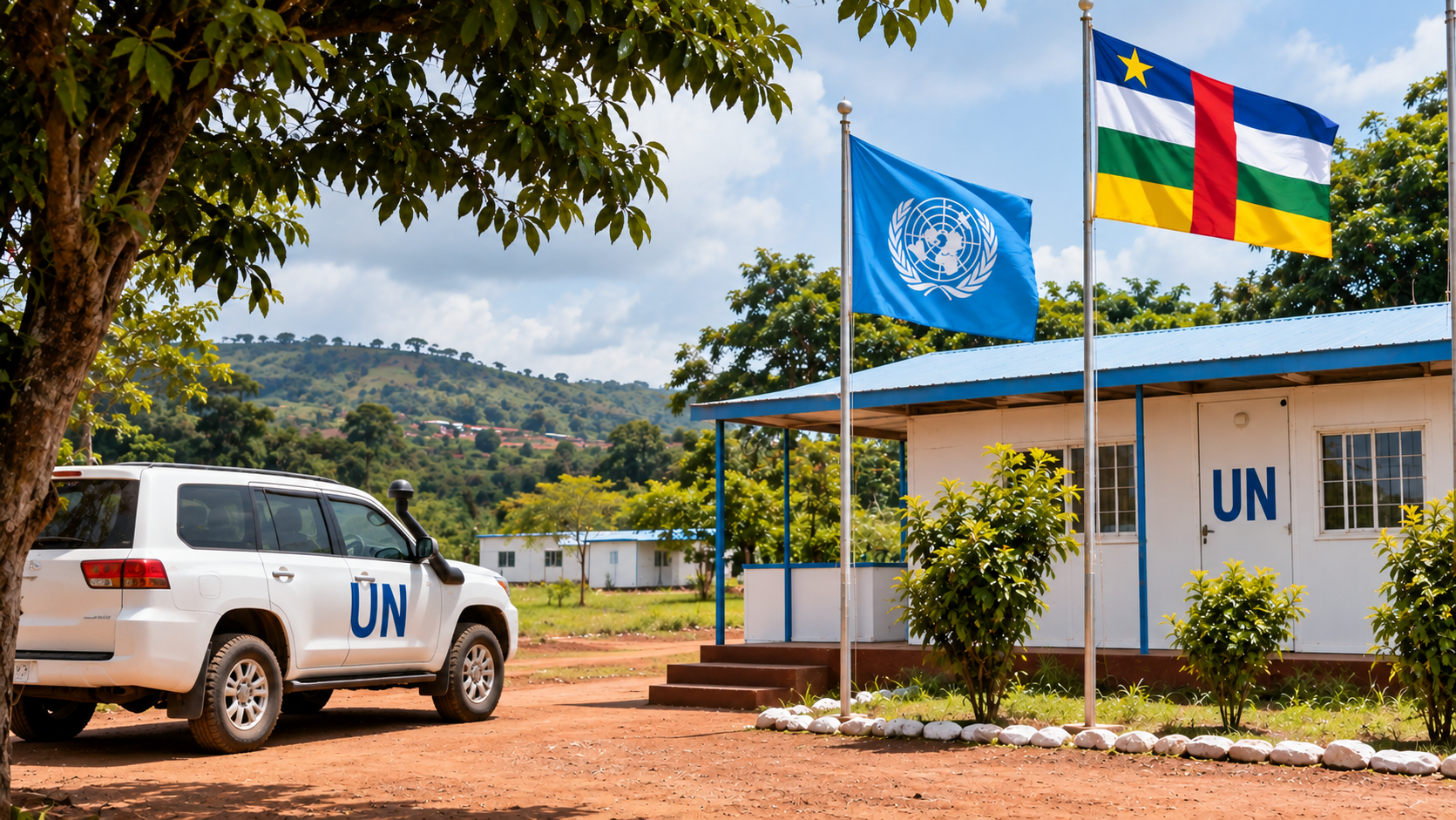
The United Nations is considering further peacekeeper cuts in the Central African Republic as the Security Council prepares to decide the future of its mission.
The UN Security Council is expected to vote on Thursday, November 12, on renewing the mandate of the UN Multidimensional Integrated Stabilization Mission in the Central African Republic (MINUSCA).
According to Africanews, citing AFP and the Associated Press, the mission’s current mandate expires this weekend.
A gradual reduction in peacekeeping operations is among the options under consideration.
UN peacekeeper cuts already underway
MINUSCA began operating in 2014 during the Central African Republic’s civil war.
Since then, the mission has played a major role in supporting civilian protection and security efforts.
However, the UN has already started reducing its presence.
Between January and June 2026, MINUSCA closed or relocated 21 bases across the country.
Despite these changes, the mission still maintains a substantial presence.
It currently has nearly 10,000 military personnel and approximately 2,000 police officers.
The Security Council must now decide whether to renew the mandate while allowing further reductions.
Armed groups remain active near borders
Although security has improved since the worst years of the civil war, violence continues in several regions.
Armed groups remain active, particularly near the borders with Chad, Sudan and the Democratic Republic of the Congo.
These areas continue to face security challenges despite the broader improvement in conditions.
Meanwhile, attacks attributed to remnants of the Lord’s Resistance Army have raised concerns in the country’s southeast.
According to the reporting, four people were killed in attacks between June and September.
Additionally, approximately 68 civilians, including 40 children, were reportedly abducted.
The figures highlight the continuing threats facing communities in areas affected by armed violence.
Sudan border violence adds to concerns
Instability along the border with Sudan has also created serious humanitarian challenges.
In June, an attack in Am-Dafock, on the Sudanese side of the border, reportedly killed 29 people.
The violence also displaced approximately 17,500 people.
Such incidents demonstrate how insecurity in neighbouring countries can affect border communities.
As a result, the security situation remains a key consideration in discussions about the future of UN peacekeeping operations.
President Touadéra seeks phased withdrawal
Central African Republic President Faustin-Archange Touadéra has called for a gradual withdrawal of UN peacekeepers.
His position comes as the country seeks to move beyond the international security arrangements established during its civil war.
However, continued armed activity raises questions about how quickly the mission’s presence can be reduced.
The Security Council must balance the government’s request with the security risks facing civilians.
Security Council faces critical decision
The upcoming decision will determine the next stage of MINUSCA’s operations.
A renewed mandate could allow the mission to continue supporting security efforts while gradually reducing its footprint.
However, the precise scale and timetable of any further reductions remain uncertain.
For now, the Central African Republic faces a difficult transition.
Security has improved in some areas, but armed violence, abductions and instability near its borders continue to threaten civilians.
The Security Council’s decision will therefore be important for the country’s security outlook and the future of international peacekeeping assistance.