
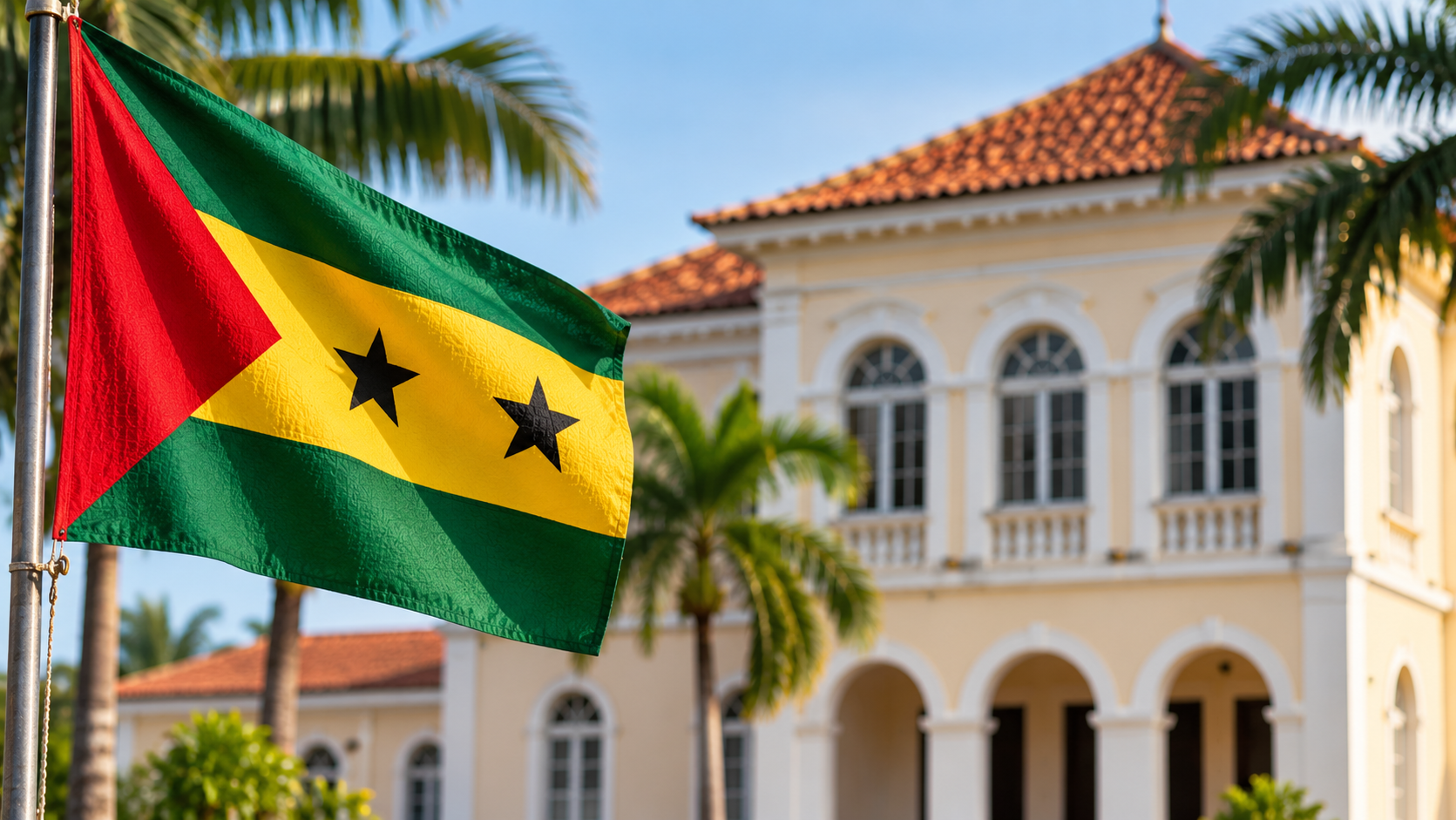
São Tomé and Príncipe’s President Carlos Vila Nova has reappointed Prime Minister Américo Ramos following September’s legislative elections, despite his party finishing second.
Ramos will serve another term after the president concluded that the election-winning party had not demonstrated sufficient parliamentary support to form a stable government.
According to Africanews and agency reports, the decision was announced on Thursday, November 12.
The appointment follows an election that left no political party with an outright majority in the 55-seat National Assembly.
Election winner falls short of majority
The Movement for the Liberation of São Tomé and Príncipe (MLSTP) emerged as the largest party in September’s parliamentary elections.
It secured 24 seats, just four short of the 28 required for an absolute majority.
Meanwhile, Ramos’ Independent Democratic Action (ADI) party finished second with 23 seats.
The remaining eight seats went to smaller political groups.
Six representatives belong to a coalition comprising the Independent Citizens’ Movement, Socialist Party and National Unity Party.
The Basta movement secured the final two seats.
Consequently, neither of the country’s two largest parties can govern with an absolute parliamentary majority on its own.
President defends decision to reappoint Ramos
President Vila Nova said he initially considered whether the MLSTP could secure enough parliamentary support to govern effectively.
However, he concluded that the party had failed to provide adequate guarantees of a stable parliamentary majority.
As a result, he turned to Ramos and the ADI to form the next government.
The MLSTP has reportedly challenged the president’s account of the discussions.
The disagreement highlights the political uncertainty created by the closely contested election.
Although the MLSTP won the most seats, the president’s decision means the second-place party will retain the premiership.
Economic challenges await new government
Ramos’ next administration faces significant economic and social pressures.
São Tomé and Príncipe, an island nation in the Gulf of Guinea, continues to struggle with limited employment opportunities and economic development challenges.
In particular, the lack of opportunities for young people has contributed to emigration.
Addressing these concerns will be an important priority for the returning prime minister.
Meanwhile, parliamentary cooperation could prove essential because the ADI does not hold an outright majority.
The government will therefore need sufficient support in the National Assembly to advance legislation and maintain political stability.
Political stability remains a priority
The reappointment places Ramos at the centre of efforts to form a functioning government after the September vote.
However, questions remain over the parliamentary arrangements that will support his administration.
Africanews reported that the MLSTP disputes the president’s explanation for choosing the ADI.
For São Tomé and Príncipe, the immediate challenge will be translating the election results into stable governance while addressing the country’s economic difficulties.
The coming parliamentary period will test the new government’s ability to build support and deliver on those priorities.