
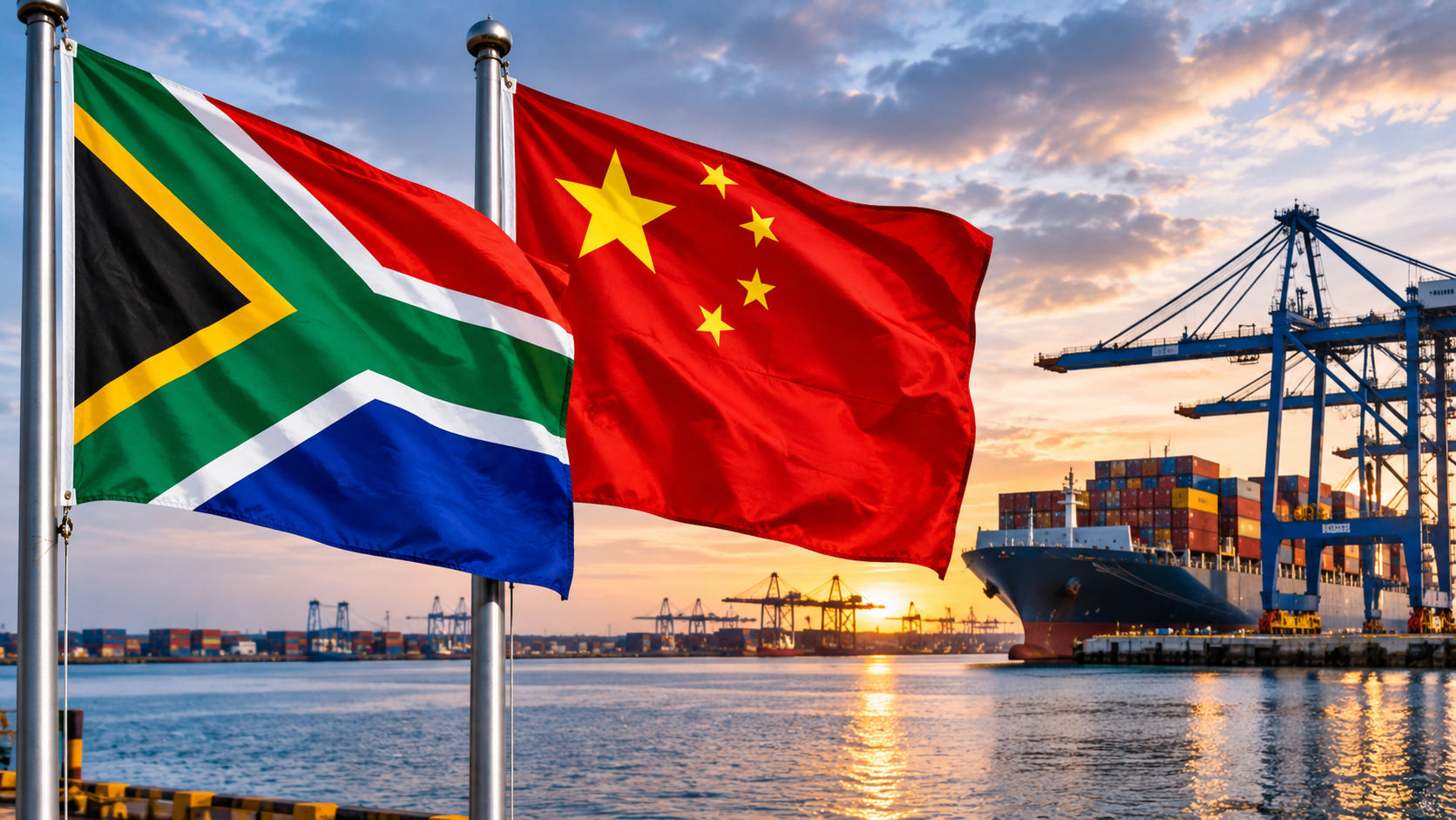
South Africa is strengthening trade ties with China as rising US tariffs reshape global economic relationships.
Meanwhile, Canada is resisting Washington’s trade demands to protect its automotive industry.
According to Business Insider Africa, both countries are adjusting their economic strategies in response to trade policies under US President Donald Trump.
However, their approaches differ. Canada is focusing on domestic investment, while South Africa is expanding exports to China.
South Africa expands trade with China
South Africa has increased its commercial engagement with China following changes to its trade access to the United States.
Business Insider Africa reported that South Africa lost duty-free access to the US market under the African Growth and Opportunity Act (AGOA).
As a result, Pretoria has sought alternative export opportunities.
China’s zero-tariff policy for qualifying African products has helped support this shift.
Between May and August 2026, South African exports to China increased by nearly 25%.
Meanwhile, imports from China rose by 23% during the same period.
The growth has created new opportunities for South African agricultural products, minerals and manufactured goods.
Chinese Ambassador Wu Peng welcomed the increase during remarks in Pretoria.
He also expressed confidence that more high-value South African products would enter China’s market.
Canada rejects US trade demands
Canada is taking a different approach to growing trade tensions with Washington.
Prime Minister Mark Carney has ruled out signing a new trade agreement that fails to protect Canadian vehicle manufacturing.
According to CBC News, cited by Business Insider Africa, Carney made the remarks during discussions in Manila.
He stressed that any agreement must support a sustainable Canadian automotive industry.
Canada withdrew from bilateral negotiations three months earlier after new US demands raised concerns about domestic manufacturing.
Nevertheless, Carney said reaching a stable agreement would benefit workers and businesses in both countries.
Canada invests in economic independence
Ottawa has also introduced a major spending plan to reduce its reliance on the United States.
The Canadian government announced a C$142.1 billion budget titled Masters of our Destiny.
The plan supports critical mineral mining, energy production and housing development.
In addition, it provides financial assistance to automotive and steel workers affected by US tariffs.
Canadian Finance Minister François-Philippe Champagne said the strategy aims to change the country’s economic growth model.
He also emphasised the importance of building a stronger and more independent economy.
US tariffs reshape global trade
The decisions by South Africa and Canada reflect wider changes in international trade.
Both countries are responding to uncertainty surrounding Washington’s commercial policies.
However, South Africa is focusing on expanding access to Asian markets.
Canada, meanwhile, is investing in domestic industries while seeking better trade terms with the United States.
For African economies, China’s growing trade engagement could provide additional export opportunities.
Nevertheless, greater reliance on any single market can create new economic risks.
As trade tensions continue, countries are increasingly looking for ways to diversify their commercial partnerships.
The developments also highlight how US trade policies are influencing economic decisions far beyond North America.