
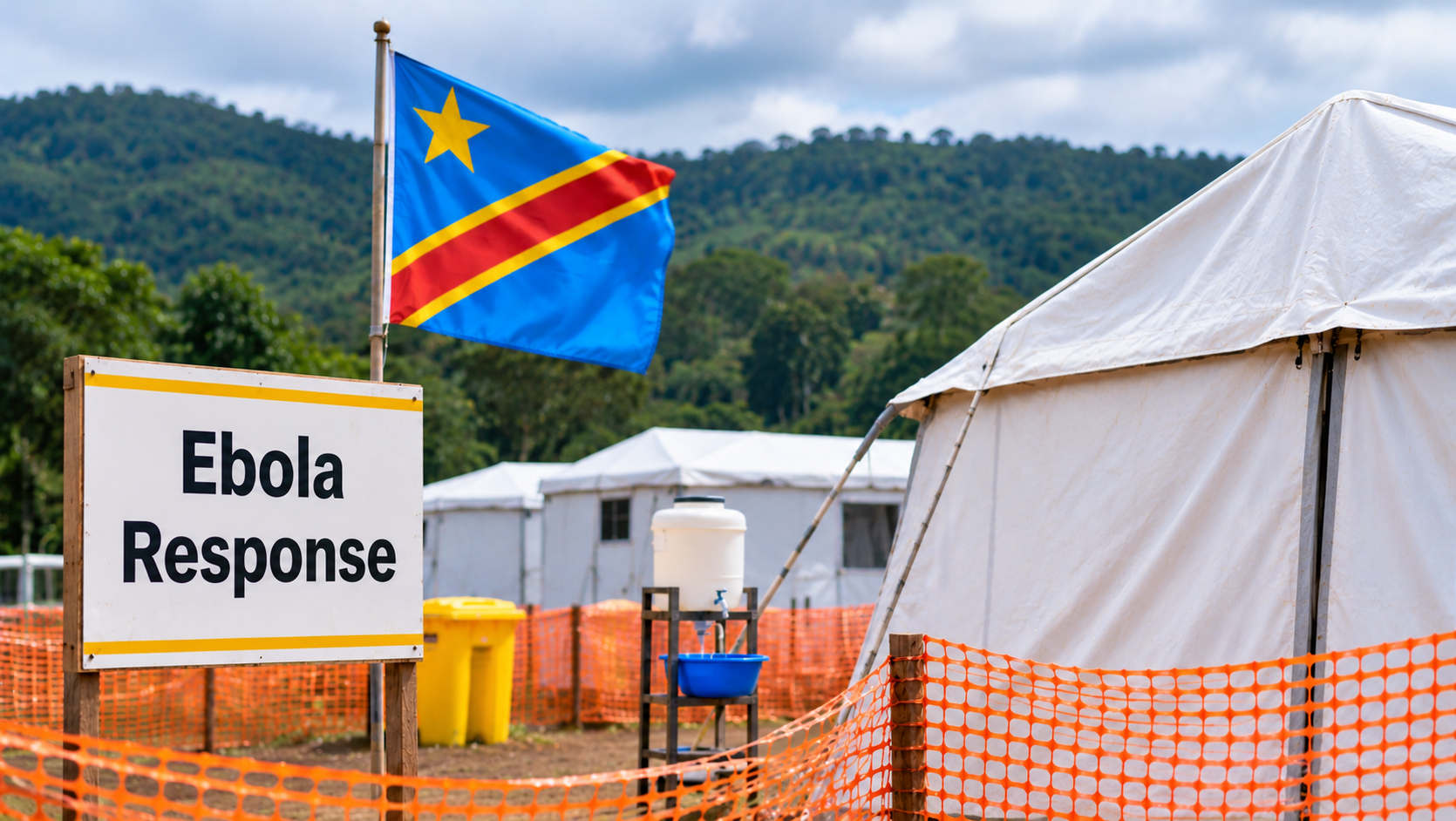
The Ebola outbreak in the Democratic Republic of the Congo (DR Congo) remains out of control six months after it began, according to the Africa Centres for Disease Control and Prevention (Africa CDC).
Health authorities have reported more than 11,200 infections and 5,500 deaths since the outbreak was declared on May 15, 2026.
Africa CDC Director-General Jean Kaseya warned that the outbreak could become the deadliest in history unless authorities contain its spread.
According to Al Jazeera, citing Reuters, Kaseya raised the alarm on Sunday as health officials struggled to control infections across several African regions.
Ebola cases spread beyond DR Congo
The outbreak has affected eight of DR Congo’s 26 provinces.
Meanwhile, cases have also been reported in East, Central and West Africa, according to the report.
This represents the widest geographical spread of an Ebola outbreak recorded on the continent.
Kaseya warned that health authorities were struggling to identify new infections before the virus spread further.
More than 80% of new cases are being detected among people who were not previously identified as contacts of infected patients.
In addition, more than 65% of deaths have occurred outside healthcare facilities.
These figures suggest that many infections are escaping existing monitoring systems.
Conflict complicates Ebola response
The outbreak has placed additional pressure on DR Congo’s already strained healthcare system.
Conflict and insecurity have restricted access to affected communities, particularly in Ituri province.
As a result, health workers face difficulties identifying infections, monitoring contacts and delivering medical assistance.
Delayed detection has also contributed to the spread of the virus.
Furthermore, some healthcare workers have reportedly gone months without receiving their salaries.
The Congolese government is working to digitise payroll systems to improve payments and strengthen the emergency response.
Donors urged to release Ebola funding
Africa CDC has also raised concerns about delays in international financial support.
According to Kaseya, donors have pledged approximately $2.9 billion to fight the outbreak.
However, only $1.3 billion has been released.
The funding gap has complicated efforts to expand testing, strengthen surveillance and support healthcare workers.
Kaseya described coordination problems between DR Congo and international donors as a collective failure.
Nevertheless, he said Africa CDC was working with the government to prevent duplication and improve the use of available resources.
Rare Ebola strain presents challenges
The outbreak involves the Bundibugyo strain of the Ebola virus.
This strain can cause severe illness, including haemorrhagic fever.
According to the report, it can be fatal in approximately half of infected patients.
Containing the outbreak has been particularly difficult because no vaccine or treatment has been developed specifically for this strain.
However, researchers are working to improve available medical options.
Earlier in November, the World Health Organization (WHO) approved clinical trials involving two new Ebola vaccine candidates.
Results are expected in early 2027.
WHO reports progress in some areas
Despite the continuing emergency, the WHO has reported signs of progress.
WHO Director-General Tedros Adhanom Ghebreyesus said transmission was slowing in several areas where the outbreak initially spread.
He also highlighted advances in clinical trials, including the Tumaini trial and research into new vaccines.
Meanwhile, at least 3,000 people have recovered from Ebola in DR Congo and returned home, according to the WHO.
However, health officials warn that improvements in some locations do not mean the wider outbreak is under control.
Africa faces growing health emergency
The current outbreak is reported to be the second-largest and second-deadliest Ebola epidemic on record.
Only the 2014–2016 West African outbreak was larger. That epidemic caused more than 28,600 infections and over 11,000 deaths.
Africa CDC is urging stronger coordination, faster funding and improved disease surveillance to prevent further transmission.
Health officials say early detection, contact tracing and access to treatment remain essential.
Without a stronger response, the outbreak could place additional pressure on vulnerable communities and healthcare systems across the region.