
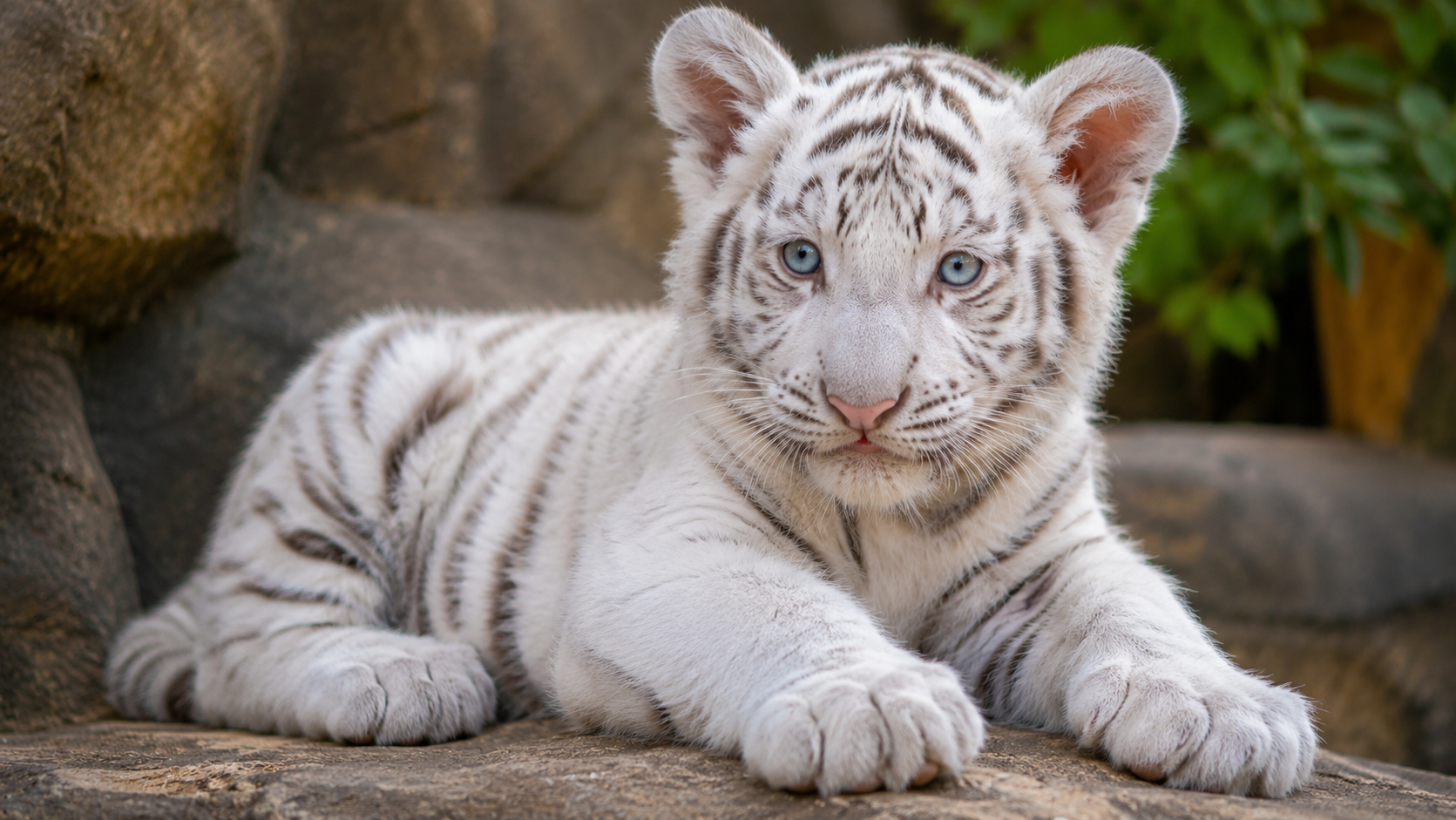
A rare white tiger cub has been born at Tripoli Zoo in Libya, marking a milestone just seven months after the facility reopened following a 17-year closure.
The cub is the first white tiger born at the zoo. However, its survival required immediate intervention after its mother abandoned it shortly after birth.
According to Africanews, citing AFP, zoo staff placed the newborn in an incubator to provide the care it needed.
The birth has attracted attention as the historic zoo continues rebuilding its animal population after years of closure and conflict.
Rare cub receives special care
White tigers are extremely uncommon in the wild.
According to the report, their distinctive colouring occurs in approximately one out of every 10,000 tiger births.
White tigers are not a separate tiger species. Instead, their appearance results from an inherited genetic variation.
They are considered functionally absent from natural habitats today.
Following the cub’s birth, staff at Tripoli Zoo intervened when its mother failed to care for it.
The newborn was placed in an incubator, allowing keepers to monitor its condition and provide additional support.
However, the zoo has not provided further details about the cub’s long-term health.
Tripoli Zoo reopens after 17 years
Tripoli Zoo reopened in March 2026 after remaining closed for approximately 17 years.
The facility was established in 1985 and covers around 45 hectares in Libya’s capital.
It is the country’s largest zoological and botanical garden.
The zoo originally closed in 2009 for renovations under the government of former leader Muammar Gaddafi.
However, political upheaval and armed conflict prevented it from reopening.
Following the overthrow of Gaddafi’s government in 2011, armed groups occupied the site.
During the years of instability, some animals were killed, while others, including rare species, were reportedly stolen.
As a result, the zoo suffered significant losses.
Animal population declines during closure
Before its prolonged closure, Tripoli Zoo housed approximately 1,100 animals.
However, only around 700 remained when the facility reopened in March.
The decline reflects the difficulties of maintaining animal welfare and protecting wildlife during prolonged instability.
Since reopening, the zoo has been working to restore its facilities and improve animal care.
The arrival of the white tiger cub represents a notable development in those efforts.
Zoo officials highlight animal welfare
Wassim Ali, a keeper at Tripoli Zoo, told Africanews that births within zoological facilities can support animal care and educational activities.
He said zoos allow visitors to learn about animals’ behaviour, feeding habits and development.
Ali also highlighted the importance of providing proper healthcare and monitoring.
However, conservation specialists distinguish between breeding rare colour variations and protecting endangered species in their natural habitats.
White tigers are a colour variation of the tiger rather than a separate endangered species. Therefore, breeding them does not automatically contribute to the conservation of wild tiger populations.
Animal welfare, genetic diversity and responsible breeding practices remain important considerations.
A new chapter for Libya’s largest zoo
The birth comes as Tripoli Zoo seeks to recover from years of disruption.
Its reopening has restored a major recreational and educational facility in the Libyan capital.
Meanwhile, the arrival of the white tiger cub has drawn renewed attention to the zoo’s animal-care programmes.
For staff, the immediate priority remains ensuring the newborn receives appropriate care and continues developing safely.
The cub’s birth also highlights the challenges facing wildlife facilities rebuilding after prolonged periods of conflict.